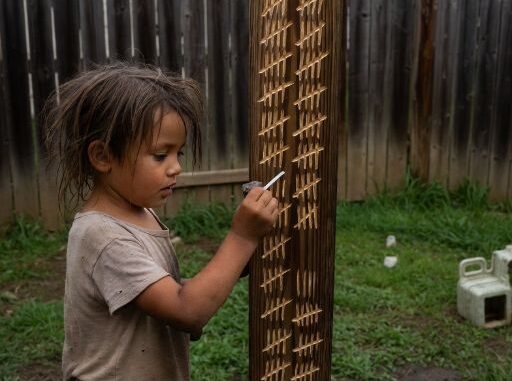
I’d had enough. Every day, the same thing—little Sarah, maybe six, alone in the muddy yard, hair a mess, clothes torn. Her mom, Linda, never came outside. I’d see her pale face in the window and assumed the worst. So I sat on my porch, phone in hand, ready to call child services.
Before dialing, I looked once more. Sarah wasn’t playing. She stood at the fence, carving lines into the wood with a sharp rock. Hundreds of neat tally marks.
“Hey, kid, what are you doing?” I asked.
“That’s for last night,” she said quietly.
“For what?”
“It’s a game. Daddy says when the fence is full, he’ll let Mommy come out of the…” Her voice trailed off.
My stomach turned. The story I’d built in my head—neglectful mother, drug use—crumbled. Could her father be the danger? I put the phone down and asked again, softer.
“It’s a secret,” she whispered, then ran inside.
The next day, I watched. Thomas, her father, left for work, hugged Sarah, whispered something, and she nodded. It wasn’t monstrous—it was protective.
I learned the truth when I finally spoke with him. Linda wasn’t neglectful—she was trapped by grief and depression after losing their son. The tally marks weren’t sinister; they were a “good day” game to help Sarah’s mother recover. Each mark meant a small victory over sadness.
I felt ashamed of my assumptions. I offered help, and slowly, I became part of their lives: mowing the lawn, fixing the fence, bringing meals. Sarah’s smile returned. Linda eventually stepped outside again.
The fence post still wasn’t full, but hope was growing. Compassion, I realized, isn’t about fixing problems. It’s about showing up, lending a hand, and making small marks of kindness on someone’s life.