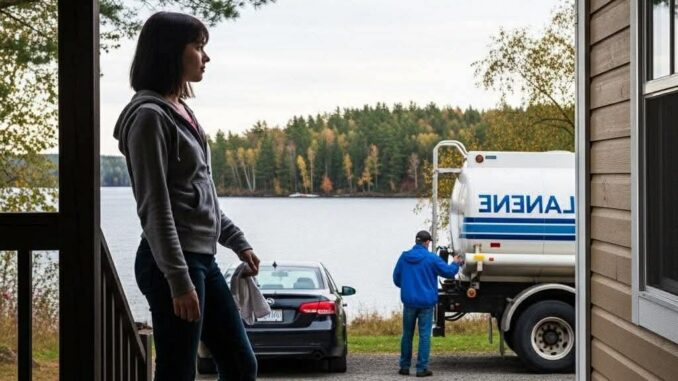
On my eighteenth birthday, my parents showed up at my grandparents’ lake cabin with a moving truck, calling it “ours now” and labeling a room “Guest.” That word told me everything—they thought I was temporary.
At fourteen, I’d earned a full scholarship to an elite prep school. My parents barely noticed, too consumed with my brother’s problems and my father’s gambling debts. My grandparents were the only ones who truly saw me. Before they died, they promised the cabin would be mine—and made sure of it.
At seventeen, I worked with a lawyer to prepare a trust. The night of my eighteenth birthday, while my family celebrated what they believed was their opportunity, I finalized the deed transfer. By morning, the cabin legally belonged to me alone.
So when they tried to move in—planning renovations and a sale to cover debts—I told them the truth. My lawyer and a sheriff arrived with the documents. The property was in an irrevocable trust. I was the sole owner. They had no claim.
They left angry. I stayed.
Over the years, I kept the cabin, finished college with honors, and built a career in environmental conservation. My parents never reached out—except to ask for money or try, unsuccessfully, to claim the property during bankruptcy.
The cabin became what my grandparents intended: a sanctuary. A place for friends, love, and new memories. A foundation I chose to protect.
I didn’t just inherit a house.
I inherited the lesson that protecting your peace—even from family—isn’t cruelty.
It’s self-respect.