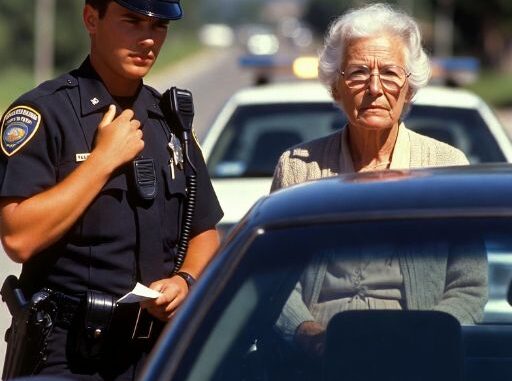
The old Buick was doing 15 over. Easy ticket. I flipped on the lights and she pulled over immediately. Inside sat a woman who looked like a thousand grandmas—white hair in a bun, big glasses, shaky hands on the wheel.
“Ma’am, do you know how fast you were going?”
“The flow of traffic, officer.”
I sighed and wrote the ticket. “Here you are, Mrs. Gable. Pay within thirty days.”
She studied it quietly, then looked up, eyes suddenly sharp.
“This is a civil infraction, correct?”
“Yes, ma’am.”
“Then why are you citing me under Article 15?”
I chuckled. “That’s just the traffic code section.”
She didn’t blink. “Article 15 of the Uniform Code of Military Justice is non-judicial punishment. Run my service number.”
Confused, I called dispatch. After confirming her name and a faded blue base sticker on her windshield, the dispatcher’s tone changed.
“Son… you pulled over retired Brigadier General Margaret Gable. She helped write Article 15.”
My stomach dropped.
I returned to her window, apologizing. She accepted—but asked a question:
“Did you ever ask why I was speeding?”
I hadn’t.
“I’m on my way to St. Jude’s Hospice. A dear friend is dying.”
Guilt hit hard. I tore up the ticket and offered her a police escort. She smiled. “Now you sound like a real officer.”
We made it in fifteen minutes. Her friend Arthur passed peacefully, his estranged son arriving just minutes before us. Later, she explained:
“If you hadn’t stopped me, I’d have arrived earlier. His son wouldn’t have gone inside. Your delay gave him time to find the courage to say goodbye.”
What I thought was a mistake became the reason a family found peace.
On the drive back, I pulled over and called my own grandfather—ending months of silence with a simple, “It’s about time you called, son.”
Sometimes a routine stop isn’t routine at all. Beneath every surface is a story. And sometimes our biggest mistakes are part of something bigger than we can see.