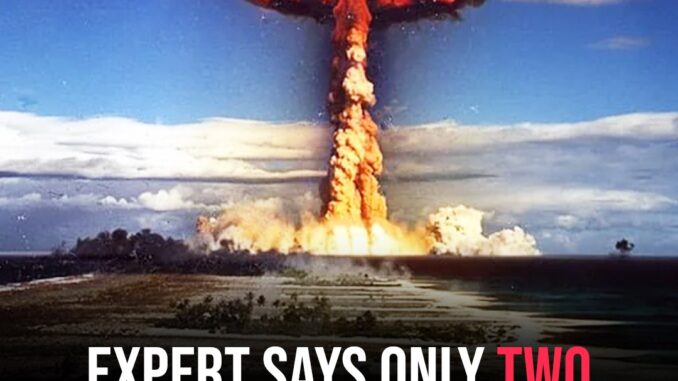
As tensions rise after U.S. and Israeli strikes on Iran, some Americans fear a wider war. President Donald Trump has claimed Iran revived its nuclear program, though The New York Times reports those claims are unproven. The U.S. launched “Operation Epic Fury,” targeting cities including Tehran and Isfahan, raising concerns about possible retaliation.
The U.S. holds roughly 2,000 nuclear warheads, many based in Montana, North Dakota, and Nebraska. A strike on these sites could cause massive destruction and long-term radiation. Newsweek reports that areas farther from nuclear infrastructure — parts of the East Coast, South, and Midwest — might have slightly better short-term survival odds, though no region would be truly safe.
In 2023, Scientific American warned that attacks on missile fields could devastate nearby regions and contaminate farmland for years.
For longer-term survival, journalist Annie Jacobsen said on The Diary of a CEO that Southern Hemisphere countries like New Zealand and Australia may offer better odds during a nuclear winter due to distance from major powers and stronger agricultural resilience.
Her conclusion: no place is completely safe in nuclear war — but geography could shape survival chances.