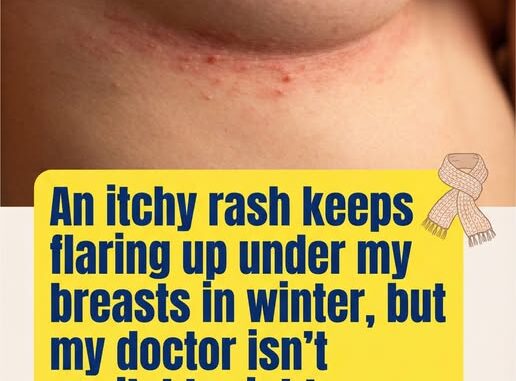
Winter Under-Breast Rash: Causes, Care, and Prevention
Cold, dry winter air and indoor heating dry out skin, while under-breast folds trap heat, moisture, and friction—leading to itchy, inflamed rashes, often intertrigo. Signs include redness, itching, burning, shiny skin, and sometimes a mild odor. Symptoms worsen with sweat and improve when the area stays dry.
Seek Medical Help If You Notice:
-
Rapidly spreading redness
-
Pus, blisters, open sores
-
Fever or chills
-
Darkened skin
Immediate Care:
-
Gentle cleansing: 1–2 times/day with lukewarm water and mild, fragrance-free cleanser. Avoid scrubbing.
-
Thorough drying: Pat fold dry, lifting the breast to remove trapped moisture; use cool airflow if needed.
-
Protective barrier: Apply a thin layer of zinc oxide, petrolatum, or diaper rash cream.
-
Antifungal cream: For persistent redness/itching, use OTC clotrimazole, miconazole, or ketoconazole twice daily for 7–10 days.
Prevention:
-
Wear breathable, moisture-wicking fabrics
-
Change sweaty clothing promptly
-
Use properly fitting bras
-
Allow airflow at home when possible
-
Stay hydrated and maintain skin care
Key Takeaway: Keep the area dry, reduce friction, and respond early. Consistent care prevents worsening and supports healing, even in cold, dry winter months.