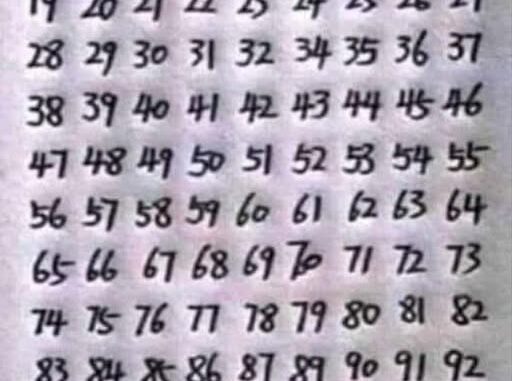
“Invisible” Numbers: Why We Miss a Simple Counting Test
A viral grid from 1–92 challenges viewers to find missing numbers—but our brains often “fill in” gaps, making errors hard to spot.
The answer:
- 33 is missing (between 32 and 34)
- 88 is missing (between 87 and 89)
Why it’s tricky:
- Expectation bias: we anticipate the next number and mentally insert it.
- Filling-in effect: the brain auto-corrects patterns, overlooking details.
The puzzle works because its messy, handwritten style forces the brain to focus less on accuracy and more on pattern recognition—showing how easily perception can be fooled.
Post Views: 113