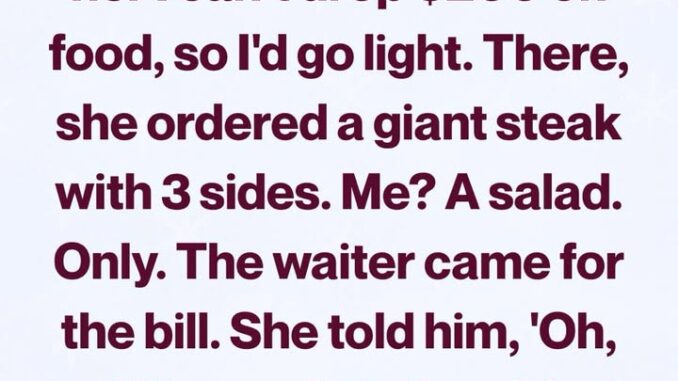
You were clear upfront, and she ignored that. That’s the real issue. Splitting a bill after ordering far more than you agreed to is a form of disrespect, whether intentional or habitual. So your instinct—that something wasn’t right—is valid.
But ordering extra meals to raise the bill was a passive-aggressive move, not just a quiet boundary. It didn’t actually correct the situation—it shifted it. Instead of reinforcing your limit, it turned the moment into a subtle form of retaliation. You protected your dignity on the surface, but avoided the one thing that would’ve truly set a boundary: saying it out loud.
A more direct response in that moment could’ve been simple and calm:
“I’m going to pay for what I ordered, like I mentioned earlier.”
No scene. No drama. Just clarity, backed by action.
That kind of response does two important things:
- It reinforces that your words mean something.
- It gives the other person a chance to either respect the boundary—or clearly reveal that they won’t.
Right now, she may walk away confused about the higher bill, but not necessarily aware of what she did wrong. Which means the pattern you’ve noticed… is likely to repeat.
What you did show, though, is that you’re no longer willing to silently absorb the cost of someone else’s choices. That’s a meaningful shift. The next step is aligning that inner clarity with direct communication, so you don’t have to rely on indirect actions to make your point.
So the real question going forward is:
Do you want to keep the peace in moments like this—or actually change the dynamic?