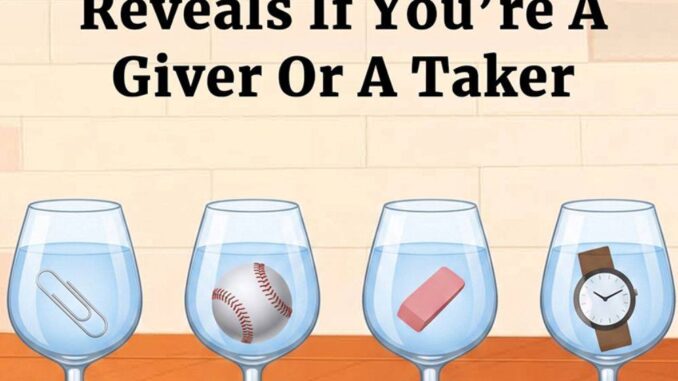
Four glasses—A, B, C, and D—look equally full, but each contains a different object: a paperclip, baseball, eraser, and wristwatch. The trick is understanding displacement: bigger objects take up more space, leaving less room for water. Since the paperclip in Glass A occupies the least space, Glass A contains the most water.
These puzzles are popular because they test more than eyesight—they challenge how we think. Some people answer quickly based on appearance, while others pause to analyze the details. The lesson is simple: appearances can be misleading, and small details often change the whole answer.