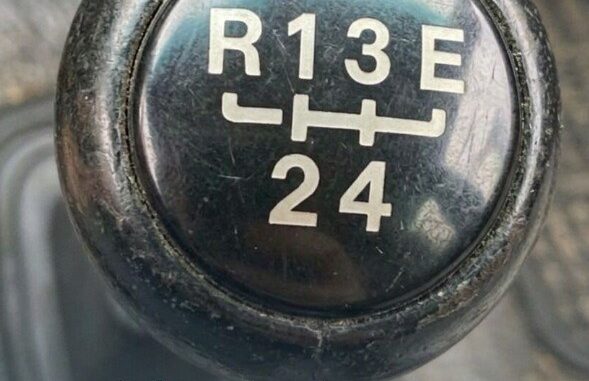
For decades, car gear systems were simple and familiar: manual cars used numbered gears with “R” for reverse, while automatics relied on “P, R, N, D.” But many vintage cars also featured a mysterious “E” on the gear selector, leaving modern drivers confused.
The “E” stood for Economy mode — an early fuel-saving feature created before modern onboard computers existed. When activated, it lowered engine RPM, softened throttle response, and forced earlier gear shifts to reduce fuel consumption.
The trade-off was slower acceleration and weaker performance, so drivers mainly used it during long highway trips to save gas.
Unlike today’s automatic eco-driving systems, this was a fully mechanical setting that required drivers to actively choose fuel efficiency over speed. As automotive technology advanced in the 2000s, computerized systems replaced the need for manual Economy mode, causing the “E” gear to disappear.
Today, the letter “E” has returned with a new meaning in modern vehicles — representing electric and eco-friendly transportation. The old “E” gear remains a fascinating reminder of how drivers once manually controlled fuel efficiency before smart technology took over.