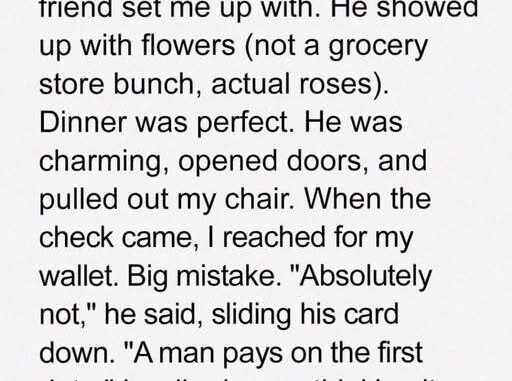
A perfect date turned unsettling the next morning when an actual invoice arrived by email. It listed dinner, drinks, flowers, parking—even “emotional labor and conversational investment”—as charges to be repaid because the romantic outcome he expected never happened.
At first it seemed like a joke, but the tone was completely serious. Suddenly, every thoughtful gesture from the night felt calculated instead of kind. The flowers, compliments, and expensive dinner no longer looked generous—they looked transactional.
The issue was never really the money. It was the belief that affection, attention, or romance could be earned through spending and later collected like a debt.
Friends reacted with shock, then laughter, eventually creating a mock invoice charging him for wasted time, emotional whiplash, and “unsolicited ego maintenance.” Humor helped expose the deeper truth: real kindness doesn’t keep score, and genuine connection cannot survive when every gesture comes with hidden expectations.
When confronted, the man defended himself by calling the date an “investment,” revealing how he viewed relationships—not as mutual connection, but as transactions expecting returns.
In the end, blocking him felt less dramatic than necessary. Because love isn’t a contract, care isn’t something owed back, and anyone who treats intimacy like accounting has already misunderstood what relationships are meant to be.