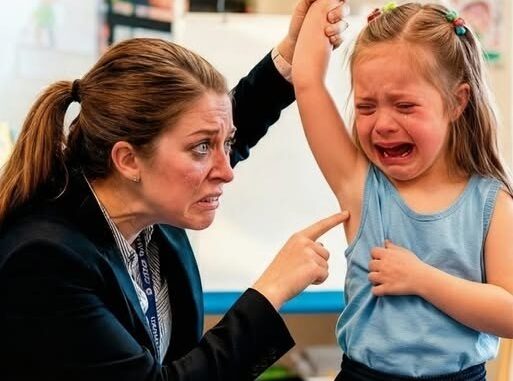
First-grade teacher Eleanor Prescott thought she had seen every kind of childhood struggle in her twenty years teaching in northern Ohio. But one quiet morning in Room 12, something felt deeply wrong.
The children had suddenly stopped talking. Their eyes were fixed on six-year-old Lila Monroe, who sat alone in the corner, withdrawn and silent. A faint odor clung to her clothes, causing the other students to avoid sitting near her—not out of cruelty, but discomfort.
When Eleanor approached, Lila flinched and whispered through tears, “Please don’t say anything.”
As Eleanor gently lifted the sleeve of the little girl’s oversized sweatshirt, her heart nearly stopped. Hidden beneath was a swollen, infected wound that looked painfully untreated. Moments later, the school nurse arrived, took one look, and quietly said, “This needs emergency medical attention.”
Lila broke down crying, desperately defending her grandmother. “She tried to help me,” she whispered. “Please don’t be mad at her.”
Over the next few hours, Eleanor learned pieces of the child’s difficult life. Lila lived with her exhausted grandmother, who worked long hours and struggled to care for her. The signs had been there for months: oversized clothes, constant hunger, exhaustion, silence, and fear.
That day changed everything.
Lila was taken for proper medical care while Eleanor stayed beside her the entire time, promising she wouldn’t leave her alone. In the weeks afterward, the little girl’s empty chair became a painful reminder that children often suffer quietly, hoping someone will notice.
Eleanor realized the most important moments in teaching are not always lessons written on a board. Sometimes, they are the quiet moments when a child silently asks for help—and someone finally listens.