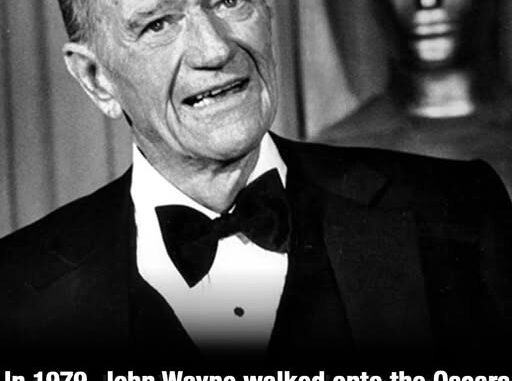
The Academy Awards are usually a polished showcase of fame and glamour. But on April 9, 1979, the ceremony became something more human—a farewell to John Wayne. Gravely ill, Wayne made one final public appearance that left Hollywood deeply emotional.
At seventy-two, Wayne had survived decades of physical hardship and serious illness. After battling lung cancer years earlier, he later underwent major surgery that revealed stomach cancer. By the 1979 Oscars, many believed he was nearing the end of his life.
When his name was announced, the atmosphere instantly changed. Thin and visibly weakened, Wayne still carried the unmistakable presence that had defined generations of films. As he slowly walked onto the stage, the audience rose in a prolonged standing ovation—not for a role, but for his endurance and courage.
At the microphone, Wayne delivered a line that became unforgettable: “That’s just about the only medicine a fellow would ever really need.” The crowd was deeply moved. He then joked that both he and the Oscar statuette had arrived in Hollywood in 1928 and were both “weather-beaten,” but still hanging on. Later, he presented Best Picture to The Deer Hunter.
Only weeks later, Wayne’s condition worsened. Even in his final days, he participated in experimental cancer research, hoping it might help others. On June 11, 1979, he died, leaving behind not just a film legacy, but an example of resilience and dignity in the face of death.