The answer is simple once you focus on the store’s final net loss instead of tracking every step separately.
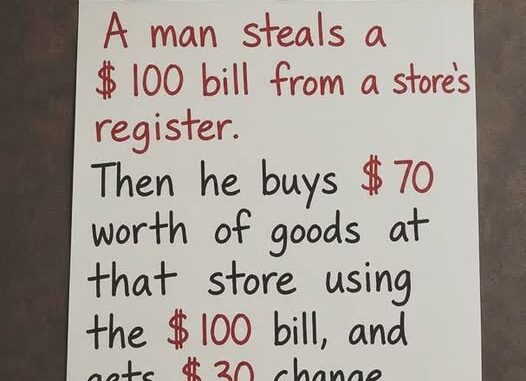
A thief steals $100 from the register. Later, he returns and uses that same $100 bill to buy $70 worth of goods. The cashier gives him $30 in change.
At the end of the transaction, the stolen $100 bill is back in the register, so the store no longer loses that original cash directly. What the thief leaves with is:
- $70 worth of merchandise
- $30 in cash change
That equals a total loss of $100.
The confusion happens because many people double-count the stolen bill and the later purchase as separate losses. In reality, the $100 bill simply returns to the store during the transaction. The only permanent losses are the goods and the change.