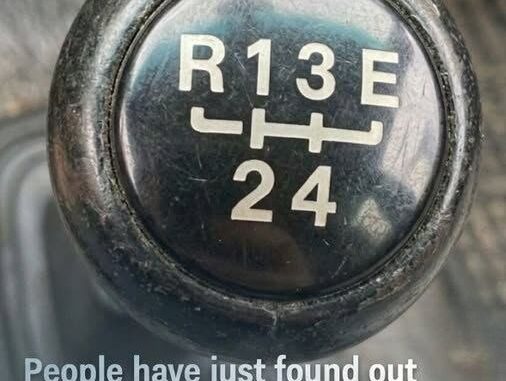
For decades, car gear layouts stayed almost identical. Manual cars used numbered gears plus “R” for reverse, while automatics followed the familiar P, R, N, D pattern. Drivers never questioned these standard labels—until many recently noticed an unusual letter “E” on some classic cars.
The mysterious “E” stood for Economy mode, an early fuel-saving feature created before modern computers and hybrid systems. When activated, it lowered engine RPM, softened acceleration, and made the transmission shift earlier to improve fuel efficiency.
The trade-off was slower acceleration and reduced power, so drivers mainly used it for steady highway cruising to save money on fuel.
This feature reflects a time when drivers had to manually choose efficiency over performance. Unlike today’s cars, which automatically optimize fuel use through advanced computers, older vehicles relied on physical mechanical systems.
Although the “E” gear disappeared as technology advanced, its idea lives on. Today, “E” is more closely linked to electric vehicles and sustainable transportation, showing how automotive efficiency has evolved from simple mechanical solutions to intelligent digital systems.