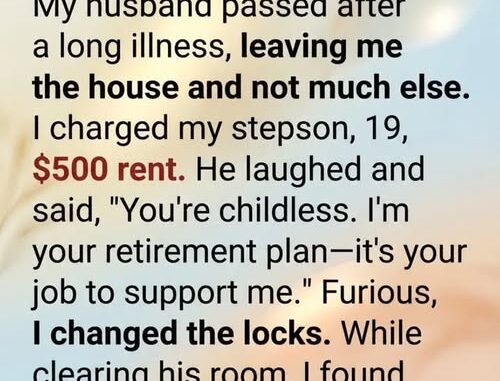
After my husband died, the house stayed the same, but everything felt empty. Bills piled up, grief lingered, and I struggled to manage life alone. My nineteen-year-old stepson, Leo, still lived with me, quiet and withdrawn in his own grief. Though he helped around the house, I worried he didn’t understand how serious our financial situation had become.
One evening, overwhelmed and desperate, I asked if he could help pay a little rent. He smiled awkwardly and said, “Things always work out somehow.” Exhausted and hurt, I took his response as careless and immature. By the next morning, resentment had replaced patience.
While he was out, I started packing his belongings, convinced I had been carrying everything alone. But while cleaning his room, I found a duffel bag hidden under his bed. Inside was a savings passbook filled with years of small deposits and a letter addressed to me.
In the letter, Leo explained that he had quietly saved money for years so he could help take care of me after his father was gone. He admitted he didn’t know how to talk about it and that his joke the night before was only an awkward attempt to hide how much he cared.
Sitting on his bedroom floor, I realized how badly grief and fear had distorted my thinking. I had mistaken love for indifference.
That evening, when Leo came home, I apologized for not trusting him. He admitted he was afraid of disappointing me and didn’t know how to express himself. For the first time since my husband’s death, we truly talked—about money, grief, fear, and the future.
We agreed to face things together. He would help where he could without sacrificing his education, and I would stop pretending I had to carry every burden alone.
Over time, the house changed again. Not because the grief disappeared, but because we stopped facing it separately. We shared memories, supported each other, and slowly rebuilt a sense of family from the loss.
I kept the savings book in my desk drawer, not because of the money, but because it reminded me that love is often quiet. Sometimes the people who care the most simply don’t know how to say it out loud.
And in learning to listen beyond fear, we found our way forward together.