PART 1
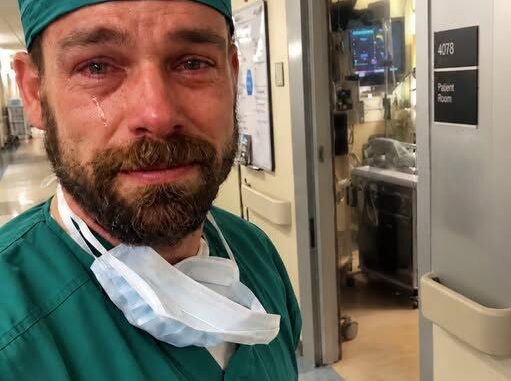
Marcus and I had been married for eleven years, and I had spent each of those years sharing him with that hospital.
He was an exceptional surgeon, and I took pride in the fact that my husband saved countless lives. However, over the last year, I found myself packing up his dinner before I even sat down to enjoy mine.
He missed Thanksgiving, our anniversary, and our daughter’s eighth birthday.
At times, he wouldn’t come home at all.
“We’re short on staff, honey. Please don’t wait up.”
Whenever he finally crawled into bed, he appeared so drained that I swallowed every complaint. One time, I woke up to find him sitting on the edge of the mattress, his shoulders shaking.
“Marcus?”
He wiped his face before turning to me.
“Rough night. Go back to sleep.”
So that Tuesday, after watching him leave with his hospital badge clipped to his pocket, I decided to surprise him.
I packed his favorite lunch, added a slice of apple pie, and slipped a note under the fork:
You don’t have to look after everyone. Let me have a turn.
I drove to the hospital, envisioning how delighted Marcus would be to see me.
But as soon as I arrived, something felt off.
At the nurses’ station, a woman I had known for years stopped smiling the moment she noticed me.
“Is Marcus around?” I asked. “And please don’t warn him. He’ll just say I shouldn’t have bothered.”
She glanced at the nurse next to her.
My smile faded.
“Did something happen to him? Where’s Marcus?”
Neither of them replied.
I began to feel frustrated at their strange behavior when I spotted Marcus’s colleague, David, walking toward me.
His face was as pale as a ghost.
He stopped in front of me.
“I’m so glad you’re here!” I said cheerfully. “Can you tell me where Marcus is?”
David searched my face.
Then, without warning, tears filled his eyes.
“He hasn’t told you anything, has he?”
PART 2
My blood ran cold. The lunchbox in my hand suddenly felt heavy, pulling at my shoulder as I stared at David’s quivering lips.
“Told me what?” my voice rose, sharp and breathless. “David, what is happening? Is Marcus injured? Did he collapse?”
David placed a firm, trembling hand on my arm and led me away from the busy corridor into a private consultation room. He shut the door behind us, blocking out the rhythmic sounds of hospital monitors and hurried footsteps.
“Clara… Marcus isn’t working today,” David said softly, his voice thick with unrestrained emotion. “He hasn’t performed surgeries for six months.”
I stared at him, letting out a hollow, incredulous laugh. “That’s impossible. He leaves every morning in scrubs. He stays overnight for emergency calls. He was crying on the edge of our bed last week because of a rough shift!”
“He was crying because he couldn’t bring himself to break your heart,” David whispered, pulling a thick medical file from a drawer on the side desk and sliding it toward me. “Six months ago, during a routine tremor assessment, Marcus was diagnosed with early-onset ALS. His fine motor skills in his hands began deteriorating rapidly.”
The room seemed to spin violently around me. The air vanished from my lungs.
I looked down at the folder. Inside were neurological scans, progression charts, and Marcus’s voluntary relinquishment of his surgical license.
“He stepped down from the OR immediately,” David continued, tears streaming down his cheeks. “He knew he could never put a patient’s life at risk. But he couldn’t bear the thought of going home, looking at you and your daughter, and admitting that the man who saved everyone else was losing control of his own body.”
“Where is he?” I choked out, tears blurring my vision as I clutched the lunchbox to my chest. “David, where is my husband right now?”
David wiped his eyes. “He’s down in the pediatric oncology garden. He’s spent every single day of these past six months volunteering there—reading to the children, sitting with families, doing whatever he can to help without a scalpel in his hand.”
PART 3
I practically ran through the lower-level glass doors, my heels clicking frantically against the concrete until I reached the secluded courtyard garden.
There, sitting on a wooden bench beneath a blossoming dogwood tree, was Marcus.
He was wearing a simple jacket over his worn blue scrubs. In his lap was a children’s storybook, and beside him on the bench was a little boy with a soft knit beanie, giggling as Marcus attempted to do funny cartoon voices.
As I watched him, I noticed it—the faint, involuntary twitch in his right hand as he tried to turn the thin page of the book. He paused, swallowed hard, and used his left hand to gently force the page over, keeping his warm smile fixed on the boy’s face so the child wouldn’t notice.
He hadn’t been avoiding our family out of coldness or workaholism. He had been mourning the loss of his lifelong passion in complete solitude, spending his remaining strength bringing comfort to sick children while concealing his failing body from the people he loved most.
“Marcus,” I sobbed, unable to hold it in any longer.
Marcus froze. He slowly lifted his head, his dark eyes widening in utter shock as he saw me standing at the garden entrance, holding the packed lunchbox and crying.
“Clara…” he whispered, his voice trembling as he awkwardly stood up.
He apologized to the little boy, set the book down, and took three hesitant steps toward me before stopping, looking at the ground like a child caught in wrongdoing.
“You weren’t supposed to find out like this,” he choked out, tears welling in his eyes. “I wanted to give you and Lily one more normal year. I wanted you to remember me as strong, as the man who provided for you, not… not as someone who needed care.”
I didn’t wait for him to finish. I dropped the lunchbox onto the grass, rushed forward, and wrapped my arms around his neck, burying my face into his shoulder.
He hesitated for a moment, then wrapped his arms around me, holding me so tightly I could feel the desperate, ragged rise and fall of his chest as he finally released the burden he had carried alone for six long months.
“You foolish, brave, wonderful man,” I sobbed into his collar. “Did you really think I only loved you because of what your hands could do in an operating room?”
Marcus pressed his face against my hair, weeping silently. “I was terrified, Clara. I’m so scared.”
“You don’t have to take care of everyone anymore, Marcus,” I whispered, pulling back just enough to look into his tear-stained eyes, taking his trembling right hand into both of mine and pressing it against my cheek. “Let me have a turn.”
Final Part
We walked out of the hospital together that afternoon, hand in hand.
Marcus didn’t return to the hospital as a surgeon again, nor did he hide in the shadows of his own grief. That night, we sat down with our eight-year-old daughter, Lily, and explained that Daddy’s body was going to tire a little faster now, but that our family would fight every single step of the journey together.
Over the next two years, the disease took its physical toll, but it never affected the heart of our home.
Marcus spent every morning making breakfast for Lily, walking her to the bus stop, and being present for every recital, every anniversary, and every ordinary Tuesday evening that he had missed during his years in the OR.
With the support of David and the hospital board, Marcus established the Hayes Patient Support Fund—a foundation that provided emotional and financial counseling to families facing terminal diagnoses. The surgeon who once saved lives with a scalpel spent his remaining time uplifting spirits with his wisdom, empathy, and boundless love.
One quiet autumn afternoon, as Marcus sat in his favorite armchair by the living room window wrapped in a warm blanket, watching Lily play in the falling leaves outside, he reached out his left hand and squeezed mine.
“Thank you, Clara,” he whispered softly, his voice faint but steady.
“For what, sweetheart?” I asked, leaning down to kiss his forehead.
“For coming to the hospital that Tuesday,” Marcus smiled, his dark eyes filled with a profound, peaceful warmth. “You saved my life long before I ever needed saving.”
Marcus passed away peacefully a year later, surrounded by a home filled with warmth, laughter, and an abundance of sweet memories.
And every time I look at our daughter—now a bright, compassionate young girl who wants to study medicine—I don’t remember Marcus as the distant, exhausted surgeon who missed birthdays. I remember him as the man who held my hand, who let us love him through the dark, and who taught us that the greatest healing in the world doesn’t happen in an operating room—it happens right at home.
Epilogue: The Garden Beneath the Dogwood
Five years after Marcus’s passing, the early autumn sun streamed through the glass atrium of the hospital’s pediatric wing, casting long, golden geometric patterns across the freshly polished floors.
The hospital had expanded over the years, but the quiet courtyard garden on the lower level remained unchanged. The dogwood tree beneath which Marcus had sat with a children’s storybook five years ago was now tall and wide, its branches stretching proudly toward the afternoon sky.
Beside the tree stood a simple, elegant bronze plaque, permanently mounted onto a slate pedestal:
Dr. Marcus Vance (1981–2022)
Surgeon, Humanitarian, Father.
“The greatest healing in the world doesn’t happen in an operating room—it happens right at home.”
I sat on the wooden bench beside the pedestal, holding a warm paper cup of black coffee. The cool breeze carried the familiar scent of ozone, clean cotton, and fallen leaves.
In my lap rested a leather-bound folder detailing the annual report of the Marcus Vance Patient Support Fund.
What had begun as a small, quiet initiative in our living room during Marcus’s final months had grown into a nationwide network. The fund now supported over twelve hundred families each year—providing grants for home healthcare, covering lost wages for caregiving spouses, and placing grief counselors directly into pediatric and oncology wards across three states.
David, now the Chief of Surgery, walked through the glass doors of the courtyard, wearing his signature navy scrubs with a lab coat thrown loosely over his shoulders. His silvering hair at the temples was the only indication that five years had swept past us.
“I knew I’d find you down here, Clara,” David said softly, stepping onto the stone path.
“I always stop by before the annual lecture,” I smiled, looking up as he sat beside me on the bench. “How are things upstairs?”
“Chaotic, as usual,” David chuckled, taking a slow breath as he looked at the dogwood tree. “We had three emergency surgeries last night. I was in the OR until 4:00 AM. But every time my hands get tired, I step over to the window, look down at this garden, and remember what Marcus used to say.”
“What was that?”
“‘A scalpel can fix a heart, David, but only presence can comfort one,'” David quoted, his eyes shining with quiet nostalgia. “He was a better teacher in his final two years than most of us are in a lifetime.”
“He loved this place,” I whispered, resting my hand against the cold bronze of the plaque. “He loved the kids here.”
“Speaking of which,” David said, nodding toward the glass entrance. “Your star student is waiting in the auditorium.”
I smiled, closing the folder and standing up.
We walked together up the wide marble staircase to the hospital’s main auditorium. The hall was filled to capacity with first-year medical residents, nursing staff, attending physicians, and pediatric specialists.
Sitting in the front row, wearing a crisp white coat that looked remarkably like the one Marcus used to wear, was thirteen-year-old Lily.
She had grown so tall. Her dark, expressive eyes and steady, thoughtful smile were the spitting image of her father. For her eighth-grade honors project, she had chosen to shadow the hospital’s pediatric palliative care team, and today she was seated as the guest of honor for the annual Marcus Vance Memorial Lecture.
When I stepped up to the podium, the room fell into a respectful, attentive silence.
“Thank you, everyone, for being here,” I began, my voice echoing clearly through the microphone. “Five years ago, my husband, Dr. Marcus Vance, surrendered his surgical license. For a long time, he believed that without his hands, without his scalpel, and without his title as a surgeon, he had lost his purpose.”
I looked out at the sea of white coats, meeting Lily’s bright, proud eyes in the front row.
“Marcus spent his entire career saving lives behind closed doors in the OR,” I continued. “But it wasn’t until he stepped out of those doors—until he allowed himself to be vulnerable, to be seen, and to be cared for by the people who loved him—that he discovered his true legacy. Healing isn’t just about preserving life; it’s about honoring the time we are given with one another.”
I held up the leather report. “Today, because of his courage to speak the truth, thousands of families no longer have to carry their darkest burdens alone in the dark.”
The auditorium erupted into warm, sustained applause.
After the lecture, as physicians and residents gathered around the stage to share stories of how Marcus had impacted their training, Lily walked up the steps and wrapped her arms tightly around my waist.
“You were amazing, Mom,” she whispered into my shoulder.
“Your dad would be so proud of you, sweetie,” I said, kissing the top of her head. “Look at you in that coat.”
“I’m going to be a pediatric neurologist, Mom,” Lily stated with absolute, quiet conviction, looking up at me. “I want to be the doctor who helps families find hope when things get scary.”
“I know you will, Lily,” I smiled, holding her close. “I know you will.”
Later that evening, long after the auditorium had cleared and the hospital had settled into its quiet nighttime rhythm, Lily and I walked out through the front entrance together.
The crisp evening air hit our faces, carrying the sweet scent of autumn leaves across the quiet driveway.
I took my daughter’s hand in mine, feeling the warmth of her grip—steady, vibrant, and full of the future.
We didn’t look back at the hospital with sadness or regret. We looked forward, stepping into the starlight, knowing that the man who had loved us so deeply had left behind a light bright enough to guide us for the rest of our lives.