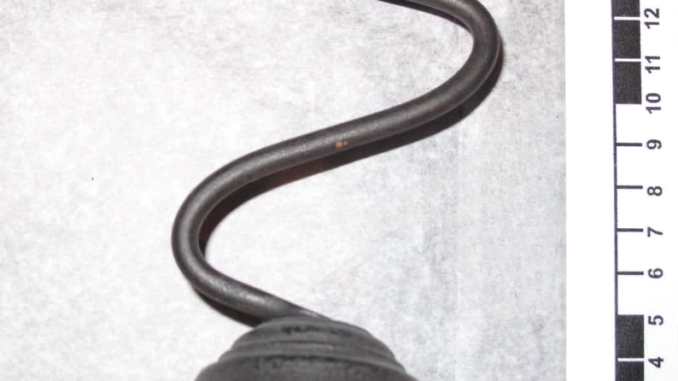
It appears too small to be an iron. Too unusual to function as a candle holder. Too formal to be classified as a toy.
The solution: a goffering iron — a specialized laundry instrument designed to create fine ruffles, frills, and small pleats.
During the 18th and 19th centuries, caps, cuffs, collars, and stylish trims were adorned with intricate ridges. A standard flatiron would flatten them completely. A goffering iron’s heated cylindrical or bullet-shaped component allowed laundry workers to press those ridges into position without damaging the entire garment. The metal was heated in a fire or on a stove, placed into its holder, and used carefully on damp or starched fabrics.
Stands ensured the hot component remained stable. Wooden handles safeguarded fingers. Households that prioritized “proper” linen often possessed multiple sizes for various frills.
As clothing fashions softened and laundry technology evolved, goffering irons faded from everyday use into flea markets and museum collections. This explains why a contemporary shopper gazes at the “egg on a stick” and feels utterly confused.
Interesting tidbit: Auckland Museum records a goffering iron that was brought to New Zealand from Scotland around 1860 — evidence that even small laundry tools accompanied migrant families.
Related instruments included fluting irons and specialized tongs for ribbons and trims. Together, they constituted a forgotten toolkit of “detail laundry” that most present-day closets no longer require — which is precisely why the goffering iron appears as a foreign object at a flea market.
Curious about another laundry-room enigma? Share your thoughts in the comments.