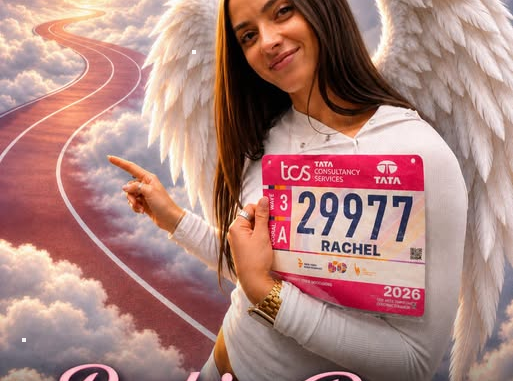
Just over two miles from the finish line, a young runner collapsed while her mother waited further along the route, unaware that the daughter she had filmed smiling earlier would not reach her.
On November 1, 2026, Rachel Apa, 24, was participating in her first New York City Marathon, with her mother, Michelle Apa, cheering her on in person and her father, Steve Apa, tracking her progress from Pennsylvania.
Before the day concluded, a joyful video would serve as a cherished final glimpse of her life, her father’s phone would fill with increasingly painful messages, and her family would confront a shocking medical explanation that was nearly impossible to reconcile with the healthy daughter they knew.
Rachel Had So Much Ahead of Her
Rachel arrived for marathon weekend with months of training behind her and a life that was already advancing rapidly. She had recently moved to Charleston, South Carolina, where she commenced an MBA at Charleston Southern University while also maintaining a full-time remote job, balancing her athletic aspirations with the demands of work and studies.
She grew up in Lewisberry Borough, Pennsylvania, and graduated from Red Land High School in 2020 before attending Bucknell University. During her time there, she played Division I field hockey for four years, scoring 17 goals throughout her collegiate career and establishing an athletic background that made taking on a marathon feel like a natural next step.
Her achievements extended well beyond sports. In a celebratory LinkedIn post, Rachel shared that she graduated with honors in May 2024, obtaining a Bachelor of Science in Business Administration, and announced that she had joined TE Connectivity as a product manager in its Aerospace, Defense, and Marine segment.
She expressed eagerness to begin her new role, gratitude for those who had supported her, and pride in all she had accomplished as a student-athlete. “Thank you to everyone who has supported me along the way!” she wrote, concluding an announcement filled with future plans.
For Steve, that enthusiasm was simply his daughter being herself. In conversation with NBC News, he remarked, “She was always on the go, always moving, whether it was school, sports, or anything else. She was always active.”
Even after college, Rachel continued to exercise regularly and had spent months training for the 26.2-mile race. However, the reason she chose this specific challenge traced back to someone who had encouraged her throughout her life.
She Carried Her Grandfather’s Memory to the Starting Line
Rachel entered the marathon as a charity runner for the Parkinson’s Foundation, joining its Parkinson’s Champions team in honor of her grandfather. He had passed away in 2022, and she had witnessed the disease gradually strip away the mobility he once enjoyed.
In her fundraising message on LinkedIn, she articulated why selecting a personally significant cause was so important. “My grandfather was one of my role models growing up,” she wrote. “He taught me to stay active, push my limits, and embrace challenges.”
Running through New York provided her a way to apply those lessons while supporting research and improved care. She hoped the funds she raised would also help bring a cure closer, encouraging people to contribute whatever they could.
Her family planned to support her along the way. Michelle and two of Rachel’s friends would travel across the five boroughs to cheer her on, while Steve remained in Lewisberry with the marathon tracking app and his phone, ready to motivate her from afar.
At Mile 9, Her Father Had Every Reason to Smile
Steve spoke with Rachel before the race, and she was enthusiastic to start. Once she was on the course, their conversation continued through short messages, allowing him to share in the experience even from another state.
At approximately 11:30 a.m., around the nine-mile mark, she sent him a familiar phrase: “Hey, go.” The words were part of a mantra they had shared for years, linked to Steve’s own days playing football at Lehigh University.
Her subsequent messages were wonderfully reassuring. “I feel amazing,” Rachel texted, crediting her pre-race carbohydrate loading, then added, “I’ve never felt this good.”
Steve’s response balanced encouragement with the caution of a father wanting his daughter to enjoy her first marathon without overexerting herself. “Great, don’t overdo it,” he replied. “First marathon. This is a learning run. Don’t push too hard.”
He also helped her locate the supporters waiting along the route, telling her Michelle would be on the left in two blocks. While he monitored her progress on a screen, her mother had the opportunity to see her daughter approaching, capturing a moment that would later become painfully precious.
Her Mother Lifted the Camera at Mile 14
By the time Rachel reached Mile 14 in Queens, she still appeared thrilled to be there. Michelle filmed her passing, and the race-day video, later shared with the media, showed Rachel smiling as she ran toward and then past her mother’s camera.
She wore a matching mint-green sports bra and running shorts, with a red-topped race bib affixed to the front of her shorts. White running shoes and socks completed her outfit, a simple band encircled her left wrist, and her light brown hair was pulled back from her face.
Rachel raised her hand toward the camera for a wave as she went by. It was an ordinary, lovely moment between a runner and the mother who had come to support her, captured before either of them could foresee how the day would conclude.
Michelle then proceeded toward Central Park, where she and Rachel’s friends would wait near Mile 25, close to the finish line. Steve continued sending words of encouragement from home, but the messages returning to his phone soon took on a very different tone.
The Replies Became Harder to Read
As Rachel continued along the course, the excitement in her messages transformed into pain. When she texted “Ugh,” Steve attempted to lift her spirits: “You beat the 18.” But her next reply, “Ow, ow,” led him to remind her to take it easy.
Around Mile 20, she sent another “Ow, ow,” according to her father’s account to NBC News. Steve kept texting as she approached Miles 21 and 22, but the replies ceased.
At Mile 23, he sent “Final stretch,” as reported by the Times. He also reminded her that finishing her first marathon was far more important than her speed: “All finish, not speed.”
Around 1:30 p.m., Steve messaged again as Rachel neared Mile 24, then noticed that her location on the tracking app had stopped moving. Ahead at Mile 25, Michelle and Rachel’s friends were still waiting to cheer her toward the finish when they observed the same concerning pause.
Michelle called Steve, who advised her to go search for their daughter. He then sent Rachel another message, informing her that her mother was walking toward her, but his phone remained silent.
There was no response. As Michelle retraced her steps along the course to find Rachel, a nearby spectator was already rushing to her side.
A Stranger Called Her Name, Then Ran Toward Her
Near Mile 24 in Central Park, close to 85th Street, hospital social worker Michaela Nicholas spotted a runner in green. Rachel’s name was visible on her bib, numbered 29977, giving Michaela a way to offer the personal encouragement spectators shouted throughout the route.
“Let’s go, Rachel, you got this!” she called out. Moments later, Rachel collapsed.
Michaela rushed over and could not find a pulse. Her fiancée called for a doctor, and three individuals took turns performing CPR, including two who identified themselves as medical professionals.
While they worked, Michaela held Rachel’s hand and assured her she was not alone. Her mother was still trying to reach her, her father was still miles away, and a woman who had just learned her name remained by her side.
New York Road Runners, the organization behind the marathon, stated that a bystander initiated CPR before its medical personnel took over and used a defibrillator. An ambulance subsequently arrived to transport Rachel to the hospital, but the timing of the response became a source of distress for Michaela.
Timestamped photographs and videos provided to the Times indicated the collapse occurred around 1:33 p.m. A red-shirted marathon medical team arrived by 1:40 p.m., and the available images showed defibrillator use between 1:41 p.m. and 1:50 p.m.
Michaela remarked that the wait for formal help felt excessively long. “It was an unacceptable amount of time,” she stated.
The organizers did not immediately respond to the newspaper’s inquiries about when their personnel arrived or first utilized the device. The Fire Department reported that its ambulance reached the scene at 1:41 p.m., with paramedics making contact with Rachel a few minutes later.
Michelle Reached the Course as the Ambulance Left
When Michelle arrived near the Mile 24 marker, she could not find her daughter and began calling out Rachel’s name. Steve reported that an emergency worker informed her that an ambulance had just taken Rachel away.
Michelle traveled in a second ambulance to Mount Sinai Hospital, where Rachel had arrived in critical condition, according to the New York Police Department. Back in Pennsylvania, Steve began his drive to New York.
Doctors worked for over six hours to save Rachel. Despite their efforts, she passed away that day.
The race that her family had anticipated would end with a celebration at the finish line concluded inside a hospital. Her parents then had to grapple with how someone so young, so accustomed to rigorous exercise, could have fallen critically ill during an event she had trained for.
The explanation Steve later shared identified a condition many would never associate with a fit 24-year-old athlete.
Her Father Shared the Explanation That Doesn’t Seem Possible
According to Steve, Rachel died from rhabdomyolysis, commonly referred to as “rhabdo,” a serious condition where damaged muscle tissue breaks down and releases substances into the bloodstream that can harm the body.
He also conveyed that explanation to ABC News on Tuesday, November 3. His disbelief was painfully evident. “It’s unfathomable,” he said. “Perfect health, perfect shape, 24 years old.”
According to Cleveland Clinic, rhabdomyolysis can occur following intense exertion, although it also has other causes. As muscle fibers break down, their contents enter the bloodstream and can damage the kidneys; the resulting disruption can also place dangerous strain on the body.
Symptoms may include:
• Unusual muscle pain
• Muscle weakness
• Muscle swelling
• Dark urine
• Some individuals may also experience nausea or reduced urination
However, it remains unclear if Rachel experienced any of these symptoms, as her complete medical records have not been disclosed.
The condition is relatively uncommon, with approximately 26,000 cases reported annually in the United States, a figure researchers believe could underestimate the true total. Competitive athletes are among those affected, indicating that physical fitness is not a guarantee against it.
Dr. Bradley Uren, an emergency medicine physician at University of Michigan Health, told the Times that he treats such cases each year, often during summer months. Prompt treatment may include intravenous fluids to assist in clearing harmful substances, while severe kidney damage might necessitate dialysis.
His assessment of Rachel’s reported decline was that the most dangerous outcome appeared to have unfolded remarkably quickly. The medical explanation provided her family with a term for what occurred, but it hardly made the loss easier to comprehend.
Researchers Had Already Examined the Risk in Marathon Runners
The link between marathon running and serious muscle breakdown had been studied long before Rachel’s passing. A research review by Priscilla M. Clarkson indicated that strenuous exercise could damage skeletal muscle cells, with most cases resolving without lasting effects.
However, more extensive damage could release significant amounts of muscle proteins, including myoglobin, into the bloodstream. Under certain circumstances, that protein could accumulate in the kidneys and contribute to acute kidney failure.
The review highlighted that acute kidney failure remains relatively rare among marathon runners. It noted that contributing factors could overlap, including dehydration, heat stress, certain medications, infections, or underlying conditions, rather than identifying one explanation that applies to all runners.
A 2026 study in Nephron examined cases following New York City Marathons held between 2017 and 2023, utilizing records from four hospitals. Researchers identified 24 runners with post-marathon rhabdomyolysis after the unusually hot 2022 race, compared to 15 across the other five marathons combined.
The cases correlated with the combined effects of temperature and humidity, and the researchers also observed a sharp increase in race-day heat compared to the preceding two weeks. All patients received intravenous fluids, and one required hemodialysis.
However, these findings pertained to earlier races and did not determine what triggered Rachel’s condition. For those who knew her, the focus remained on the young woman they had lost, as the communities she had been part of began to articulate their grief.
The Places She Had Called Home Began Mourning Her
Back in Pennsylvania, Rachel’s former school district remembered a student whose achievements continued well beyond graduation. In a statement shared by WGAL, West Shore School District remarked, “Through her many accomplishments as a student-athlete and in the years following graduation, Rachel made a lasting impact on Red Land and the District as a whole.”
Bucknell also mourned the former player who had dedicated four years to its field hockey program. “The Bucknell community grieves her loss and extends its heartfelt condolences to all who knew and loved her,” the university stated.
On Monday, November 2, New York Road Runners expressed sorrow over the death of a participant following the previous day’s race. The organization noted that the last runner to die after a medical incident at the marathon had been in 2024.
Its condolences continued in a Tuesday statement: “Our thoughts and sincere sympathies are with her family, friends, and the entire running community.” For those who had witnessed Rachel compete, studied alongside her, or worked with her, the news meant grappling with an absence where they had anticipated years of further achievements.
The Parkinson’s Foundation also honored her, recognizing the deeply personal reason Rachel had joined its team. “We admire Rachel’s determination and are thankful she was part of our team,” it stated, offering condolences to her family, loved ones, and fellow Parkinson’s Champions.
Steve and Michelle returned home to Pennsylvania, where Rachel’s two brothers were also trying to process what had occurred. A family that had spent Sunday cheering her on was left figuring out how to live without her.
She had entered the race to honor someone she loved. Now the people who loved Rachel were carrying her memory, too.
The information in this article is not intended or implied to be a substitute for professional medical advice, diagnosis or treatment. All content, including text and images contained on ondoho.com, or available through ondoho.com, is for general information purposes only. ondoho.com does not take responsibility for any action taken as a result of reading this article. Before undertaking any course of treatment, please consult with your healthcare provider.