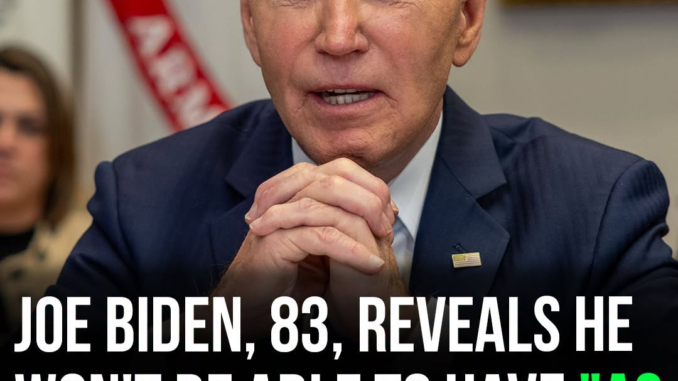
Former President Joe Biden states that prostate cancer will limit his ability to engage in as many discussions regarding his forthcoming memoir, Promise Me, America, as he had initially anticipated. In a post on X this past Sunday, he shared an inconsistent daily experience: “Some days are better than others.” He mentioned that his doctors remain optimistic about his treatment response and expressed gratitude to those who have offered prayers and kindness to him, Jill, and their family. The book, set to be released on November 17, reflects on his presidency from 2021 to 2025.
Biden revealed his diagnosis in May 2025, when his office indicated that the cancer had metastasized to his bones but was hormone-sensitive. He completed radiation therapy that October. For a family that lost Beau Biden to brain cancer in 2015, the illness carries significant emotional weight. Nonetheless, Biden concluded with his father’s words: “Champ, when you get knocked down, get up”—a lesson he shared with himself and the nation.
Biden’s statement indicates a shift in his expectations regarding what he can do around the book’s launch. A memoir often involves a lengthy series of interviews and events where an author discusses the decisions and memories that appear in the book. His message sets a more constrained expectation for that public schedule. He noted that he had hoped to participate in more of those discussions than his health currently permits.
His mention of better days and tougher ones also clarifies why the number of appearances is a personal choice. An event requires preparation and sustained focus, along with the time spent in front of an audience. A public announcement can set a release date for a book, but it cannot guarantee predictability for the author during its release period.
The linked article juxtaposes Biden’s new statement with his previous account of the diagnosis and treatment. These are distinct pieces of information. The diagnosis announcement detailed what his office had discovered about the cancer. The more recent message conveys how he is navigating daily life and what he believes he can manage. His appreciation for his doctors and those who have supported his family are included in that same update.
The memoir reflects on his presidency. For readers, the published book allows Biden to recount events in chronological order and explain his understanding of them at the time. An interview would provide a different context, with an interviewer able to inquire about decisions or follow up on specific memories. The alteration in his public plans suggests there may be fewer of those discussions alongside the text he has prepared.
The statement also acknowledges his family. Biden expresses gratitude to those who have kept Jill and the rest of the family in their thoughts alongside him. The article recalls Beau Biden’s passing because that loss is part of the family narrative against which Joe Biden is now discussing his own health struggles. The words attributed to his father provide a personal conclusion. They link his remarks about reducing engagements with the advice he remembers receiving long before either the memoir or this diagnosis.