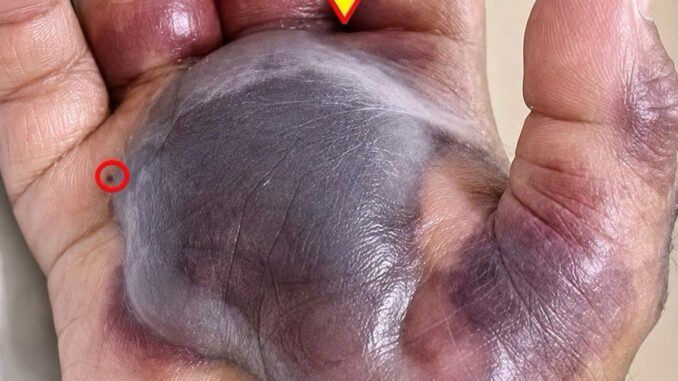
I nearly lost my finger to a rose thorn. It wasn’t a dramatic incident or a severe, jagged cut that sent me to the emergency room; it was merely a small, harmless scratch I hardly noticed while tending to my garden. I dismissed it, placed a simple bandage on it, and carried on with my life, blissfully unaware that a quiet, unseen threat was already infiltrating my bloodstream. Three days later, I found myself gazing at a frightening, bright red streak traveling up my arm, indicating the path of a deadly infection that brought me to the brink of a medical disaster.
We often approach skin injuries with a dangerously casual attitude. A paper cut from a bill, a minor scrape from a kitchen accident, or a bothersome mosquito bite are regarded as insignificant nuisances. We tend to believe our bodies are invulnerable, that the skin serves as an impenetrable barrier that magically heals itself. However, the truth is much more fragile. That tiny break in your skin is a wide-open entry point for aggressive bacteria to invade your body, multiply in the warmth of your tissues, and potentially trigger a systemic, life-threatening infection before you even realize you’re at risk.
My alarming experience with cellulitis—a serious bacterial skin infection—was a harsh wake-up call. The initial redness surrounding the thorn scratch appeared to be normal healing, but as it began to extend upward, transforming into a throbbing, heat-emitting streak, the seriousness of my situation became undeniable. Had I waited another twenty-four hours to seek medical attention, the result could have been drastically different. I was fortunate to catch it just as it was spiraling out of control, necessitating immediate, aggressive antibiotic treatment to halt the spread. That experience shattered my complacency. I learned the hard way that when it comes to the integrity of our skin, ignorance is not bliss—it is a significant risk.
While most everyday scrapes, cuts, and insect bites heal without incident, perceiving them as inherently harmless is a grave error in judgment. Your skin is the primary frontline of your body’s defense system against the invasion of viruses, bacteria, and other environmental pathogens. When that barrier is breached, the clock starts ticking. The infection process is disturbingly efficient: pathogens enter through the breach, thrive in the warm, moist environment beneath the surface, and trigger a massive immune response that manifests as inflammation. If your immune system becomes overwhelmed or is compromised by other health factors, that localized issue can swiftly escalate into a systemic crisis.
Certain individuals face a significantly higher risk of these complications. Older adults often contend with thinner, less elastic skin and a slower, less efficient immune response. Individuals managing diabetes frequently experience compromised circulation and delayed wound healing, making them prime candidates for stubborn infections. Those with pre-existing immune system vulnerabilities, whether due to chronic illnesses, certain medications like steroids or chemotherapy, or underlying skin conditions, must be exceptionally cautious. For these groups, a “minor” cut is never truly minor; it is a serious medical event that requires immediate attention.
So, how can you tell the difference between a typical healing process and an infection that necessitates a doctor’s intervention? You need to be aware of the warning signs. First, look for spreading redness. While some initial redness is normal, an expanding border or, even more alarmingly, red streaks radiating away from the wound are critical indicators of a spreading infection. Second, watch for worsening pain. If the discomfort intensifies rather than diminishes, or if it evolves into a deep, throbbing ache that seems disproportionate to the size of the injury, you should be concerned. Third, monitor swelling that increases instead of receding, often accompanied by skin that feels unusually tight or distorted.
Additionally, pay close attention to heat. An infected area will often feel distinctly warmer than the surrounding, unharmed skin, and this warmth may persist or intensify over time. Do not overlook systemic symptoms; if you develop a fever of 100.4°F or higher, experience unexpected chills, sudden fatigue, or a general sense of feeling unwell, the infection may have already begun spreading beyond the local site. Moreover, observe the drainage. Clear or slightly yellowish fluid is typical, but thick, cloudy, foul-smelling pus is a clear sign of bacterial involvement. Finally, the most common indicator is simple persistence: if the wound shows no improvement after two or three days, or if it seems to be getting deeper or larger, you must prioritize professional medical evaluation over self-treatment.
If you identify these symptoms, immediate action is crucial. Do not adopt a “wait and see” approach. Contact your primary care physician right away to describe your observations and seek advice. To monitor the progression of the infection, use a pen to draw a line around the edge of the redness; this visual reference allows you to objectively assess whether it is expanding over the next several hours. Keep the area clean and dry by gently washing it with mild soap and water, and always cover it with a fresh, sterile bandage. Importantly, do not attempt to “pop” or drain the area yourself, as this often introduces new bacteria and pushes the infection deeper into your tissue. While over-the-counter pain relievers can alleviate discomfort, they do not address the underlying infection, so they should never replace professional care.
Ultimately, we must change our perspective on wound care. For minor abrasions, effective management is straightforward: gently clean the area, apply a thin layer of antibiotic ointment, and protect it with a clean bandage that you change daily. When dealing with insect bites, resist the urge to scratch, as the trauma to the skin is exactly how bacteria gain entry. Use cold compresses and anti-itch creams to alleviate the symptoms. Maintain a standard of hygiene that includes washing your hands before touching any wound and using clean tools if you must deal with splinters or nail care.
Trust your instincts. If something feels off, it likely is. Your health is not worth risking misplaced optimism. A few moments of vigilance can save you from a potentially life-altering experience. The next time you sustain a cut, no matter how small, treat it with the care it deserves—because beneath the surface, your body is engaged in a battle you cannot afford to lose.