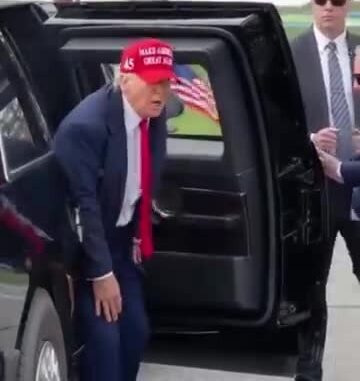
A wave of shock swept through social media today as unsettling allegations emerged claiming that former U.S. President Donald Trump had been “shot again” in Washington, D.C. The sensational phrasing rapidly circulated across various platforms, inciting panic, speculation, and numerous reactions from both supporters and detractors. However, within a few hours, the reality behind the viral assertion became more evident—and considerably less dramatic than the rumors implied. Despite the fervor of online discussions, no reliable news outlet, law enforcement agency, Secret Service statement, or hospital report has verified any recent attack on Donald Trump in Washington or elsewhere.
Federal authorities also remain quiet on any such crisis—strongly suggesting that the narrative is not grounded in actual events. Much of the confusion seems to arise from repurposed footage, misleading captions, and sensational posts aimed at eliciting fear and engagement rather than providing accurate information.
Many of the viral messages originated from unverified social media accounts and private groups, where exaggerated language is frequently employed without substantiation.
In today’s digital landscape, where misinformation can spread more swiftly than official communications, such false alarms are becoming more prevalent. It is crucial to differentiate this rumor from the very real and well-documented assassination attempt that took place in 2024 at a rally in Butler, Pennsylvania, where Trump was injured but survived.
That event resulted in extensive security reforms, federal inquiries, and an ongoing criminal case that remains in the public domain. Since then, security measures around the former president have been intensified, with numerous thwarted threats reported—but no verified new shooting incident as claimed in today’s viral assertions.
Security Concerns and Misinformation Risks
Security specialists caution that erroneous reports like these can lead to significant repercussions.
They can incite unwarranted panic, inundate emergency services with calls, mislead the public, and diminish trust in authentic news reporting. They also place additional pressure on public safety agencies that must respond repeatedly to rumors instead of genuine emergencies. Political analysts observe that prominent figures like Trump are continual targets for misinformation, especially during election cycles and times of national strain.
Sensational headlines are often designed to provoke emotional responses, prompting users to share before confirming the facts. In many instances, the intention is not to inform, but to drive clicks, outrage, or division. For the moment, all confirmed information indicates that Donald Trump has not been shot again, in Washington or elsewhere.
Officials encourage the public to depend solely on reputable news sources and verified government announcements for updates concerning national security or public safety.
As this situation illustrates, not everything labeled “breaking news” online is authentic. In an era where a single unverified post can reach millions within minutes, vigilance, verification, and patience remain the most dependable safeguards against panic and deception.
The November 12 shooting in Washington reported by the Associated Press occurred near Logan Circle. Coverage of that incident details a police response in the area and identifies it as a distinct event. An image of officers in Washington can therefore be authentic while the social media description attached to it refers to a different, unsupported assertion. Readers seeking information about the actual police response can refer to the AP report, which provides the location and date.