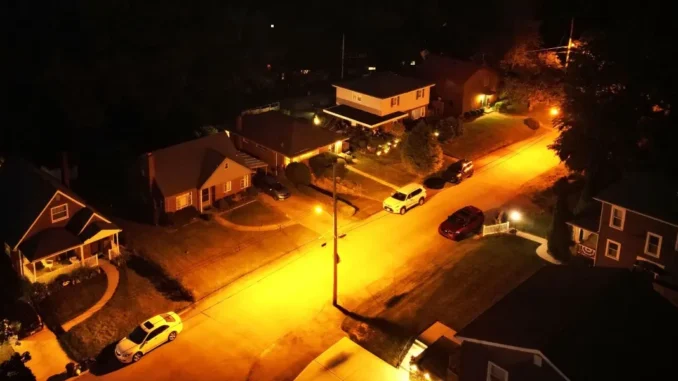
My neighbor splashed yellow paint on my SUV during the night after I had her vehicle towed. By breakfast, police were already inspecting her garage, but the paint she applied revealed something much more serious than mere vandalism.
The first thing that caught my eye was the hue: vibrant yellow.
The kind of yellow that appeared almost surreal against my SUV's white finish.
At 2:13 that morning, I had been stirred awake by a metallic noise outside.
I remember glancing at the clock, feeling annoyed before I felt scared.
Then I peered through the bedroom window.
Linda was sprinting across my lawn.
She vanished toward her house before I could even comprehend what I was witnessing.
I quickly put on a robe and headed downstairs.
An empty bucket was beside my car.
Yellow paint covered the hood, windshield, driver’s side door, and part of the rear quarter panel.
For a few moments, I just stood there.
Then I began to laugh because the whole situation was so ridiculous that my mind didn’t know how else to react.
Linda and I had been in a dispute over my driveway for six months.
The area beside my garage was narrow, but it was mine.
It was clearly on my property, and I used it whenever I needed to park my SUV outside instead of inside the garage.
Linda had decided, for reasons known only to her, that the strip was "essentially shared."
She would park there when guests arrived.
She allowed her adult son, Tyler, to leave his truck there.
One time, I came home to find a landscaper she had hired using the space to unload equipment.
Initially, I asked politely.
"Linda, could you please move your car?"
She would sigh. "You're not even using the garage side."
"That's not the point."
"Then what is the point?"
"It's my driveway."
That never seemed to satisfy her.
Eventually, I erected a small sign near the property line: "PRIVATE DRIVEWAY."
She laughed upon seeing it. "You are unbelievable."
"I've asked you six times."
"You have plenty of room."
"So do you."
Her driveway was larger than mine.
That was the part I could never comprehend.
This wasn't about space.
It was about Linda deciding she could do something because no one had stopped her yet.
Last week, I finally stopped asking.
I returned home from work and found her SUV parked beside my garage again. Linda was not home.
I called a towing service. Forty minutes later, her SUV was gone.
She returned about an hour later.
I heard her before I saw her.
"What did you do?"
I stepped outside.
"I had it towed."
Her face turned crimson.
"You had my car towed?"
"It was on my property."
"You could have called me."
"I have called you."
"I mean today."
"I didn’t know where you were."
She pointed at me. "You'll regret this."
I remember thinking the threat sounded absurd.
Then, six nights later, I woke to the clang, and there she was.
Running away from my damaged SUV.
I had no camera facing the driveway and no witnesses.
Nothing except what I had seen from the window.
I took photographs.
Many of them.
I also captured an image of the bucket.
Then I returned inside.
I intended to call the police first thing in the morning because I knew a vandalism report at 2:30 a.m. might not receive immediate attention unless someone was still outside.
By 7:20 a.m., I didn’t have to call anyone.
Someone knocked on my front door.
I assumed Linda had come over to deny everything in person.
Instead, when I opened the door, three police cars were parked outside her house.
Two officers were moving in and out of her garage.
Linda stood barefoot on her lawn in pink pajamas, shouting.
"I didn't do anything!"
I stepped onto my porch.
The officer who had knocked noticed me.
He approached my car.
"Ma'am, is the damaged vehicle yours?"
"Yes."
He examined the yellow paint. "Don't wash it."
"I wasn’t planning to."
"Good."
"Why are the police searching Linda's house?"
He glanced toward her garage.
"That's a separate matter."
Before I could ask anything else, another officer emerged holding a half-empty paint can.
It was the same bright yellow color.
I nearly laughed. "Well, I guess that’s my proof."
Neither officer smiled.
One of them looked back at my SUV.
Then at the paint can.
Then back at the SUV.
"This isn't about your car," he said.
I frowned. "What isn't?"
He disregarded my question.
Meanwhile, the older officer pointed toward the rear.
"When did you purchase it?"
"Three years ago."
"Was it new?"
"No, it was used."
"Where did you acquire it?"
"A dealership on Route 8."
He circled the vehicle.
I followed.
Near the rear bumper, something in the yellow mixture had harmed part of the white finish.
I hadn’t noticed it in the dark.
There was another layer beneath.
Not primer. Older white paint.
The officer crouched.
Then he leaned closer.
"What is it?" I asked.
He remained silent.
There were faint markings under the newer coating.
Letters and numbers.
At first, I thought they were random.
The officer took out a small cloth and carefully wiped an edge.
More text became discernible.
Two letters followed by a number.
Then what appeared to be part of another marking near an old repair line.
The officer’s entire demeanor shifted.
He touched the radio at his shoulder.
"Get her away from the vehicle."
My stomach sank. "What?"
The younger officer looked at me.
"Ma'am, step back, please."
"Why?"
The older officer stood. "Just step away."
I complied.
He spoke softly into his radio.
A few words and a number.
Then something about a cold case.
I felt lightheaded. "What is happening?"
He looked at me. "What’s your name?"
"Claire."
"Claire, have you ever had bodywork done on this vehicle?"
"No."
"Any repainting?"
"Not since I’ve owned it."
"You mentioned you bought it used."
"Yes."
"Do you still have the purchase documents?"
"I believe so."
"Don’t touch the car. Don’t move it."
"Why?"
He hesitated.
Then he stated, "This vehicle may be linked to an old investigation."
"What kind of investigation?"
He glanced toward the SUV.
"Possibly an old fatal hit-and-run I've been working on."
Everything inside me turned cold. "What?"
He asked me to go inside and locate the paperwork.
My hands trembled as I rummaged through the filing cabinet in the kitchen.
I found the bill of sale, dealership paperwork, financing documents, and a copy of the title.
When I returned outside, there were more officers.
Linda had ceased her yelling.
Now she stood near her porch with her arms crossed, looking frightened.
I handed the folder over.
The older officer introduced himself as Detective Harris.
He flipped through the papers.
"Is this dealership still operational?"
"Yes."
He nodded. "I’m going to explain what I can."
I waited.
"Six years ago, a nine-year-old boy named Caleb was struck and killed while crossing a residential street about 15 miles from here."
I covered my mouth.
"The driver didn’t stop."
He nodded. "We had traffic-camera footage from two intersections away. Poor quality. It was nighttime."
He glanced back at my SUV. "But we could discern a white SUV of this general model, along with part of a distinctive fleet marking. Same make."
I felt nauseous. "Are you saying this is the car?"
"I'm saying it may be."
"Why?"
Harris pointed toward the exposed markings.
"After the collision, the vehicle would have had damage on the right rear side. In the footage, there was also a partial commercial fleet marking on the back quarter panel."
I stared at the scratches.
"The letters?"
"Perhaps."
He continued. "I worked the case."
That explained his expression.
He didn’t look excited.
He looked haunted.
"We enhanced every frame we could. We circulated images to repair shops. Dealers and salvage yards. Nothing."
"Why not?"
"We don’t know yet."
He glanced down at the old white layer.
"But if someone repainted the vehicle quickly and altered paperwork, that could account for why we never found it."
I gazed at my SUV.
I had driven it to work.
To grocery stores and on vacations.
I had washed it, vacuumed it, and changed tires.
Complained about the gas mileage.
And all that time, it might have been evidence in a child's death.
I felt sick.
"Am I in trouble?"
Harris looked at me immediately.
"Not based on what you've shared."
"I bought it from a dealership."
"We'll verify that."
"Please do."
He nodded. "We will."
Then I recalled Linda. "What are you doing at her house?"
Harris glanced over. "Her son was arrested last night."
"Tyler?"
"Yes."
"For what?"
He paused, then responded because it would become public anyway.
"Stolen property."
That surprised me less than it probably should have.
Tyler worked at a large commercial construction site.
According to Harris, the company had reported high-value metals missing over several months.
Copper, specialty wiring, and metal fittings.
Other materials worth thousands.
Investigators had been monitoring Tyler.
He was arrested after attempting to sell part of the stolen material.
Then he confessed.
He told police the rest was stored in Linda’s garage.
That was the reason officers were there before I reported the paint.
They had a search warrant.
While searching the garage, they discovered the stolen materials.
And the yellow paint.
The same paint now covering my SUV.
"So she really poured paint on my car?" I asked.
Harris looked at the can.
"We'll test it, but yes, it seems likely."
Linda was arrested later that morning on the vandalism charge.
Tyler was already in custody.
My SUV was towed too.
Not because I had done anything.
Because it was now evidence.
That was the strangest aspect.
By lunchtime, my driveway was vacant.
Linda's house was silent.
And I was seated at my kitchen table trying to comprehend how a petty dispute over parking had escalated to this.
The following weeks were exhausting.
Detectives interviewed me twice.
They contacted the dealership.
The dealership owner initially insisted there was nothing out of the ordinary about the SUV.
Then investigators pulled old sales records.
The vehicle had entered the dealership shortly after the hit-and-run, a few years before I purchased it.
The seller had accepted far less than market value for a quick cash sale.
According to the paperwork, the dealership had listed the vehicle as having "cosmetic body damage."
That cosmetic damage included repairs and a full repaint on part of the rear quarter.
Harris called me one afternoon.
"We found the previous owner."
I sat down. "And?"
"We're bringing him in."
The man's name was Darren.
He had owned the SUV six years earlier.
He also had connections to a contracting company that used fleet markings on several vehicles.
The partial letters beneath my paint matched that company.
The repair marks matched the area investigators believed had struck Caleb.
Then came the part nobody had managed to prove before.
After an intense interrogation, Darren confessed.
He had been driving that night.
He said Caleb ran into the road.
When he hit him, he panicked.
He kept going.
He told himself he would call the police later.
He never did.
Instead, he hid the SUV at a friend's property for several weeks.
Then he took it to a dealer known for acquiring vehicles cheaply without asking many questions.
The dealer performed shoddy repairs and repainted the panel.
The dealer cleaned up the paperwork enough to make the vehicle appear ordinary.
Years later, I bought it.
When Harris informed me, I cried.
I had never met Caleb.
I didn’t know his family.
But something about it broke me anyway.
A nine-year-old child died.
His parents spent six years not knowing who had struck him.
And the answer had been parked beside my garage.
Harris told me Caleb's parents had been notified before Darren's arrest became public.
"They finally know," he said.
I asked, "Does it help?"
He was quiet. "Not enough."
I understood.
Nothing would bring their son back.
But not knowing had been its own kind of cruelty.
At least now there was a name.
There would be charges.
There would be a courtroom.
There would be something resembling accountability.
The dealership became part of a separate investigation.
Their records were chaotic.
The owner claimed he didn’t know Darren had been involved in a fatal collision.
Maybe that was true.
Maybe not.
But investigators discovered enough irregularities in how the title and repair history were handled that the dealership faced serious repercussions.
Since I had purchased the SUV in good faith and investigators found significant issues with its sale history, my lawyer assisted me in pursuing compensation from the dealership.
It took time.
Eventually, after the case against the dealership progressed through the legal system, I was awarded compensation.
The SUV itself never returned.
It remained as evidence for months and was later dealt with as part of the case.
Strangely, I didn’t want it back.
I couldn’t envision sitting behind the wheel again.
As for Linda, the paint match confirmed precisely what was expected.
She pleaded guilty to vandalism and received fines, restitution, and community service.
She splashed paint on my car because she was furious that I had her SUV towed.
That paint stripped away the newer finish.
That unveiled the original markings.
Those markings provided investigators with a new lead in a cold case.
And now a family finally knew who had taken their child’s life.
Tyler faced harsher consequences.
The stolen construction materials were worth a significant amount of money.
He ended up accepting a plea deal and serving time.
Linda blamed everyone for that.
The police, his employer, and his "bad friends."
At one point, she even seemed to blame me.
I’m still unsure how I fit into that equation.
She never parked in my driveway again.
Mostly because after everything, she barely spoke to me.
That was fine.
About eight months later, I encountered Detective Harris at a grocery store.
He recognized me first. "Claire."
"Detective."
We stood awkwardly beside a display of canned soup.
I asked the question I had dreaded asking.
"How is Caleb's family?"
He nodded slowly.
"They're doing as well as people can."
"Was there a conviction?"
"Yes."
He told me Darren had accepted responsibility as part of a plea.
There had been a sentencing hearing.
Caleb's parents spoke.
I swallowed. "I hope it helped."
Harris looked at me. "His mother said something afterward."
"What?"
"She said she could finally stop looking at every white SUV on the road."
That sentence lingered with me.
I contemplated all the years she must have spent doing exactly that.
Watching traffic. Wondering.
Searching every vehicle for some hint.
I returned home and cried again.
Eventually, I purchased another car.
Nothing extravagant.
A gray sedan with good mileage.
It was dependable.
The salesman kept attempting to upgrade me to a better vehicle.
One with leather seats, a larger engine, and a premium package.
I kept replying, "No, thank you."
I wanted ordinary.
Ordinary felt fantastic.
I still reside in the same house.
Linda still lives next door.
Our interactions are now mostly limited to nodding if we happen to see each other outside.
My driveway remains entirely mine.
Sometimes I reflect on how absurd the chain of events was.
If Linda hadn't parked in my driveway, I wouldn’t have called the towing company.
If I hadn’t called the towing company, she might not have become angry enough to vandalize my SUV.
If she had used something other than that paint, perhaps the old layer would never have dissolved.
Maybe the fleet marking would still be concealed.
Maybe Darren would still be living with the belief he had evaded justice.
None of that justifies what Linda did.
It was petty, destructive, and illegal.
But consequences don’t always stop where people expect them to.
Linda thought she was ruining my week.
Instead, she exposed her own crime, drew police attention to evidence linked to an old investigation, and inadvertently opened the door to solving a child's death that had remained unsolved for six years.
I lost a car.
The dealership had to reimburse me.
Linda received community service.
Tyler went to jail.
Darren finally confronted the law.
And Caleb's parents got an answer they should have received years prior.
All because of a bucket of yellow paint.
I still can’t quite believe it.
If you were the narrator, how would you feel knowing that something done to harm you ended up aiding another family in finally achieving justice?
Here's another story you might enjoy if you liked this one: At 72, I thought the worst thing my new neighbor could do was turn my garden into her personal dumping ground. Then she panicked over one small thing I left on her porch, and I realized the trash was only part of the story.
amoMedia.com does not support or promote any kind of violence, self-harm, or abusive behavior. We raise awareness about these issues to help potential victims seek professional counseling and prevent anyone from getting hurt. amoMedia.com speaks out against the above mentioned and amoMedia.com advocates for a healthy discussion about the instances of violence, abuse, sexual misconduct, animal cruelty, abuse etc. that benefits the victims. We also encourage everyone to report any crime incident they witness as soon as possible.