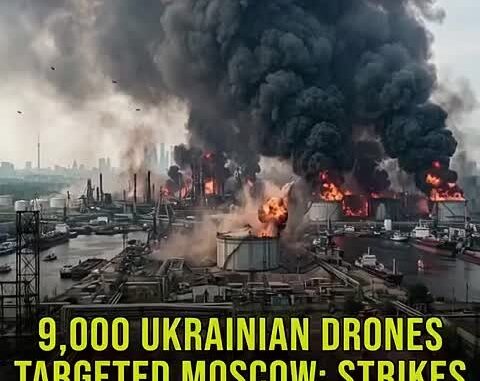
Moscow Mayor Sergei Sobyanin announced that 8,670 Ukrainian drones were directed towards the Moscow region from 8:30 a.m. on August 1 to 8:30 a.m. on September 1, 2026. The reported figure pertains to a one-month timeframe. This count originates from the mayor’s office and should be interpreted with consideration of both its duration and geographic context.
The Facebook video rounds this figure to 9,000 and indicates that the drones were targeting Moscow. While a rounded headline can effectively communicate the magnitude of a claim, it may also obscure two key distinctions in the underlying narrative. The first distinction is between the capital and its neighboring area. The second is between the number reported as heading towards that area and the number claimed to have reached the city.
As per the linked article, Sobyanin credited the interception of the majority of drones to Russian air defense. The article notes that his office provided a lower count for drones intercepted while approaching Moscow itself. These numbers originate from the same official report. Considering the smaller count as part of the larger total differs from treating the statements as two separate sources.
Figures released by governments during wartime can be challenging for journalists to verify thoroughly. A local journalist may confirm damage at a specific address, while a government may assert monitoring of activity over a more extensive area. The two accounts can pertain to different phases of the same event. An independently verified report of a specific incident would not necessarily confirm a monthly total.
Recent reporting highlighted restrictions at airports during some incidents in August. This illustrates how the reported activities impacted travelers entering and leaving the region. Airport restrictions may be issued as a precaution, so their existence cannot be used to determine how many drones reached the capital or to assess damage at a specific site.
The video also references strikes on oil and port facilities, which necessitate their own dates and sources. Footage depicting smoke or fire can portray the broader conflict, but the visuals alone do not clarify which facility was impacted or if it was part of the same series of events mentioned in the mayor’s statement. A report focused on an individual site should clarify what transpired there and who verified it.
Keeping the date range in mind enhances the understanding of the claim. A viewer who only sees a brief video might mistakenly think the number pertains to a single attack. The statement attributed to Sobyanin instead aggregates reported activity throughout August. It does not confirm that every drone was aimed at central Moscow, reached a target, or inflicted damage.
The supported description is therefore confined to what was publicly stated. Moscow’s mayor reported 8,670 drones directed toward the region within a specified month. The broader impression of scale and timing from the video should be cross-verified against that statement before the count is reiterated.
The timeframe is significant when comparing reports.