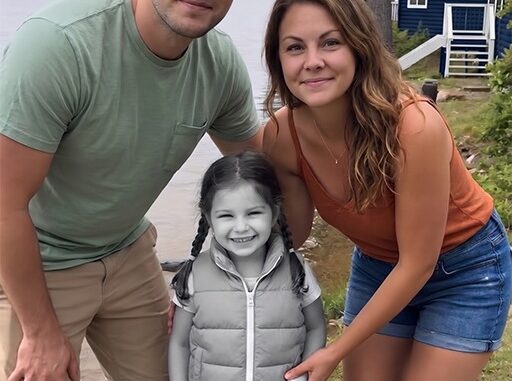
Four years ago, my 5-year-old daughter disappeared during a family camping trip. Despite extensive searches and investigations, she was never found. My marriage crumbled, my family was shattered, and my 6-year-old nephew became mute after that night.
Then, on what would have been my daughter’s 9th birthday, my nephew finally spoke up.
“Aunt Miriam,” he murmured, shaking. “I know what happened to Maisie. She didn’t just get lost.”
What he revealed next altered everything.
Before that dreadful summer, my husband, Callum, and I enjoyed a happy life. Our daughter, Maisie, was a spirited, adventurous girl with curly brown hair and striking green eyes. She adored animals, collected unique rocks, and believed every excursion into the woods was a chance to find something magical.
That summer, we planned a family getaway at a lakeside campground roughly 3 hours from our home.
Callum’s older brother, Blake, came with his wife, Corinne, and their two sons. His younger brother, Patrick, brought his wife, Jade, and their children. My sister, Beth, joined us with her 6-year-old son, Eli.
Maisie and Eli were inseparable. She was bold and inquisitive, while he was timid and careful. Wherever Maisie went, Eli generally trailed behind.
The first two days were delightful. We swam in the lake, explored hiking trails, and roasted marshmallows around the fire.
On our third evening, Maisie curled up on my lap and asked, “Mommy, can we come back next summer?”
“Absolutely, sweetheart.”
“Promise?”
I kissed her forehead. “I promise.”
I never anticipated how much that promise would haunt me.
Around 8:30 p.m., the adults were gathered around the firepit while the kids played nearby with their flashlights. Most of the older children eventually retreated to their cabins, but Maisie and Eli continued pretending to be explorers.
After some time, Eli emerged near the firepit, pale and visibly shaken.
“Where’s Maisie?” I inquired.
He stared at me, silent.
I called her name, assuming she was just hiding.
But she never responded.
Within minutes, everyone was searching. We checked the cabins, bathrooms, playground, and nearby trails. Callum dashed toward the lake while the others combed through the woods.
When we couldn’t locate her, we contacted the police.
Search teams arrived that night. Officers, volunteers, and rescue dogs scoured the area for days. Divers searched the lake, and investigators interviewed everyone at the campground.
One search dog picked up Maisie’s scent leading to a narrow service road behind the cabins, but the trail ended there.
Police considered the possibility that someone had abducted her, but there were no witnesses willing or able to identify a suspect, nor was there useful surveillance footage.
Eventually, the investigation stagnated.
I refused to lose hope. I pursued every lead, contacted investigators regularly, and traveled to unfamiliar towns whenever someone reported seeing a girl resembling Maisie.
Callum dealt with his grief differently. He became withdrawn, stopped discussing our daughter, and spent most of his time at work.
We began to argue incessantly.
Fourteen months after Maisie vanished, we divorced.
Our families endeavored to support us through it all. Corinne was particularly helpful. She brought me meals, assisted with household tasks, and frequently called to remind me not to lose hope.
At times, she would sit beside me while I cried and whisper, “Miracles happen, Miriam. Maybe Maisie will return someday.”
I believed she was sincerely trying to provide comfort.
Meanwhile, Eli had transformed entirely.
After Maisie’s disappearance, he nearly stopped speaking. Doctors explained that the trauma had left him with severe anxiety and a significant difficulty in verbal communication.
With therapy, he gradually learned to express himself through gestures, drawings, and brief written messages. However, whenever anyone mentioned the camping trip, he became terrified and shut down.
We assumed he was traumatized by losing his closest friend.
No one suspected he was harboring a secret.
Four years went by.
Each year, I commemorated Maisie’s birthday with a small family gathering. I couldn’t bear to stop celebrating the day she was born, even though I had no idea where she was.
On her 9th birthday, our relatives gathered at my home.
Eli, now 10, barely touched his meal. He kept stealing glances at Corinne, who was sitting next to Callum, softly talking about how much she missed Maisie.
Later that evening, I went into the kitchen to clean some dishes.
Eli trailed behind me.
He stood in the doorway, his hands shaking.
“Are you okay, sweetheart?” I asked.
He glanced toward the living room before stepping closer.
Then, in a voice I hadn’t heard in four years, he whispered, “Aunt Miriam?”
I froze.
“Eli?”
Tears welled in his eyes.
“I saw what happened to Maisie.”
My heart began to race.
“What do you mean?”
“She didn’t get lost,” he whispered. “Aunt Corinne took her.”
I stared at him.
For a moment, I couldn’t comprehend what he was saying.
“Corinne?”
He nodded.
“She told Maisie there was a puppy in the woods. But there wasn’t. There was a car waiting.”
I knelt beside him.
“Sweetheart, are you certain?”
“I followed them. A woman put Maisie in the car. Maisie was crying and wanted to come back.”
His voice cracked.
“Then Aunt Corinne saw me. She said if I told anyone, Maisie would get hurt. She said I couldn’t tell anyone, not even by writing it down.”
He started sobbing.
“I thought being quiet would keep her safe.”
I pulled him into my embrace, struggling to hold back my own tears.
I immediately called Beth into the kitchen. When Eli spoke to his mother, she broke down in tears. She hadn’t heard him say more than a few isolated words in years.
We kept him away from the other guests and contacted the detective assigned to Maisie’s case.
He instructed us not to confront Corinne and arranged for Eli to speak with a specially trained child interviewer.
The following morning, Eli recounted what he remembered.
He explained that Corinne had approached him and Maisie while they were playing and offered to show Maisie a lost puppy.
Eli wanted to join them, but Corinne told him to stay behind.
He followed anyway.
From behind a tree, he watched Corinne lead Maisie toward the service road, where a pale green SUV was parked.
A woman stepped out and took Maisie into the vehicle.
When Maisie realized she wasn’t returning to the campsite, she began to cry.
Then Corinne noticed Eli watching and threatened him into silence.
He was only 6. He believed every word.
For years, he had been terrified that revealing what he witnessed would put Maisie in danger. But through therapy, he slowly began to understand that he wasn’t to blame for what happened.
Seeing Corinne pretending to grieve at Maisie’s birthday gathering finally compelled him to speak.
Investigators promptly reopened the case.
Corinne denied everything, asserting that Eli had mixed up his memories.
But detectives uncovered something suspicious.
Corinne had a younger sister named Daphne, who had lost her 4-year-old daughter to an illness two years before Maisie went missing.
Following her daughter’s death, Daphne became increasingly withdrawn and fixated on the idea of raising another child. She had met Maisie at a prior family gathering and repeatedly remarked on how much the little girl resembled her own daughter.
Corinne had always claimed she and Daphne were estranged.
However, investigators found evidence that they had remained in consistent contact.
They also discovered that Daphne had owned a pale green SUV at the time of Maisie’s disappearance.
Blake, Corinne’s husband, recalled that she had left the campfire for about 15 minutes that evening, claiming she needed something from their cabin. He had never questioned her explanation.
Investigators began tracking Daphne’s movements after the camping trip.
They found that she had changed residences several times during the first year after Maisie vanished before settling on a secluded property in another county.
Corinne had been sending her money regularly.
After nearly three weeks of investigation, detectives located Daphne’s current home.
Neighbors reported that a young girl lived with her.
The child was known as Lucy. Daphne claimed she was her daughter and homeschooled her due to health issues.
The girl rarely left the property.
One neighbor had taken a photograph at a small community gathering. When investigators examined it, they noticed that the child bore a striking resemblance to an age-progressed image of Maisie.
They gathered additional evidence and obtained the necessary warrants.
Police then entered Daphne’s property.
Inside, they found a 9-year-old girl with curly brown hair and green eyes.
My daughter.
Maisie was alive.
When the detective called, I could barely grasp his words.
“Miriam, we believe we’ve found Maisie. She’s safe.”
I dropped the phone and collapsed onto the floor, weeping.
After medical evaluations and identity verification, professionals arranged a carefully supervised reunion.
The next day, I entered a quiet room where a little girl sat clutching a stuffed rabbit.
She was taller and thinner than the child I’d lost.
But I recognized her instantly.
“Maisie?” I whispered.
She looked up.
For a moment, she simply gazed at me.
Then she asked, “Why didn’t you come get me?”
My heart shattered.
I knelt in front of her.
“Oh, sweetheart. I’ve been searching for you every single day.”
Her eyes brimmed with tears.
“Daphne said you didn’t want me anymore. She told me you gave me away.”
“No, darling. That’s not true. I never stopped loving you.”
She hesitated.
Then she asked, “Do you still have my pink blanket?”
I started crying.
“Of course. It’s still on your bed.”
She reached for me, and I wrapped my arms around her.
“Mommy,” she whispered.
It was the most beautiful word I’d ever heard.
In the following months, investigators uncovered the full truth.
After losing her daughter, Daphne had become obsessed with the notion of replacing her. She convinced herself that raising Maisie would give her another chance at motherhood.
Corinne was aware of Daphne’s fixation.
Instead of seeking help for her sister, she encouraged the scheme and eventually suggested using our family camping trip as an opportunity.
She knew the layout of the campground, including the service road hidden behind the cabins.
On the night Maisie disappeared, Corinne lured her away with a story about a puppy and delivered her to Daphne.
Afterward, she returned to the campsite and joined the search as if nothing had occurred.
For four years, she helped conceal Maisie’s whereabouts while pretending to comfort me.
Daphne had moved frequently after the kidnapping, ultimately settling in a remote location. She kept Maisie away from regular schools, limited her interactions with outsiders, and taught her to fear anyone who might recognize her.
She renamed her Lucy and told her that her real parents had abandoned her.
Initially, Daphne tried to make Maisie call her Mom. But Maisie remembered me and refused, continuing to call her Daphne.
As the years rolled on, Daphne’s constant lies made Maisie question her own memories.
Yet she never entirely forgot us.
She remembered her pink blanket, our dog Murphy, the pancakes I made on Sundays, and Callum carrying her on his shoulders.
Most painfully, she recalled my promise to take her camping again.
Corinne and Daphne were prosecuted for their roles in the kidnapping and confinement. Both eventually pleaded guilty and received prison sentences.
Blake had no knowledge of his wife’s involvement. The revelation devastated him, and he separated from Corinne.
Callum was equally heartbroken.
He repeatedly apologized for having lost hope, though I reminded him that neither of us could have known what was taking place.
Finding Maisie didn’t mend our marriage, but it helped us rebuild our relationship as co-parents.
We collaborated to support our daughter.
Her recovery wasn’t simple.
Maisie suffered from nightmares, separation anxiety, and moments of confusion. She occasionally asked whether Daphne would return for her.
With professional assistance, patience, and reassurance, she gradually began to feel secure again.
We also had to accept that she wasn’t the 5-year-old we had lost.
She was 9, with new interests, habits, and fears.
We couldn’t recover the years we’d missed, but we could provide her with the love and stability she deserved moving forward.
Eli’s recovery was gradual as well.
He wrestled with guilt, believing he could have saved Maisie if he had spoken out sooner.
Beth, the therapists, and I consistently reassured him that he had been a frightened little boy manipulated by an adult.
When Maisie and Eli finally reunited, they stood awkwardly facing each other.
Then Maisie smiled.
“You’re taller.”
Eli chuckled softly.
“So are you.”
She examined his face for another moment.
“Remember our explorer game?”
He nodded.
“We never found the treasure,” she said.
“No,” Eli replied.
Then Maisie embraced him.
Watching them together brought tears to my eyes.
Just over a year after Maisie returned, we celebrated her 10th birthday with a proper party.
There were balloons, gifts, music, and a pink birthday cake.
Callum helped with decorations, Beth brought cookies, and Eli spent the afternoon playing games with Maisie.
For the first time in years, our home was filled with laughter instead of sorrow.
That evening, after everyone had left, Maisie showed me a notebook.
Inside was a list she’d created titled, “Places I Want to Visit With My Family.”
The first was the beach.
The second was an aquarium.
The third was a camping trip.
My heart tightened.
“Are you sure, sweetheart?”
She nodded.
“Not the old campground. Somewhere new.”
I gently brushed her hair away from her face.
“Why camping?”
She pondered for a moment.
“Because I used to love it. And I don’t want to be afraid of the woods forever.”
I pulled her close.
“Then we’ll find somewhere beautiful.”
Later, as I tucked her into bed, she grasped my hand.
“Mommy?”
“Yes, sweetheart?”
“Do you remember what you promised me before I disappeared?”
My throat constricted.
“That we’d go camping again?”
She nodded.
“Did you forget?”
I kissed her forehead.
“Never.”
She smiled sleepily.
“Good. Because I didn’t either.”
I remained beside her until she fell asleep.
For four years, I had lived with the horrible thought that my daughter might be somewhere calling for me, believing I had abandoned her.
I had lost my marriage, my peace, and nearly every hope I once held.
But my daughter was finally home.
We still had healing to do, and nothing could restore the years that had been taken from us.
Yet every morning, I woke up to the sound of Maisie’s footsteps in the hallway. Every evening, I could kiss her goodnight.
And every time I looked at Eli, I remembered that a frightened little boy had found the courage to reveal a secret that adults had concealed for years.
His words had brought my daughter back.
We couldn’t change what transpired in those woods.
But we could create new memories.
And this time, when Maisie asked me to promise we’d go camping again, I knew we would finally have the opportunity to keep that promise.