It typically starts as an idyllic afternoon—a leisurely family stroll along a shaded woodland path, the crunch of leaves underfoot, and children weaving through the grass. Yet, the serene atmosphere can disappear in an instant once you return home, pull back a sock, and notice a tiny parasite clinging to your child’s skin.
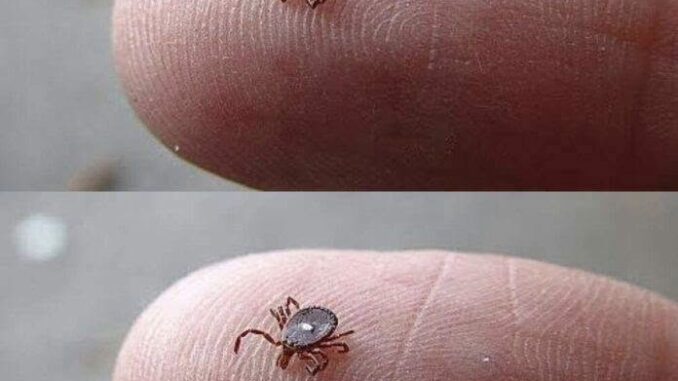
For one mother, that routine post-hike examination uncovered a small tick resting on her son’s leg. What drew her attention wasn’t just its presence, but a distinct, unmistakable feature: a bright, solitary white dot marked right on its back.
Her initial concern quickly escalated into alarm, and rightly so. She hadn’t encountered a typical wood tick. She had come across a species that many families fail to recognize until its bite leads to an unexpected health issue.
Identifying the Lone Star Tick
That unique marking—a single silver or white spot on the back of the female—is the defining characteristic of the Lone Star tick. Once primarily found in certain areas, this aggressive little traveler has been rapidly expanding its range, appearing in backyards, parks, and trails frequented by families daily.
While it may be easy to miss due to its small size, this tick has garnered national medical attention for a reason that distinguishes it from its notorious relative, the blacklegged tick.
Most parents are instinctively alert for Lyme disease after a tick bite. However, the Lone Star tick poses a very different, highly unusual risk: a condition known as alpha-gal syndrome.
What is Alpha-Gal Syndrome?
When a Lone Star tick bites, it can transfer a sugar molecule called alpha-gal into the bloodstream. In some individuals, this triggers an immune system reaction—essentially causing the body to develop a sudden, severe allergy to red meat (like beef, pork, and lamb) and other mammal-derived products.
Unlike typical food allergies that provoke reactions within minutes, symptoms of alpha-gal syndrome are infamous for being delayed. Hours after consuming a hamburger or pork chop, a child or adult may suddenly develop widespread hives, experience sharp stomach pains, or, in severe instances, endure a life-threatening anaphylactic reaction.
What to Do If You Find One
Discovering a Lone Star tick on your child’s skin can incite a wave of panic in any parent, but remaining calm and taking precise actions can make a significant difference. If you spot one attached, here’s how to proceed:
Use the Right Tool: Grab a pair of fine-tipped tweezers. Avoid using bare fingers, petroleum jelly, or hot matches, as these methods can cause the tick to regurgitate fluids into the bite.
Pull Straight Up: Hold the tick as close to the skin’s surface as you can. Pull upward with consistent, even pressure. Do not twist or jerk, as this may result in the mouthparts breaking off and staying in the skin.
Clean and Disinfect: After removal, wash the bite area thoroughly with soap and warm water, or clean it with rubbing alcohol.
Monitor the Area: Note the date on your calendar and keep an eye on your child’s skin and overall health in the subsequent days and weeks.
Keeping Perspective: Caution Without Panic
It’s easy to feel overwhelmed by the prospect of sudden food allergies, but maintaining perspective is crucial: the vast majority of tick bites do not lead to serious illness. Discovering a tick does not automatically imply that your child will develop an allergy or infection.
The aim isn’t to fear the outdoors, but to equip yourself with knowledge. If your child experiences any of the following symptoms in the weeks following a bite, contact a healthcare professional immediately and be sure to mention the tick exposure:
An unexplained fever or chills
An unusual rash around the bite or elsewhere on the body
Uncharacteristic fatigue or body aches
Signs of an allergic reaction (hives, swelling, or digestive issues)
Protecting Your Family on the Trail
Outdoor excursions should create wonderful memories, not health worries. You don’t need to forgo your favorite nature trails to stay safe—a few proactive habits provide strong protection:
Dress for Defense: Outfit kids in light-colored clothing (which makes ticks much easier to spot) and tuck pant legs into socks when traversing through brush.
Apply Protection: Use an EPA-registered insect repellent containing DEET or picaridin on exposed skin and clothing.
The Post-Hike Routine: Make thorough “tick checks” a regular practice after outdoor activities. Inspect warm areas where ticks enjoy hiding, including behind the knees, around the waistband, under the arms, and through the hair. Placing clothes into a high-heat dryer for 10 minutes will also eliminate any hidden hitchhikers.
That tiny white spot on a Lone Star tick may seem innocuous at first glance, but understanding what it signifies is your best defense. By staying informed and taking simple precautions, you can ensure your family’s safety while enjoying all that the great outdoors has to offer.