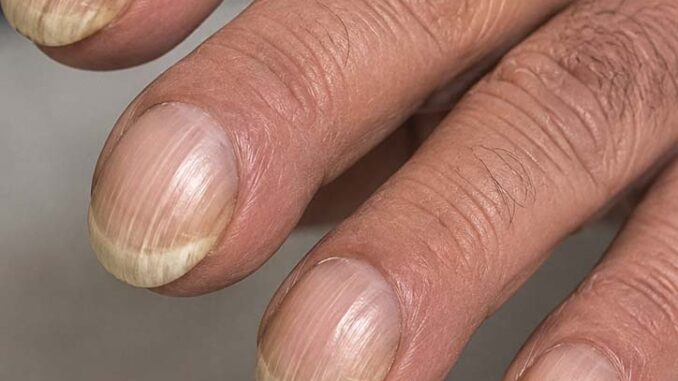
Nail clubbing is a distinct alteration in the fingers and nails that can sometimes indicate an underlying health issue. It typically causes the fingertips to enlarge or become rounded, while the nails curve downwards over the tips of the fingers. Although these changes may occur gradually, they should not be overlooked, particularly if they appear suddenly or in conjunction with other symptoms.
This article outlines what nail clubbing is, potential causes, and when it might be necessary to seek medical attention. This content is for educational use only and is not meant as medical advice, diagnosis, or treatment.
1. What Nail Clubbing Appears Like
Nail clubbing results in alterations in both the nails and fingertips. The nails may look shinier and softer than normal, while the fingertips can swell or take on a bulbous shape. The nails usually curve downwards, giving a rounded look sometimes referred to as “drumstick fingers.”
These alterations can affect multiple fingers or all of them, ranging from mild to quite pronounced.
2. Why The Fingers Change Form
Clubbing occurs because the tissue beneath the nails thickens over time. Increased blood flow and changes in connective tissue are thought to contribute. In some instances, low oxygen levels in the blood may play a role in these physical changes.
Although the precise cause is not completely understood, clubbing is frequently associated with chronic medical conditions that impact oxygen circulation and overall health.
3. Lung Diseases: A Frequent Cause
Lung issues are among the most prevalent reasons for nail clubbing. Conditions like chronic obstructive pulmonary disease (COPD), pulmonary fibrosis, and lung cancer are often connected to it.
These disorders may lower oxygen levels in the bloodstream, which can lead to the changes observed in the fingers and nails.
4. Heart Conditions Associated With Clubbing
Certain heart ailments can also result in nail clubbing, particularly conditions that disrupt oxygen-rich blood circulation. Congenital heart defects and infective endocarditis are two examples that are commonly linked to clubbing.
Since these conditions impact blood flow and oxygen delivery, they may result in swelling and nail alterations over time.
5. Liver, Digestive, And Hormonal Disorders
Some liver ailments, including cirrhosis, may lead to nail clubbing. Digestive issues such as inflammatory bowel disease (IBD) have also been associated with this condition.
Hormonal imbalances, particularly hyperthyroidism, can sometimes be a factor as well. Changes in metabolism and circulation may influence the tissues beneath the nails.
6. Could It Be Cancer?
In certain instances, nail clubbing may be related to cancer, especially lung cancer. Some gastrointestinal cancers and mesothelioma have also been tied to the condition.
While cancer is not the most frequent cause, unexplained clubbing should always be assessed by a healthcare provider.
7. When To Consult A Doctor
Anyone observing nail clubbing should think about consulting a doctor, particularly if symptoms like shortness of breath, fatigue, weight loss, chest pain, or a chronic cough are present.
Doctors may suggest tests such as blood work, chest X-rays, CT scans, or heart and lung function assessments to determine the underlying cause.
8. Can Nail Clubbing Be Treated?
Treatment aims at addressing the condition responsible for the clubbing. In certain cases, managing the underlying illness may halt the progression or enhance the appearance of the fingers and nails.
However, if the underlying disease is advanced or chronic, the changes may not completely reverse. Continuous medical care is crucial for monitoring overall health and preventing complications.
9. Supporting A Loved One
If your dad or another loved one experiences nail clubbing, providing emotional support and practical assistance can greatly help. Encouraging them to attend medical appointments, adhere to treatment plans, and complete suggested tests may alleviate stress during this time.
This article is meant for informational purposes only and does not substitute for professional medical advice, diagnosis, or treatment.