Part 1 of 3
PART 1 — THE CHRISTMAS CALL
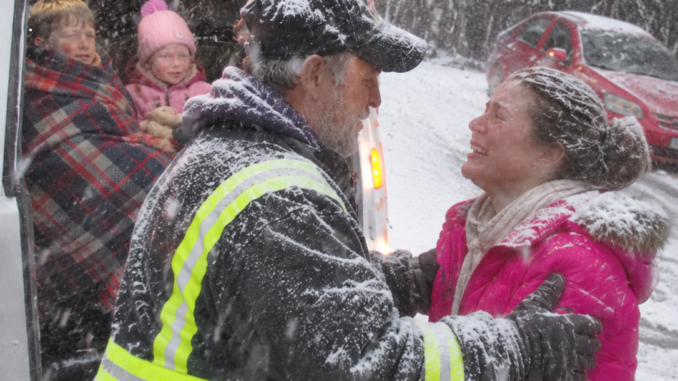
“Sir, I only have $36. Please don’t turn us away,” she implored. The boss's reply was icy: “It’s $400 up front. That’s not my concern.” After 28 years with the company, a 61-year-old employee chose to help the mother despite the boss’s indifference. When he declared his intention to assist, the boss reacted sharply, stating, “Take that truck, Ernie, and you’re fired!” Nonetheless, he went ahead to help the woman. The next morning, the boss took his keys without hesitation. However, upon learning the woman's name, the situation shifted unexpectedly.
“Four hundred dollars, ma’am. That’s the holiday emergency rate. If you can’t pay it, I can’t send a truck.”
These words resonated in my mind as I listened to my boss at two in the morning on Christmas Day, speaking to a young mother caught in a blizzard in North Dakota with two small children. Her car wouldn’t start, the temperature was four degrees, and she had only thirty-six dollars to her name.
“Please,” she begged. “My little boy is five, and my daughter is only two. I don’t know how much longer we can wait.”
My boss instructed her to reach out to someone else.
I decided to take the tow truck anyway.
Seven hours later, I was let go for using company equipment without permission. I handed over my keys without protest. Then he opened my service report, read the customer's name, and inquired where I had taken her.
I had worked for him for twenty-eight years, but I had never seen him appear so frightened.
My name is Ernest Palko, but I go by Ernie. At sixty-one years old, I have been driving a tow truck around Grand Forks, North Dakota, since I was thirty-three.
I have endured enough winters to know that cold weather does not care how prepared someone believes they are. I’ve pulled pickups out of ditches, aided stranded truckers with tire changes, and spent countless nights on icy roads. Most of the time, the individuals I encounter are having a bad day, and my role is to prevent it from worsening.
My late wife, Margaret, used to say I had the patience for towing because I was too stubborn to quit anything. We were married for thirty-three years before I lost her, and I still hear her voice whenever I reach for the old red thermos she gave me on our twentieth anniversary.
She also insisted I carry extra blankets.
“Three, Ernie. Not one,” she would say. “You never know who you’ll pick up.”
I often complained that the blankets took up space, but I kept them behind my seat anyway. After Margaret passed, I continued to carry them, along with spare gloves, hand warmers, bottled water, and a first-aid kit. Keeping those items was my way of cherishing her memory.
My boss, Victor Tamblyn, owned Tamblyn Towing. Vic was sixty-four years old, had a bad knee, and could calculate the cost of a service call before the dispatcher finished reading the address. I had known him since he bought his first truck, back when we operated out of a garage with a leaky roof and a coffee machine that malfunctioned every other week.
He wasn’t always the tough guy people knew.
Years ago, I witnessed him assist stranded motorists who couldn’t afford to pay. However, he had also been burned by customers who vanished after promising checks, and he nearly lost the business during a tough period of repairs and unpaid invoices. Somewhere along the way, he decided that being generous was a luxury he could no longer afford.
“We’re a business, Ernie,” he would remind me. “Good intentions don’t cover payroll.”
I understood that. I also recognized the distinction between someone trying to evade a bill and someone genuinely needing help to survive the night.
Vic had another reason for being difficult to work with. His wife had passed away eight years earlier, and six years ago, his only daughter left town following a terrible argument. I remembered her as a cheerful teenager who worked the dispatch counter during summer vacations. After she moved away, Vic stopped mentioning her.
There was an empty silver picture frame on his office desk. It had once held her graduation photograph, but he had removed the picture after their falling-out. He never disposed of the frame, though, and none of us dared to ask why.
That Christmas, a powerful winter storm swept across the northern plains. By midnight, snow was blowing across the roads faster than the plows could clear them, leading authorities to close several stretches of highway. The wind rattled the garage doors hard enough to make the coffee cups tremble on the counter.
I was covering the overnight shift so the younger drivers could spend Christmas morning with their families. My own house would be quiet, except for the ticking clock in the kitchen and Margaret’s old Christmas decorations.
At 2:04 a.m., the dispatch phone rang.
Overnight calls were routed through Vic first, with a connection to the driver assigned to emergency duty. I heard him answer while I sat in my truck near the garage, finishing my last cup of coffee.
“Tamblyn Towing.”
A young woman answered. Her voice was shaky, and I could hear the wind howling in the background.
“Please, I need a tow. My car slid into a ditch on Highway 2, about ten miles west of town. The engine won’t start, and I’ve got two little kids with me.”
Vic asked whether anyone was injured.
“No, I don’t think so. But it’s getting so cold. My daughter keeps crying, and my little boy says he can’t feel his fingers.”
I set down my thermos.
Vic asked for her location, then explained the holiday emergency rate.
“Four hundred dollars. Cash or card, up front.”
There was a long pause.
“I have thirty-six dollars,” she said. “My credit card’s maxed out. I can pay the rest after Christmas, I promise.”
Vic sighed.
“Ma’am, I can’t dispatch a truck on a promise.”
“Please. I wouldn’t ask if it were just me.”
“Is there a husband or family member who can pay over the phone?”
Her voice became very quiet.
“I don’t have a husband anymore.”
I heard a child coughing.
“Sir, I was trying to get home. I thought I could make it before the storm got this bad.”
“You need to call 911,” Vic said. “They can coordinate emergency assistance.”
“I already called. They said help is coming, but they don’t know when.”
“Then stay on the line with them. I’m sorry.”
The call ended.
I sat there for a moment, listening to the wind against my truck. Then I called Vic directly.
“You can’t leave them out there.”
He sounded irritated.
“Ernie, don’t start.”
“There are two little kids in that car.”
“And I told her to call emergency services. That’s what she’s supposed to do.”
“She already has. You know how backed up everyone is tonight.”
“So are we. I’m not sending a truck forty miles into a storm for thirty-six dollars.”
I looked at the blankets behind my seat.
“I’m going to see if I can reach her.”
“No, you’re not.”
“Vic, it’s four degrees.”
“And it’s my truck. You take it out on an unpaid call without authorization, and you don’t bother coming back. Twenty-eight years or not.”
I considered arguing, but it wouldn’t change anything. Vic had made up his mind, and I had made up mine.
“Then I guess we’ll talk about that when I get back.”
I ended the call.
I didn’t drive blindly onto a closed highway. I contacted the emergency dispatcher handling the stranded motorist’s report, identified myself and my recovery truck, and asked whether a tow operator could assist. A state patrol officer was coordinating access to that stretch of road, and after several minutes, I received directions to meet him at a safe approach point.
I checked my equipment, pulled on another pair of gloves, and started the engine.
It took nearly forty minutes to reach the sedan. Snow swept across the windshield in thick sheets, and even with the patrol vehicle ahead of me, there were stretches where I could barely see the road. I kept my speed low and my eyes on the taillights in front of me.
All the while, I kept thinking about the woman on the phone.
She hadn’t sounded angry when Vic refused her. She had sounded exhausted, like someone who had already tried every other option.
We found her car nose-down in a ditch, partly buried in drifting snow. It was a small red sedan with frost covering the windows and a faint glow from the interior light.
The patrol officer approached first. I followed with two blankets tucked under my arm and knocked on the driver’s window.
A young woman turned toward me. Her hair was pulled into a loose ponytail, and her face was pale with fatigue. She lowered the window just enough to speak.
“Are you the tow truck?”
“Yes, ma’am. I’m Ernie. We’ve got an officer here too, and we’re going to get everybody somewhere warm.”
Her eyes filled with tears.
“I told the man on the phone I couldn’t pay.”
“We’ll deal with that later. Let’s take care of the kids first.”
The officer helped her gather their belongings while I opened the rear door. A little boy in a blue knit hat sat beside his younger sister, who wore a pink winter coat. They were tucked beneath one thin blanket, with a stuffed dinosaur resting between them.
The boy watched me without moving.
“Are you really taking us home?” he asked.
“Somewhere warm first,” I told him. “Then we’ll figure out the rest.”
He looked toward his mother.
“Mom said somebody would come. I thought maybe she was just saying that.”
I felt something tighten in my chest.
“Well, she was right. Here we are.”
We moved the children into my heated truck using their child restraints, with the patrol officer helping us check that everything was secured properly. I wrapped the blankets around them and gave their mother dry gloves from my emergency kit.
The little girl was still upset, but she calmed down once her mother sat beside her. The boy pressed his stuffed dinosaur against the window and watched the snow swirling around the recovery lights.
“Is your truck bigger than a fire truck?” he asked.
I smiled.
“Not quite. But it’s pretty good at getting cars out of trouble.”
He nodded thoughtfully.
“Our car got in a lot of trouble.”
“It sure did.”
Once the officer was satisfied that the family didn’t need immediate medical transport, I went back outside to prepare the winch. The sedan was buried deeper than it had first appeared, and I had to work slowly to avoid damaging the undercarriage.
By the time I pulled it back onto stable ground, my shoulders ached and my gloves were stiff with ice.
The engine still wouldn’t start, so I secured the car for towing. With the patrol officer’s help, we arranged to take the family to a truck-stop motel on the edge of Grand Forks.
The boy watched from my cab as I finished attaching the sedan.
“Mom, he got our car!” he shouted.
I heard him through the open window and couldn’t help smiling.
It was almost four in the morning when we reached the motel. The desk clerk looked half asleep as we walked into the lobby, and the little girl was resting against her mother’s shoulder.
“One room?” the clerk asked.
The young woman nodded.
“How much?”
“Ninety dollars, including tax.”
I saw her glance toward her purse.
Before she could speak, I took out my wallet.
“Put it on my card.”
She turned to me.
“Mr. Ernie, I can’t let you do that.”
“You can pay me back someday if you want. Tonight, you need a warm room and some sleep.”
She covered her mouth, and for a moment, I thought she was going to cry again.
“I don’t even know your last name.”
“Palko. Ernest Palko. But nobody calls me Ernest unless I’ve done something wrong.”
That got a tired little laugh out of her.
I helped carry their bags to Room 6. The boy stood in the doorway holding his dinosaur while his mother settled his sister on one of the beds.
“Do you have kids?” he asked me.
I shook my head.
“No, sir. But I had a wife who would’ve been pretty upset with me if I’d left you out there.”
He considered that, then held out the dinosaur.
“You can borrow him.”
I smiled.
“That’s mighty generous, but I think he belongs with you tonight.”
His mother wiped her eyes.
“Thank you for coming when you didn’t have to,” she said.
I nodded.
“Merry Christmas. Get some rest.”
I left them in the warm room, finished securing the sedan in the motel’s designated parking area, and drove back to the garage.
Before going home, I completed the service report. I copied the woman’s information from the vehicle paperwork, including her name and the number of passengers.
I paused when I reached the surname.
Tamblyn.
That was Vic’s name, of course. It wasn’t impossible that she was related to him, but I had never heard him mention any relatives living outside Grand Forks. The woman I had helped looked nothing like the teenager I remembered from years ago.
I stared at the form for a moment, then finished writing.
I was too tired to make sense of it.
At home, I warmed up some soup and fell asleep in my recliner beneath Margaret’s old Christmas blanket.
At eight-thirty, my phone rang.
Vic.
“Get down to the yard. Now.”
I knew what was coming.
When I arrived, he was waiting beside the truck, holding a fuel receipt and the mileage log.
“Two hundred miles on my truck. Fuel, winch time, and a tow I’ll never get paid for. You think I can just write that off?”
“The family got to a warm motel,” I said.
“That’s not what I asked you.”
“I know.”
He shook his head.
“I warned you, Ernie. You made your choice.”
I took the keys from my pocket.
“I did.”
He held out his hand.
“Then you’re finished here.”
I placed the keys in his palm.
Twenty-eight years is a long time to work beside a man. I had watched Vic build that company, lose his wife, and grow older in an office that always smelled of coffee and engine oil. I didn’t want our friendship to end in a snowy parking lot.
But I couldn’t apologize for bringing those children somewhere warm.
Vic turned toward the truck, muttering about unpaid invoices. He opened the clipboard to enter the customer’s information into his records.
Then he stopped.
He read the name once.
Then again.
“Ernie.”
I turned around.
**Part 2 of 3**
His voice had changed.
“How old were the children?”
“The boy was five. The little girl was two.”
He looked back at the report.
“Did the boy have dark hair? Was the girl wearing a pink coat?”
I frowned.
“Yes. How’d you know?”
Vic’s hands began to shake.
“My daughter sent me a picture of them last spring. I never answered her letter.”
I stared at him.
He lowered himself onto the truck’s running board, still holding the clipboard.
“Where did you take her, Ernie?”
“The truck-stop motel. Room 6.”
He looked at the name one more time.
April Tamblyn.
Then he covered his face with both hands.
“That’s my little girl.”
**PART 2 — THE CHRISTMAS HE ALMOST LOST**
Vic sat on the running board for several seconds, staring at the report. Snow gathered on his shoulders, but he didn’t seem to notice.
“I was the one who answered her call,” he whispered.
I nodded.
“I know.”
“I told her to call her husband.”
He looked up at me.
“Ernie, I didn’t recognize her voice.”
“It’s been six years.”
“And I hung up on her.”
He stood so quickly that the clipboard slipped from his hands and landed in the snow.
“I’ve got to go see her.”
I stepped in front of him.
“Vic, listen to me a minute.”
He looked impatient, but he stopped.
“Don’t go there expecting her to forgive you,” I said. “Go because she’s your daughter, and she deserves to know you came.”
He swallowed.
“I don’t know what I’m supposed to say.”
“Start with the truth.”
He nodded once, picked up the clipboard, and hurried toward his pickup.
I followed in my own car.
Part of me wanted to stay out of it. A father and daughter who hadn’t spoken in six years had plenty to sort through without an old tow truck driver standing nearby.
But I had seen April’s face when she asked whether I’d really come to help. I wanted to ensure Vic understood that showing up at her door was only the beginning.
We reached the motel shortly after nine.
Vic parked near the entrance and walked down the hallway to Room 6. I followed a few steps behind.
He stood outside the door for a long moment, then knocked softly.
We heard movement inside.
The door opened a few inches.
April stood there in the same sweatshirt she’d worn overnight, holding her little girl on her hip. Her hair was pulled back, and she looked as though she’d slept only a couple of hours.
She stared at Vic.
“Dad?”
His mouth moved, but no words came out.
Finally, he whispered, “April.”
She looked past him toward me, then back at her father.
“What are you doing here?”
Vic held up the clipboard.
“I saw your name on the towing report.”
Her expression changed.
“Tamblyn Towing?”
He nodded.
“That was you on the phone?”
“Yes.”
She looked down at the little girl in her arms.
For a moment, nobody spoke.
Then April said, “You told me I needed four hundred dollars.”
“I know.”
“You told me to call my husband.”
Vic lowered his eyes.
“I know.”
She shifted her daughter higher on her hip.
“I thought the voice sounded familiar. But I told myself it couldn’t be you.”
He looked up.
“Sweetheart, I didn’t know it was you.”
April shook her head.
“I understand that. But what if Mr. Ernie hadn’t come?”
Vic opened his mouth, then closed it.
“I don’t know how to answer that.”
“Neither do I, Dad. That’s what hurts.”
Her voice wasn’t loud. She sounded tired, and somehow that made the words harder to hear.
Vic gripped the clipboard.
“I’m sorry, April. I was wrong to turn you away. I was wrong before that, too.”
She looked at him for a long time.
“I was driving home to you,” she said. “I spent six years wondering whether you’d even open the door. And last night, when I needed help, you were the one who answered.”
Vic’s eyes filled with tears.
“I would’ve opened it.”
“You didn’t answer my letter.”
He looked away.
I remembered the envelope that had arrived at the office the previous spring. Vic had carried it around for two days before putting it in his desk drawer.
“I read it,” he admitted. “I just didn’t know what to say.”
April gave a small, sad laugh.
“You could’ve said anything. You could’ve told me you were still angry. You could’ve said you needed more time. I just wanted to know whether you still wanted me in your life.”
“I never stopped wanting that.”
“Then why did you let six years go by?”
He had no answer.
I stepped back toward the end of the hallway, giving them some privacy.
April told him her husband, Daniel, had left in June. Their marriage had been struggling for years, and she had finally stopped pretending it could be fixed. She had been staying with a friend in Fargo while she tried to get settled.
“I didn’t come because I needed money,” she said. “I came because the kids keep asking about their grandfather. And because I missed you.”
Vic wiped his cheek.
“I missed you too.”
She shook her head.
“You told me six years ago that if I married Daniel, I shouldn’t expect to come running back when things went wrong.”
Vic nodded.
“I remember.”
“I was twenty-four, Dad. I thought I knew everything. Maybe I didn’t. But I was still your daughter.”
“You were. You are.”
She looked down at her hands.
“I needed you to be my father, not the man who had to win every argument.”
Those words seemed to settle heavily between them.
Vic had always taken pride in being right. He could argue over a towing invoice for an hour and remember every cent of it years later. But standing outside that motel room, he didn’t look interested in winning anything.
“I was wrong,” he said. “About how I handled your marriage. About what I said when you left. About letting my pride keep me from calling.”
April looked startled.
I was too.
Vic took a shaky breath.
“And last night, I was wrong again.”
A little boy appeared behind April, wearing pajamas decorated with green dinosaurs.
He looked at Vic, then at me.
“Mr. Ernie!”
I smiled.
“Morning, Bodhi. Did you get some sleep?”
He nodded, then looked up at his mother.
“Mom, is that Grandpa?”
April looked down at him.
“Yes, honey. That’s Grandpa Vic.”
Bodhi studied Vic with the serious expression children sometimes wear when they’re trying to understand grown-up problems.
“You look like the picture.”
Vic knelt slowly, his bad knee making him wince.
“You have a picture of me?”
Bodhi nodded.
“Mom keeps it in her bag.”
Vic looked at April.
She gave a small shrug.
“I wanted them to know who you were.”
His eyes filled again.
“I’m sorry I wasn’t there to meet you sooner,” he told Bodhi.
The boy looked at me.
“Mr. Ernie came when our car got stuck.”
“I know,” Vic said.
“He had warm blankets. And he pulled our car out.”
Vic nodded.
“I’m very glad he did.”
Bodhi thought for a moment.
“You should thank him.”
Vic looked over his shoulder at me.
“You’re right about that too.”
April stepped aside and invited us in.
The motel room was small, with two beds, a television mounted on the wall, and children’s coats hanging over a chair. A few toys were scattered across the carpet.
It wasn’t much of a Christmas morning.
But it was warm, and the children were safe.
Vic sat on the edge of one bed while April settled Sage beside her brother. They talked for nearly an hour, filling in pieces of six years that neither of them could get back.
April told him about her work at a dental office, about the difficult months after her marriage ended, and about how Bodhi had started kindergarten that fall. Vic told her about his knee surgery, the changes at the towing company, and how he had never managed to make his wife’s old Christmas stuffing recipe taste right.
There were awkward pauses. There were things neither of them knew how to say.
At one point, April asked why he had removed her graduation photograph from his desk.
Vic looked embarrassed.
“I didn’t want the guys asking about you.”
“So you put it away?”
He nodded.
“I couldn’t stand looking at it and wondering whether I’d ever see you again.”
April looked down at her hands.
“I thought you took it down because you were ashamed of me.”
**Part 3 of 3**
Vic shook his head.
“Never that.”
I thought about all the times I had walked past that empty frame.
I had assumed Vic kept it because he was too stubborn to throw it away. Maybe he had kept it because some part of him was still waiting to put the photograph back.
By late morning, Vic asked whether April and the children would come to his house for Christmas dinner.
She hesitated.
“Dad, I don’t want us to pretend everything’s fine just because it’s Christmas.”
“I’m not asking you to,” he said. “We can talk about the hard stuff tomorrow. Or next week. I just don’t want you spending today in a motel if you’d rather be somewhere else.”
April looked at the children.
Bodhi was showing Sage how to make his stuffed dinosaur climb the bedspread.
“We can come for dinner,” she said. “But we’ll take it one day at a time.”
Vic nodded.
“That’s fair.”
Then he looked at me.
“Ernie, would you come too?”
I started to decline. I didn’t want to intrude on their first Christmas together.
But April spoke before I could.
“Please come. The kids would love to see you.”
So I went.
Vic’s house was on a quiet street near the edge of town. His wife, Helen, had passed away eight years earlier, and he hadn’t done much decorating since. There was a small artificial tree in the living room and a wreath hanging on the front door.
April walked through the house slowly, recognizing things from her childhood.
She stopped in front of a framed photograph of her mother.
“You kept this one.”
Vic nodded.
“Of course.”
April touched the edge of the frame.
“Mom would’ve liked having the kids here.”
Vic looked toward the living room, where Bodhi was examining the Christmas tree.
“She would’ve spoiled them rotten.”
April smiled.
“Probably.”
We ate a late Christmas dinner of turkey, mashed potatoes, and vegetables Vic had hurriedly bought from a grocery store that was open for a few hours.
He overcooked the turkey.
Nobody complained.
At one point, Bodhi announced that he wanted to drive a tow truck when he grew up.
Vic laughed.
“That’s a hard job, young man.”
Bodhi pointed at me.
“Mr. Ernie does it.”
“He certainly does.”
“He has blankets in his truck. I’m going to have blankets too.”
I looked down at my plate.
For a moment, I could almost hear Margaret telling me to stop fussing about the space those blankets took up.
After dinner, April helped Vic wash the dishes while I sat with the children in the living room.
I could hear them talking softly in the kitchen. There were no grand speeches, no sudden promise that six years of hurt had disappeared.
But April laughed once, and Vic laughed with her.
It was a sound I hadn’t heard from him in a long time.
Before I left, Vic walked me to the front door.
“Ernie, about this morning—”
I shook my head.
“We can talk about work another day.”
He looked uncomfortable.
“I shouldn’t have fired you.”
“You warned me what would happen.”
“I know. But I was wrong.”
I pulled on my gloves.
“You were wrong about that call, Vic. The rest we can sort out later.”
He looked toward the living room.
April was helping Sage open a small present she’d found under the tree.
“I almost lost my chance to see them,” he said.
I nodded.
“But you didn’t.”
He looked back at me.
“Because you went.”
I didn’t know what to say to that.
So I shook his hand and wished him a merry Christmas.
Two days later, Vic called me.
“Ernie, come down to the office. I’d like to talk.”
I went because, after twenty-eight years, I couldn’t imagine not going.
The garage smelled the same as always: diesel, coffee, and wet rubber. A young driver was checking chains beside one of the trucks, and the dispatch phone rang twice before somebody answered it.
Vic was sitting behind his desk.
The empty silver frame was still there.
But it wasn’t empty anymore.
Inside was a new photograph taken on Christmas Day. April stood beside him, holding Sage, while Bodhi grinned in front of the Christmas tree.
Vic noticed me looking.
“April sent it over yesterday.”
I smiled.
“Good picture.”
He nodded.
“Best one I’ve had in years.”
Then he folded his hands on the desk.
“I want you back, Ernie. Same schedule, same truck. And I’m adding a Christmas bonus for what you did.”
I sat down across from him.
“I appreciate that, Vic. But I don’t want a bonus.”
He frowned.
“Then what do you want?”
I had thought about that question since Christmas morning.
I didn’t want to make a speech about kindness or tell Vic how to run the business he’d built. I knew there were bills to pay, employees depending on their wages, and customers who took advantage whenever they could.
But I had also spent forty minutes driving through a snowstorm because two children needed help.
I wasn’t willing to pretend that had been a mistake.
“I want us to change how we handle calls like that one,” I said.
Vic leaned back.
“What do you have in mind?”
“When somebody’s stranded in dangerous weather, especially with children, we don’t start by asking whether they can pay. We make sure emergency services know where they are, and if we can safely help, we help.”
He listened.
“We can work out payment afterward,” I continued. “And if they genuinely can’t afford it, we have a fund to cover the cost.”
Vic looked toward the garage.
“That could get expensive.”
“Maybe. But we can put money aside for it. Let customers contribute if they want. I’ll even put part of my bonus into the fund.”
He rubbed his chin.
“You already paid for April’s motel room.”
“I’d do it again.”
He was quiet for a long time.
Then he reached for a notepad.
“All right. Let’s figure out how to make it work.”
We spent most of that afternoon discussing the details.
The company would coordinate with emergency responders during severe weather, prioritize immediate safety, and maintain a small assistance fund for families who couldn’t pay. Drivers wouldn’t be expected to enter closed roads without authorization or take unnecessary risks.
Vic agreed to contribute the first five thousand dollars.
I contributed the Christmas bonus he’d offered me.
A few other employees added what they could.
Within a month, we had a simple policy posted beside the dispatch phone.
FAMILIES STRANDED IN DANGEROUS CONDITIONS: SAFETY FIRST. PAYMENT CAN WAIT.
It wasn’t as dramatic as promising free towing forever.
But it was a rule we could keep.
April moved back to Grand Forks in January.
She rented a small apartment with the children and began working part-time at the towing office while she looked for a permanent position. Vic helped her find a reliable used car, but she insisted on making the payments herself.
They still disagreed sometimes.
April didn’t suddenly forget the six years they’d spent apart, and Vic didn’t become a different man overnight. He still complained about unpaid invoices and argued with suppliers over small charges.
But he started listening when April told him something he didn’t want to hear.
And he stopped treating every disagreement as something he had to win.
Bodhi visited the garage whenever April brought the children by. He loved sitting in the parked trucks and asking questions about the winches, chains, and flashing lights.
One afternoon, he found the blankets behind my seat.
“You still have them!”
I nodded.
“Sure do.”
He ran his hand over the thick wool.
“I’m going to have blankets when I get my own truck.”
I smiled.
“That’s a good place to start.”
By the following winter, the assistance fund had helped several stranded families. Most paid what they could afterward. A few couldn’t pay anything.
Vic kept careful records, of course.
But he stopped calling those jobs losses.
On Christmas Eve the next year, another storm moved across the plains. It wasn’t quite as fierce as the one that had stranded April, but the wind was strong, and the roads were slick.
I was working the overnight shift again.
At three in the morning, the dispatch phone rang.
A family of four had slid into a ditch west of town. Their vehicle was disabled, and they were waiting for a patrol officer to reach them.
Vic answered the call himself.
I heard him ask whether anyone was injured, whether the children were warm, and whether they’d already contacted emergency services.
He didn’t ask for a credit card.
When the dispatcher confirmed that a recovery truck could safely reach them, Vic pulled on his coat.
“I’ll take this one,” he told me.
I looked up from my coffee.
“You haven’t driven an overnight call in fifteen years.”
He picked up the keys.
“Then I’m overdue.”
Before climbing into the truck, he opened the compartment behind his seat.
Inside were three thick wool blankets, folded neatly beside a red thermos.
He looked back at me.
“Margaret would’ve liked these, wouldn’t she?”
I smiled.
“She sure would, Vic.”
He closed the compartment, started the engine, and headed into the snow.
I watched his taillights disappear down the road, thinking about the woman who had taught me to keep those blankets and the two little children who had needed them a year earlier.
For twenty-eight years, I had watched Vic count every dollar that came through his business.
That Christmas, he finally understood there were things worth more than four hundred of them.