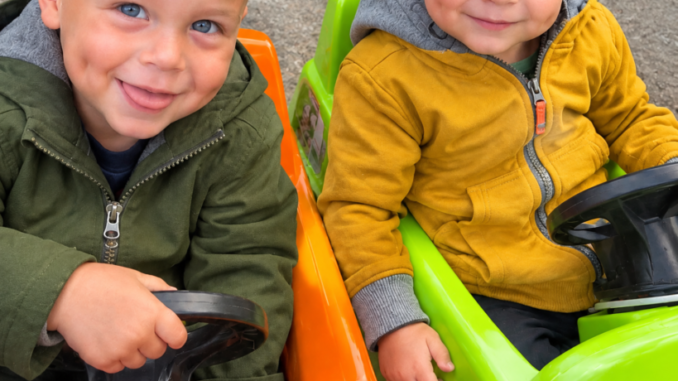
My husband found it challenging to distinguish between our identical twin sons, so he shaved large initials into their hair to tell them apart. I was livid.
However, when our four-year-old boys secretly got rid of those letters, they uncovered a painful truth their father had kept from me.
The moment I noticed the electric clippers in Henry’s hand, I dashed out of our bedroom.
“Henry!”
I nearly leaped down the stairs.
Upon arriving in our twins’ room, my husband stood between their beds, clutching the clippers and looking as if he’d been caught doing something dreadful.
Our four-year-old sons, Max and Leo, were wide awake.
They had exchanged beds.
And both were laughing.
“What on earth are you doing?” I demanded.
Henry almost dropped the clippers.
“Emma! You startled me!”
“Why are you holding those again?”
He glanced at the boys, who immediately erupted into giggles.
“They switched,” he muttered.
“I can see they’ve switched beds.”
“No, Emma. The letters.”
I examined more closely.
My heart sank.
The large M and L Henry had shaved into our sons’ hair earlier were nearly gone.
Their heads were now covered in uneven patches of extremely short hair.
“Henry! Did you shave their heads again?”
“No!”
“We did it ourselves!” Leo declared proudly.
I stared at him.
“Pardon?”
Max pointed at his brother.
“Leo shaved my letter.”
“And Max shaved mine!” Leo added cheerfully.
I shut my eyes.
For a moment, I truly couldn’t decide whether to scream or cry.
“You two used Daddy’s electric clippers?”
They nodded eagerly.
Henry explained that he’d accidentally left the clippers on the bathroom counter. Apparently, the boys had discovered them earlier that evening and secretly shaved off each other’s initials.
Neither of us noticed until Henry went to check on them before bedtime.
“Why would you leave something dangerous where four-year-olds could reach it?” I asked.
“I know. I made a mistake.”
“And why are you holding them now?”
“I found them on the bedroom floor. I was about to put them away.”
I took a deep breath.
“Nobody is touching anyone’s hair again tonight. Understood?”
Max looked disappointed.
“But Mommy, our hair looks funny.”
“It looked funny before you decided to become barbers!”
Henry covered his mouth, clearly trying not to laugh.
I shot him a warning glance.
“Don’t even think about it.”
He immediately composed himself.
Then Leo said something that shifted the entire evening.
“We had to take the letters away.”
I turned toward him.
“What do you mean, sweetheart?”
He exchanged a nervous look with Max.
Neither boy responded.
I sat on the edge of the bed.
“Boys, tell me why you shaved off the letters.”
Leo looked at his father.
“Because Daddy was sad.”
Henry went completely still.
“What?” I asked.
Max pulled his blanket closer to his face.
“Daddy thinks he’s a bad daddy.”
I looked at my husband.
His face had transformed entirely.
And suddenly, what I’d thought was another ridiculous parenting mishap became something much more serious.
My name is Emma, and Henry and I have been married for seven years.
We have identical twin boys, Max and Leo.
At four years old, they looked so similar that strangers often assumed we were carrying the same child twice.
Both had soft blond curls, bright blue eyes, matching dimples, and nearly identical voices.
But to me, they couldn’t have been more distinct.
Max was reflective and reserved. He preferred observing other children before joining in their games. He adored dinosaurs and never went to sleep without his cherished green stuffed dinosaur, Pickle.
Leo was our little whirlwind.
He talked non-stop, ran everywhere, and treated ordinary afternoons as chances for adventure.
Max disliked strawberries.
Leo could finish an entire container in one sitting.
When Max felt anxious, his nose wrinkled.
When Leo got excited, he instinctively touched his left ear.
I could recognize either child from quite a distance.
Henry, however, struggled.
Sometimes he guessed their names correctly right away.
Other times, he hesitated.
And occasionally, he was completely mistaken.
For years, our family regarded it as a harmless joke.
I’d hold one of the boys and ask, “All right, Daddy. Which one is this?”
Henry would scrutinize the child’s face.
“Leo?”
“Nope.”
“Max?”
“Correct!”
The twins found this endlessly amusing.
They began intentionally swapping shirts, pretending to be one another, and responding to the wrong names.
Sometimes Henry laughed so hard he could barely speak.
I laughed too.
What I didn’t realize was that Henry wasn’t always laughing because he found it humorous.
Sometimes he laughed because he felt he had no other choice.
At family gatherings, he’d occasionally pause before calling one of the boys.
When picking them up from preschool, he sometimes waited for one of them to speak before figuring out who was who.
Once, a teacher jokingly asked, “You still can’t tell your own children apart?”
Everyone laughed.
Including me.
Looking back, I wish I’d noticed Henry’s expression.
The afternoon everything began, I had gone out to shop for groceries.
Henry stayed home with the twins.
When I returned, both boys rushed toward me, laughing and shouting.
I nearly dropped my shopping bags.
Their beautiful blond curls were gone.
Not shortened.
Not carefully trimmed.
Practically shaved off.
But the worst part was what Henry had done with the hair left on their heads.
On Max’s scalp, he’d left a large patch shaped like the letter M.
On Leo’s head was an equally enormous L.
“Henry!”
My husband emerged from the kitchen, looking remarkably pleased with himself.
“What do you think?”
“What do I think? What happened to their hair?”
He grinned.
“Problem solved.”
“What problem?”
“Now nobody can confuse them anymore!”
I stared at him, waiting for some sign that he was joking.
There wasn’t one.
“You shaved letters into our children’s heads?”
He shrugged.
“They’re just haircuts.”
“They look like walking alphabet blocks!”
Max began jumping excitedly.
“Look, Mommy! I’m M!”
Leo twirled around.
“And I’m L!”
They were thrilled.
I was not.
“You didn’t even discuss this with me,” I told Henry.
“Emma, their hair will grow back.”
“That is completely beside the point!”
He gestured toward our laughing sons.
“Look at them. They’re happy.”
I wasn’t willing to argue in front of the children, so I told him we’d talk about it privately later.
For the rest of the evening, the twins kept admiring their ridiculous new hairstyles.
During bath time, they repeatedly touched the raised letters.
By 8:30 p.m., both were in bed.
Max slept beside the window.
Leo slept beside the door.
Just like usual.
Around 11:30 that night, I checked the baby monitor.
Both boys seemed to be asleep.
Then Leo climbed out of bed and woke Max.
They whispered something to each other.
Max grabbed his blanket and stuffed dinosaur.
Then they switched beds.
At first, I thought they were playing another identity-switching game.
But suddenly, Leo looked directly at the monitor.
“Shhh,” he whispered.
A moment later, the bedroom door opened.
Henry walked inside.
And I saw the clippers.
That was when I ran downstairs.
Now I was sitting between our sons, trying to understand why they’d secretly shaved off the initials.
“What exactly did they hear, Henry?” I asked.
He leaned against the wall and sighed.
“After you left this afternoon, I called Tom.”
Tom was Henry’s older brother.
“Why?”
“Because I knew you were going to be furious about their hair.”
“Well, you were right.”
“I wanted someone to tell me the haircuts weren’t completely ridiculous.”
“Did he?”
Henry looked embarrassed.
“He laughed for about two minutes.”
Despite everything, I almost smiled.
“Sounds reasonable.”
“But then I explained why I did it.”
Henry glanced toward the boys.
Apparently, they’d been quietly standing in the hallway during his conversation.
He hadn’t realized they were listening.
“I told Tom that I know everyone thinks it’s hilarious when I confuse the boys, but I hate it.”
My smile vanished.
Henry continued.
“Sometimes I look at them standing together, and I panic because I genuinely can’t tell who’s who.”
“They’re identical twins, Henry.”
“I know.”
“Even strangers struggle.”
“But I’m not a stranger, Emma. I’m their father.”
His voice became softer.
“I’m supposed to know my own children.”
I tried to interrupt, but he shook his head.
“Please, let me finish.”
He looked toward Max and Leo.
“I know Max loves dinosaurs. I know Leo hates getting water splashed on his face. I know who wants the green cup and who insists on the blue one. I know their favorite stories, their personalities, their habits.”
He swallowed.
“But sometimes, when they’re standing quietly in matching clothes, I just can’t recognize them.”
He looked down.
“And I keep wondering what kind of father doesn’t recognize his own sons.”
My chest tightened.
I suddenly remembered every time I’d turned his confusion into a game.
Every joke.
Every laugh.
Every moment when Henry had looked uneasy and I’d assumed he was simply embarrassed about losing.
“I told Tom that maybe I’m just terrible at being their dad,” Henry admitted.
Max’s small voice interrupted him.
“Bad Daddy.”
Henry immediately knelt beside his bed.
“No, buddy. That’s not true.”
“But you said it,” Max whispered.
Henry gently brushed his cheek.
“I was upset, sweetheart. Sometimes grown-ups say things they don’t really mean.”
Leo leaned over from the other bed.
“Then you made the big letters.”
Henry nodded.
“Yes, I did.”
Max frowned.
“We didn’t want them.”
I blinked.
“But you both seemed so excited earlier!”
Leo shrugged.
“We liked them at first.”
“Then we heard Daddy being sad,” Max explained.
I looked at my sons.
“So you decided to shave them off?”
Leo nodded seriously.
“Because Daddy already knows us.”
Henry lowered his head.
And I felt tears welling in my eyes.
Max climbed out of bed and stood directly in front of his father.
“Daddy, who am I?”
Henry hesitated.
Max no longer had his curls or the large M on his scalp.
He was even wearing Leo’s pajamas.
But Henry examined him closely.
“Max.”
Max’s entire face lit up.
“How did you know?”
Henry pointed to the green dinosaur tucked beneath his arm.
“Because you’re holding Pickle.”
Max immediately tossed the toy onto Leo’s bed.
“Okay! Guess again!”
Leo jumped out of bed.
The boys switched places.
Henry turned around while they moved.
When he faced them again, he paused.
“Leo?”
“YES!” Leo shouted.
“How?” he demanded.
Henry smiled.
“Because you touch your ear whenever you’re excited.”
Leo immediately dropped his hand.
The boys burst into laughter.
They switched positions again.
This time, Henry guessed incorrectly.
Both children practically collapsed with excitement.
And then something remarkable occurred.
Henry laughed.
Not the nervous, embarrassed laugh I’d grown accustomed to hearing.
A genuine, carefree laugh.
“All right, you tricked me!”
Max proudly declared, “I’m Leo!”
Henry shook his head.
“No, you’re Max. You’re just trying to make me say the wrong name.”
Max fell backward onto the mattress, laughing uncontrollably.
I watched my husband.
For the first time in years, he wasn’t treating the situation like a test he was destined to fail.
He was simply enjoying his children.
And I realized how much damage our seemingly innocent jokes had caused.
“I’m sorry,” I whispered.
Henry turned toward me.
“For what?”
“For making you feel as if identifying the boys correctly was some kind of test.”
“Emma, you don’t need to apologize.”
“Yes, I do. I never understood how much it bothered you.”
He sighed.
“I should have told you.”
“Yes, you should have.”
I paused.
“And you absolutely should not have shaved their heads without discussing it with me.”
He nodded.
“Agreed.”
“Especially not into giant letters.”
“Definitely agreed.”
I glanced at the twins.
Their heads looked absolutely disastrous.
Max had a strange strip of longer hair behind one ear.
Leo had a patch on top that resembled a tiny island.
“We’ll have to fix these haircuts,” I said.
Henry raised the clippers slightly.
“That’s what I was thinking.”
“Tomorrow,” I replied firmly.
He nodded.
“Tomorrow.”
We finally convinced the boys to return to their proper beds.
Max went beside the window with Pickle.
Leo settled beside the door with his blue blanket.
Just as we were leaving, Max called out.
“Daddy?”
Henry turned.
“Yes, buddy?”
“If you get us mixed up, it’s okay.”
My husband froze.
Then Leo added, “Sometimes we don’t know who’s who either.”
I laughed.
“You don’t?”
Leo nodded solemnly.
“In baby pictures.”
He was right.
We had several photographs from their toddler years that even the boys couldn’t identify correctly.
Henry smiled.
“Good night, you two.”
“Good night, Daddy!”
We closed the door.
I thought our emotional evening was finally over.
I was mistaken.
Downstairs, Henry sat quietly at the kitchen table.
I poured two glasses of water.
Then he said, “Emma, there’s something else I haven’t told you.”
I looked at him.
“What now?”
He rubbed the back of his neck.
“I went to see an eye doctor last month.”
“An eye doctor? Why didn’t you tell me?”
“Because I wasn’t sure there was anything wrong.”
I sat down.
“What made you think there might be?”
He hesitated.
“The twins were part of it. But I’ve noticed other things too.”
Henry explained that he’d sometimes struggled to recognize faces throughout his life.
Not constantly.
Not to the extent that he couldn’t recognize his closest family members.
But often enough to make him uneasy.
He’d occasionally had trouble identifying acquaintances outside their usual environments.
Sometimes he’d recognized someone only after hearing their voice.
He’d always assumed he was just inattentive.
But his difficulties with our identical sons had made him wonder if something else was happening.
“The eye doctor said my vision is perfectly fine,” Henry explained.
“Then what did he say?”
“He thought it might have something to do with how I recognize faces, rather than how clearly I see them.”
The doctor hadn’t given him a diagnosis.
Instead, he’d recommended consulting a specialist if the issue was affecting his daily life.
Henry had already scheduled another appointment.
“Why didn’t you tell me?” I asked softly.
“Because I felt ridiculous.”
My heart ached.
“Henry, there’s nothing ridiculous about wanting answers.”
He looked at me.
“I just didn’t want you to think I was making excuses.”
I reached across the table and held his hand.
“Would you feel comfortable if I went with you?”
He nodded.
“I’d like that.”
Eventually, the specialist explained that Henry displayed characteristics consistent with developmental prosopagnosia, often referred to as face blindness.
His challenges were relatively mild.
He could recognize me and other close family members.
But he relied more heavily on voices, movement, hairstyles, clothing, and familiar behaviors than most people realized.
His eyesight itself was normal.
And nothing suggested the issue was progressively worsening.
His brain simply processed facial information differently.
Identical four-year-old boys with matching faces and hairstyles were particularly difficult for him to distinguish.
Suddenly, years of confusion began to make sense.
After that, our family changed how we approached the situation.
We stopped asking Henry to identify the twins as if it were some sort of competition.
We ceased laughing whenever he made a mistake.
Instead, we focused on what he already knew about our sons.
Because the truth was, Henry noticed things about them that many parents might overlook.
Max entered unfamiliar rooms cautiously, observing everything before moving further inside.
Leo practically exploded through doorways.
Max often laughed quietly before letting out a louder giggle.
Leo snorted whenever something truly amused him.
Max had a peculiar way of pronouncing “sandwiches.”
Leo pronounced the word perfectly but refused to eat the crusts.
Their differences were everywhere.
They simply weren’t always visible in their faces.
And Henry knew those differences better than anyone.
The boys’ hair eventually grew back.
By summer, both had normal haircuts again.
No initials.
No numbers.
No strange patches.
When they started kindergarten, their new teacher asked whether there was an easy way to tell them apart.
Henry smiled.
“Max prefers green. Leo likes blue.”
“That’s helpful,” she replied.
“But don’t rely too much on their clothes,” Henry added. “They love swapping outfits.”
The twins grinned mischievously.
The teacher suddenly looked less confident.
I couldn’t blame her.
Even now, the boys consider confusing people one of their greatest talents.
Last Halloween, Max wore Leo’s favorite blue sweatshirt and confidently proclaimed, “I’m Leo!”
Leo stood beside him and announced, “And I’m Max!”
Henry studied them for a moment.
Then smiled.
“Nice try.”
Both boys looked astonished.
“How did you know?” Max demanded.
Henry pointed toward him.
“Because you’re standing slightly behind your brother, waiting to see whether your little trick is going to get you in trouble.”
Max looked offended.
Then he turned toward me.
“Mommy! Did Daddy cheat?”
I laughed.
“No, sweetheart.”
Henry looked incredibly pleased with himself.
Of course, he still gets them mixed up occasionally.
So do I.
Once, I spent several minutes scolding Leo about leaving wet towels on the bathroom floor.
Eventually, Max interrupted.
“Mom, that’s actually me.”
Leo had been sitting there quietly, enjoying his brother getting blamed.
Henry teased me about that incident for weeks.
“How can a mother not recognize her own child?” he’d ask with an exaggerated expression of disbelief.
I eventually threw a towel at him.
He deserved it.
But beneath all the laughter, something significant had changed.
We no longer used those mistakes to make Henry feel inadequate.
Sometimes I reflect on the night I found my husband holding those clippers.
I had assumed he’d shaved our sons’ hair because he couldn’t be bothered to learn how to tell them apart.
I thought he’d opted for the easiest possible solution.
But the truth was almost the opposite.
Henry cared so deeply about recognizing his children that every mistake made him question whether he was a good father.
Instead of admitting his insecurity, he’d tried to conceal it behind two enormous letters.
It was a terrible idea.
Absolutely absurd.
And, in many ways, exactly the sort of thing Henry would do when he was desperate to solve a problem.
But our four-year-old boys understood something that took both of us much longer to grasp.
They didn’t need their father to identify them correctly every single time.
They needed him to understand who they were.
And those were two very different things.
A giant M could tell Henry which child was Max.
A giant L could tell him which child was Leo.
But those letters couldn’t tell him who loved dinosaurs.
Who hated strawberries.
Who became anxious in unfamiliar places.
Who touched his ear when excited.
Who needed a specific blanket to fall asleep.
Or who would spend an entire afternoon making everyone laugh.
Henry already knew those things.
He had known them all along.
It took two little boys, a pair of clippers, and two disastrously shaved heads to help their father realize that being a good parent isn’t about never making mistakes. It’s about knowing your children, loving them, and ensuring they always feel understood.
And whenever I remember that night, I recognize something else.
Our sons weren’t trying to make their father better at recognizing their faces.
They were trying to show him that he had never failed to recognize their hearts.