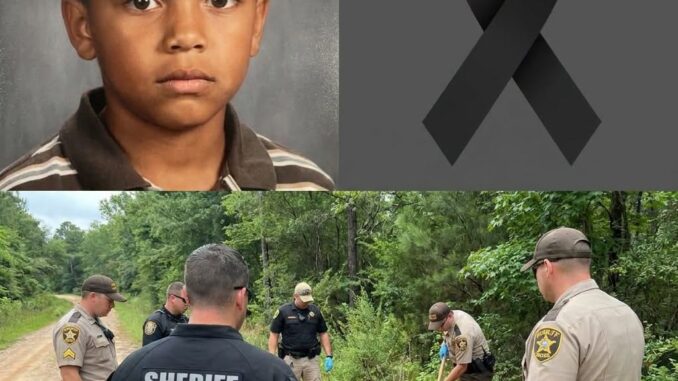
After three arduous years filled with uncertainty, unanswered questions, and sorrow, the quest for Davi has reached a heartbreaking conclusion. Authorities have verified that his remains were discovered within a cave, marking the end of a painful chapter that kept his family, friends, and community oscillating between hope and dread.
For those who cherished him, this discovery offers a form of closure that no family ever wishes to receive.
For three years, there existed the possibility that Davi could somehow be found alive. That slim chance, though minimal, helped sustain people through exhausting searches and challenging days. Each new piece of information could rekindle hope, while every month that passed made the uncertainty increasingly difficult to bear.
Now, that uncertainty has shifted to sorrow.
The confirmation of Davi’s remains means his loved ones no longer need to question his whereabouts, but knowing the truth does not simplify acceptance. After years of waiting, the reality of his passing can feel overwhelming, especially for those who continued to hope for a different outcome.
The circumstances surrounding his disappearance remain a painful aspect of the narrative.
Significant questions may still require answers regarding what transpired, how Davi ended up in the cave, and what events unfolded before his remains were discovered. Investigators are diligently working to piece together those details, scrutinizing the available evidence and striving to establish a clearer understanding of the events that led to this tragedy.
For his family, however, the investigation is just one aspect of what they are now confronting.
The emotional journey of the past three years cannot simply vanish because the search has concluded. There were likely countless moments when loved ones stared at a phone in anticipation of news, revisited cherished memories, pursued possible leads, or wondered if another search might finally yield answers.
There were probably days when hope felt robust.
There were also days when exhaustion and fear became hard to conceal.
Living with an unresolved disappearance creates a unique kind of anguish. There is no definitive conclusion, no certainty about what to expect, and no straightforward way to begin grieving. Families can find themselves caught between two possibilities, unable to fully accept either one.
That uncertainty can persist for years.
For Davi’s loved ones, the discovery finally addresses the most painful question, but it also compels them to confront the loss they had dreaded for so long.
Friends and neighbors are now mourning someone they remember not as a case file or a missing-person report, but as a person who had a life, relationships, memories, and a presence in their community.
Many have remarked on Davi’s vibrant spirit and the joy he brought to those around him. Those memories now carry a different significance.
The small moments that once seemed mundane can become treasured after someone is gone.
A conversation.
A laugh.
A familiar expression.
A shared meal.
A memory that might have once been taken for granted can suddenly become something a person clings to tightly.
That is one of the harsh realities of grief: people often recognize the value of ordinary moments only after those moments can no longer be repeated.
Community members have expressed shock and sorrow following the discovery. For many, Davi’s disappearance was not merely something they heard about in passing. It became a part of the collective experience of the community.
People searched.
People waited.
People shared information.
People hoped.
And now they are grieving together.
Candlelight vigils and memorials are being organized to honor Davi and support those closest to him. Such gatherings can provide a vital space for people to unite when words are hard to find.
A candle can symbolize remembrance.
A photograph can evoke a familiar smile.
A shared story can remind a grieving family that the person they lost mattered to more people than they might realize in their darkest moments.
Memorials cannot alter what occurred, but they can help preserve the memory of the individual behind the tragedy.
That distinction is significant.
Davi should not be remembered solely for the circumstances of his disappearance or the finding of his remains. His life was greater than the final chapter of his story.
He was someone who was known, loved, and remembered.
He had relationships and experiences that existed long before his disappearance became the focus of public attention. Those who knew him personally will carry memories that cannot be encapsulated by headlines or official statements.
As investigators continue to examine the circumstances surrounding his death, the community is left with both sorrow and unanswered questions.
The discovery may provide physical closure to the search, but it may not immediately offer a complete explanation of what transpired.
That process may take time.
Investigators may need to analyze evidence, establish a timeline, determine relevant circumstances, and carefully differentiate confirmed facts from assumptions or speculation. For the family, waiting for those answers can be challenging, especially after enduring years of uncertainty.
But understanding what occurred can hold great importance.
Families deserve clarity when circumstances remain ambiguous, and investigators bear the difficult responsibility of determining what the available evidence can substantiate.
At the same time, the grieving process belongs to those who knew Davi best.
They do not need every question answered immediately to begin mourning him.
They can remember him.
They can share stories about him.
They can gather together.
They can light candles.
They can weep.
They can sit quietly.
They can support one another through the days when the reality feels especially burdensome.
There is no single correct method to grieve a loss like this.
For three years, hope may have been the emotion that propelled many people forward. Hope encouraged ongoing searches and kept the possibility of Davi’s return alive.
Now that hope has transformed.
It may become hope for peace.
Hope for answers.
Hope that his family can eventually find moments of comfort.
Hope that the community will continue to support them after public attention wanes.
And hope that Davi’s memory will remain linked to the life he lived rather than solely the tragedy surrounding his disappearance.
The conclusion of a search does not necessarily signify the end of remembrance.
In many respects, it marks the beginning of a different kind of remembrance.
People may return to the places where they once searched. They may revisit photographs. They may share stories that had been forgotten. They may gather on anniversaries and birthdays, keeping Davi present in the lives of those who loved him.
Time may soften some of the sharpest pain, but it will not erase the significance of the person who was lost.
For a family that spent three years waiting, the emotional transition may be particularly intricate.
There can be relief in finally knowing what happened, followed immediately by profound sadness at what that answer signifies.
There can be gratitude that the uncertainty has ended, mixed with anger that the answer arrived in such a heartbreaking manner.
There can be memories of hope alongside memories of fear.
All of those emotions can coexist.
That complexity is part of grief.
The community, too, may need time to process what has transpired. A disappearance can impact individuals far beyond the immediate family, especially when neighbors, volunteers, and friends have participated in searches or closely followed the case.
For those individuals, the discovery may feel personal even though they were not related to Davi.
They had hoped for a different conclusion.
Now they are mourning alongside his loved ones.
The story serves as a reminder of how fragile life can be and how swiftly ordinary routines can transform into memories. It also illustrates the extraordinary persistence of individuals who refuse to stop searching for someone they love.
For three years, the search symbolized more than an investigation.
It symbolized hope.
Every search effort carried the potential for an answer. Every new lead represented a chance to alter the narrative. Every day that passed intensified the uncertainty, but people continued searching because giving up was not an option they were willing to consider.
That persistence deserves to be remembered as part of Davi’s story as well.
The conclusion is heartbreaking, but it does not erase the care shown by those who searched, supported the family, shared information, and continued believing that an answer could eventually be uncovered.
Now, as memorials are held and the investigation progresses, the focus is gradually shifting from searching for Davi to remembering him.
That transition will not occur overnight.
There will be challenging days ahead.
There will be questions that require time to answer.
There will be moments when his absence feels impossible to accept.
But there will also be stories.
There will be photographs.
There will be individuals who remember his laughter, his personality, his kindness, or simply the feeling of having him in their lives.
Those memories become part of the legacy left behind.
Davi’s story will forever carry the sadness of a life lost and three years spent seeking answers. But it can also embody the narrative of people who cared enough to keep searching, communities that refused to forget, and loved ones who continued holding onto hope for as long as they could.
The discovery inside the cave closes one chapter of uncertainty.
It does not close the chapter of Davi’s life.
That life deserves to be remembered beyond the circumstances of his disappearance.
And for those who loved him, perhaps the most important task now is not merely to remember how the search concluded, but to recall the person they were searching for all along.
Davi was more than a missing person.
He was someone’s friend.
Someone’s loved one.
Someone whose presence brought joy to others.
And even after three years of unanswered questions, that is the part of his story that should never be forgotten.