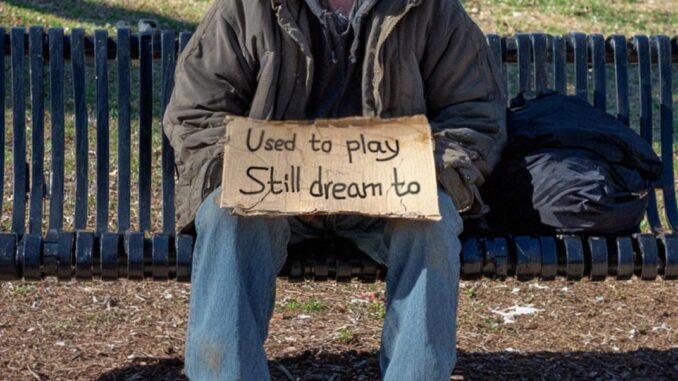
For months, Leo noticed the same homeless man outside the university entrance — a man in his late fifties, with a tangled grey beard, a patched winter coat, and fingerless gloves exposing red, chapped skin. The man didn’t beg or shout; he simply sat on a flattened cardboard box, a sign leaning on his knees: “USED TO PLAY. STILL DREAM TO.”
What struck Leo wasn’t the sign — it was how the man watched students carrying instrument cases, not with envy, but with quiet, aching pride. He seemed to be silently cheering them on.
One cold November afternoon, Leo saw the man shivering badly. On impulse, he bought a hot coffee and offered it. The man — “Harlan” — thanked him, gripping the cup as if it were sacred. When Leo asked, Harlan revealed he used to play jazz guitar, before a severe illness, medical bills, and personal loss wrecked his life. He’d pawned his guitar and lost contact with friends. For ten years he had walked past dreams he couldn’t reach.
That night Leo remembered his own near-collapse — after his mother’s cancer, he dropped out of university, worked odd jobs, dusted off his saxophone. A former professor later helped him return. He wondered: what about those who didn’t get a second chance?
Next morning, Leo asked the department head for permission: bring Harlan inside, let him sit in on rehearsal — maybe play. She refused: too risky. Still determined, Leo returned in two days with a duffel bag: clean clothes, a sweater, a blazer, and hope.
He borrowed a guitar, arranged a shower and haircut for Harlan, and gently asked: “What if you can still play?” Harlan hesitated — then agreed. In rehearsal, his fingers faltered at first. Then — after one trembling chord — the music surfaced. Rough, emotional, but real. The band adjusted around him. When Harlan finished playing, the room fell silent — then burst into applause. Even the skeptical instructor wiped tears.
The department offered him a part-time teaching spot for a community outreach program; charity partners helped find him stable housing. Students began calling him “Professor Harlan,” seeking his advice on soulful playing.
Leo said later: he refused to walk past a man whose sign said he still dreamed. In doing so, he showed that talent — and hope — don’t expire. Sometimes the bravest thing you can do on the way up is stop, and help pull someone else along.