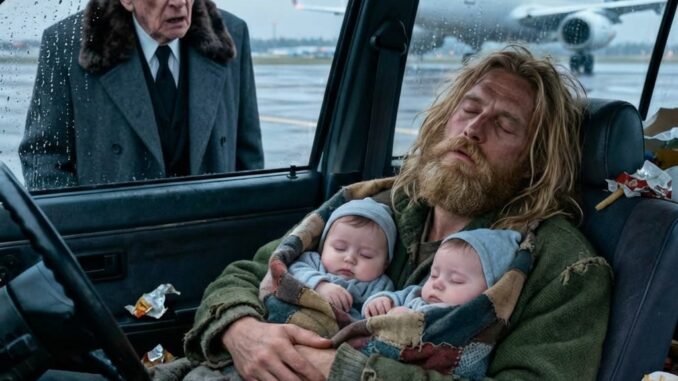
The March wind cut through the long-term parking at Toronto Pearson, cold and quiet. I pulled my collar up, tired from the flight but oddly alert. I hadn’t told my son I was coming—just wanted a simple surprise for his thirty-sixth birthday.
I scanned the lot for his car.
Then I stopped.
A Honda Civic sat near a concrete divider, its windows thick with fog from the inside.
Any Canadian knows what that means: too much breath, too little space.
My stomach dropped.
Blankets jammed against the rear window. Fast-food wrappers on the ground. A small sneaker on the seat.
I wiped a patch clear.
Michael was slumped in the driver’s seat, thinner, hollowed out.
In the back, under a heavy blanket, were my grandsons—pressed together, shoes on, frighteningly still.
I knocked. Michael woke with panic that melted into shame.
At a nearby diner, he explained how his wife and her family had taken everything—house, money, business—using legal maneuvers and a restraining order. He’d been living in the car with the boys to protect them.
I told him he wasn’t alone.
That night the boys slept in real beds. The next morning I called the best family lawyer I could find.
We fought. We gathered records. We exposed lies. In weeks, custody was restored, funds were returned pending review, and the restraining order dismissed.
Three months after the parking-lot discovery, life began again.
We ate pasta that night. Nathan raised his glass: “To home.”
I flew back a week later.
“You survived,” I told Michael. “Not because it was easy, but because you didn’t disappear.”
The car is gone now. But I remember the condensation on the windows—the sign that demanded action.