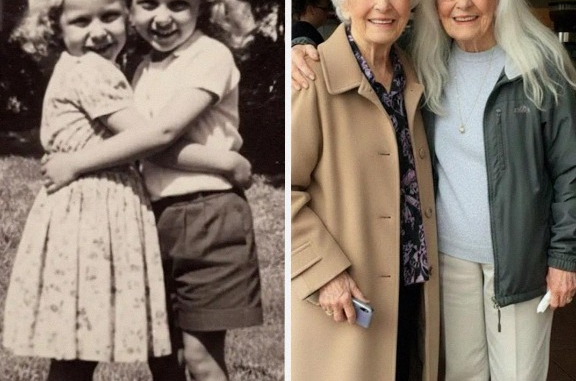
I was five when my twin sister, Ella, disappeared.
I was sick in bed, and Grandma sat by my side while Ella played with her red ball. When I woke up, she was gone. The back door had opened. Footsteps, frantic calls, police at the door. They found only her ball near the forest.
Months later, my parents told me she had died. No funeral. No grave. Just silence. I grew up with a quiet place in my chest shaped like Ella. Questions were met with anger, guilt, or avoidance. I learned to shut up, carry the loss, and live in the shadow of a missing twin.
Decades passed. I had a family of my own, became a grandmother, yet the sense of something missing never left me.
One morning, visiting my granddaughter at college, I wandered into a small café.
A woman stood at the counter. Same face, same eyes, same posture. Same voice. My heart stopped.
“Ella?” I whispered.
“My name is Margaret,” she said.
We laughed nervously, both terrified. Slowly, she shared that she had been adopted, her birth family always kept from her. When I compared stories, our birthdays and the details matched in a way that made the impossible real: we were sisters.
At home, I dug through old family records. At the bottom of a dusty box, a thin manila folder confirmed it: adoption papers. Margaret was my sister, taken from our mother years before I was born.
A DNA test confirmed it. We were full siblings.
It wasn’t a fairytale reunion. It was the slow unveiling of three lives broken by secrets, loss, and silence. But finally, we could speak, compare childhoods, and acknowledge each other’s existence.
One sister lost in the forest. One sister given away. One sister kept in the dark. And now, finally, the three lives could meet in truth.