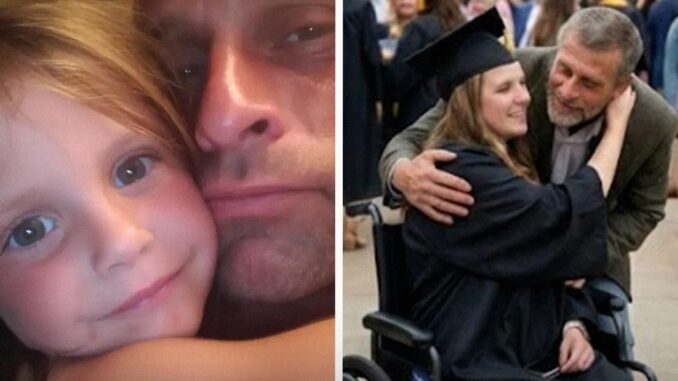
I’m 26 and haven’t walked since I was four. People assume my life began after the crash that killed my parents, but there was a before—memories of my mother singing, my father smelling of motor oil and peppermint, my stubborn, loved self.
I don’t remember the crash. The story I grew up with: accident, parents dead, I survived—but my spine didn’t. Adults whispered words like “placement” and “long-term care.”
Then my uncle Ray arrived. Big, scarred, permanent scowl, but he said, “I’m taking her. She’s mine.” He had no kids, no partner, no idea—but he became my world. He learned to lift me, reposition me, wash my hair, fight insurance companies, build ramps, make my space bigger, my life fuller. He even prepared me for puberty with awkward honesty and care.
Ray started getting sick—slower, forgetting, stage four cancer. Hospice came. The night before he died, he whispered, “You’re the best thing that ever happened to me… You’re gonna live.”
After his funeral, a neighbor handed me a letter in his handwriting: “I’ve been lying to you your whole life.” He confessed that the night of the crash, he could have stopped my parents. He hadn’t. He resented me at first, seeing in me the cost of his anger. Taking me home became repayment for a debt he could never settle. He’d quietly saved money, a trust, and my parents’ life insurance to give me a life bigger than that hospital room.
A month later, in rehab, I began standing. Last week, for the first time since I was four, I stood mostly on my own legs. I could hear Ray in my head: “You’re gonna live, kiddo.”
I still struggle with forgiveness. He couldn’t undo the crash—but he carried me as far as he could. The rest is mine now.