The return of Donald Trump to the White House has revived a complex approach to American power: promising to end “forever wars” while using unpredictable, high-stakes diplomacy. In a world already uneasy after decades of conflict, this uncertainty has sparked deeper public concern about what a global catastrophe might actually look like.
History shows that major conflicts often begin not with a clear plan but with miscalculations, pride, or technical mistakes. A modern war between nuclear powers would not resemble past territorial wars—it could fundamentally reshape civilization. While deterrence systems and treaties exist, they are still managed by humans, and history includes several moments where nuclear escalation was narrowly avoided.
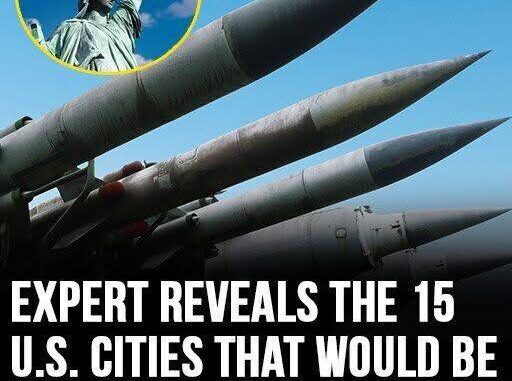
Experts like nuclear historian Alex Wellerstein explain that a common myth is that nuclear strikes would first target famous cities such as New York City or Washington, D.C.. In reality, modern strategy focuses on “counterforce”—destroying an opponent’s ability to retaliate. This means missile silos, command centers, and military infrastructure would likely be targeted first.
As a result, lesser-known locations tied to nuclear systems could face the greatest risk. Examples often discussed include areas near Malmstrom Air Force Base in Great Falls, Francis E. Warren Air Force Base near Cheyenne, and Hill Air Force Base near Ogden and Clearfield. Strategic bomber bases like Barksdale Air Force Base near Shreveport also play a key role.
Other important defense hubs include Honolulu due to its Pacific military presence, Omaha with United States Strategic Command at Offutt Air Force Base, and Colorado Springs, home to NORAD. Meanwhile, Albuquerque hosts major nuclear laboratories and storage facilities.
This doesn’t mean major cities like Los Angeles, Chicago, or San Francisco would be safe—only that military infrastructure might be targeted first.
Experts stress that this analysis is not a prediction of war. Nuclear deterrence systems, communication hotlines, and early-warning technology exist specifically to prevent escalation. Still, the discussion highlights an uncomfortable truth: civilian life and military strategy are closely connected.
Ultimately, global stability depends on the decisions of leaders and the strength of diplomacy. Understanding these risks reminds us that peace is not automatic—it requires constant effort, communication, and restraint.