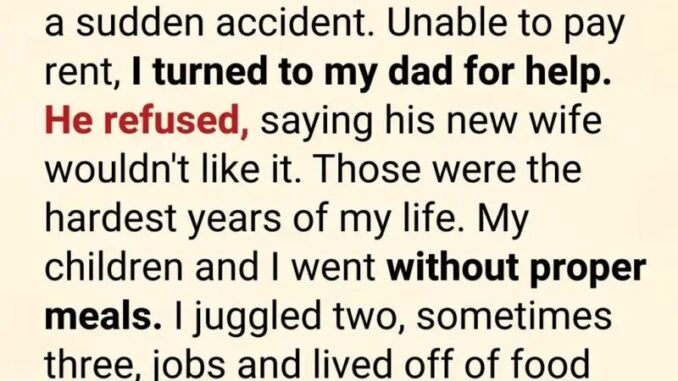
What he did wasn’t a small mistake—it was a long absence at a time when you were in real need. So the question isn’t just “should you forgive him,” it’s what kind of relationship, if any, is actually healthy for you now.
First, separate two things that often get tangled: forgiveness and access.
You can eventually forgive him (if you choose to) without letting him back into your life in the same way—or at all. Forgiveness is about releasing the weight on you. Access is about protecting your present.
His explanation—that your struggle made you strong—doesn’t really hold up. You became strong because you had no other option, not because he made a wise choice. That part of what he said deserves some pushback, even if the regret underneath it is genuine.
What matters now is:
- Is his regret real and consistent, or just driven by his current situation?
- Do you feel emotionally safe opening the door even a little?
- What would your kids gain—or lose—from having him around?
You don’t have to decide everything at once. You could choose a middle path:
- Start with a conversation in a neutral setting, not letting him move in.
- Tell him clearly what his absence cost you—without minimizing it.
- Watch whether he takes responsibility without excuses.
If he can own it fully over time, trust could be rebuilt slowly. If not, distance may still be the healthiest boundary.
Also, it’s completely valid if part of you isn’t ready—or never will be. Some wounds don’t close just because time passed.
A useful way to frame your decision is this:
“What choice brings me the most peace in the long run?”
Not guilt, not obligation—peace.
If you want, I can help you figure out what a first conversation with him might sound like, or how to set boundaries without it turning into another painful moment.