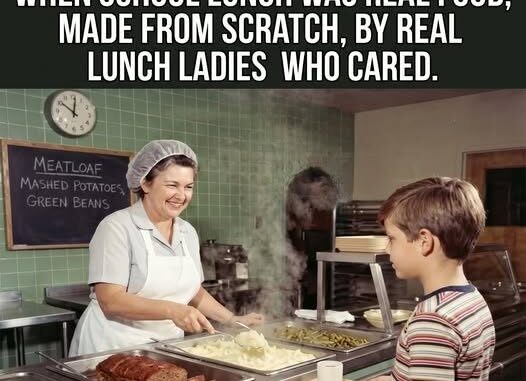
Raise your hand if you remember when school lunches were made from scratch by lunch ladies who truly cared. For many of us, those meals bring back memories of homemade spaghetti, fresh rolls, mashed potatoes, and the friendly faces behind the counter who knew our names and made every lunch feel special.
School lunches were more than food—they were part of a caring community. Dedicated cafeteria workers arrived early to prepare meals from real ingredients, serving hearty dishes and homemade desserts with pride. Many students, especially from working families, relied on these meals for both nutrition and comfort.
Today, many schools depend on pre-packaged, reheated foods due to budget pressures, regulations, and the challenge of feeding large numbers of students. While nutrition standards have improved in some areas, the personal touch and homemade quality of the past have often been lost.
The shift toward processed foods has raised concerns about nutrition, childhood health, and the loss of meaningful connections between students and cafeteria staff. Yet some communities are working to bring back scratch cooking through farm-to-table programs, better funding, and local food initiatives.
Of course, school lunches weren’t perfect, but they felt more personal and intentional. The nostalgia many people feel isn’t just about the food—it’s about a time when care, community, and real cooking were part of everyday school life.
Perhaps it’s time to rethink what we serve our children. Bringing back more scratch-cooked meals could restore something valuable: real food prepared by real people who care. The lunch ladies of yesterday didn’t just feed students—they helped nurture them, and their legacy is worth remembering.