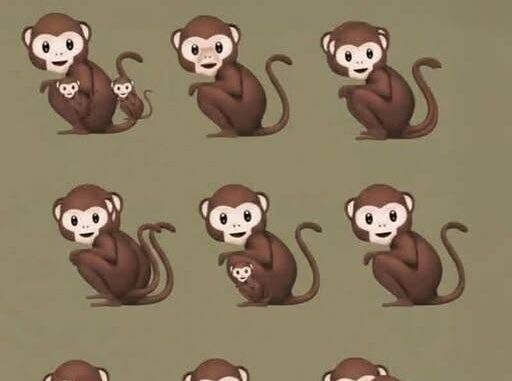
You’ve probably seen it: a cartoon of smiling monkeys paired with the claim that the number you count reveals whether you’re a narcissist. It’s the perfect viral trap, playing on our curiosity, insecurities, and desire to understand ourselves. But the real story isn’t about personality—it’s about how our brains interpret what we see.
Most people can’t resist counting the monkeys, searching for the “right” answer. Yet the image doesn’t reveal hidden traits; it reveals how differently people process visual information. Some viewers notice only the obvious figures, while others spot hidden shapes and overlapping details. The difference isn’t intelligence or character—it’s simply a reflection of different attentional styles.
Our brains rely on mental shortcuts, or heuristics, to make sense of the world. As a result, two people can look at the same image and see different things. That’s why these puzzles are so fascinating: they highlight the gap between reality and perception.
The biggest myth is the narcissism claim. There is no scientific evidence linking the number of monkeys you count to narcissistic personality traits. That headline exists purely to attract clicks and spark debate.
Still, the puzzle has value. It reminds us that first impressions are often incomplete and that slowing down can reveal details we initially miss. Whether you focus on the big picture or the hidden nuances, neither approach is better—they’re simply different ways of seeing.
The real lesson is simple: perception is subjective. The number of monkeys doesn’t matter. What matters is recognizing that there is often more to see than we first realize, and that a second look can change everything.