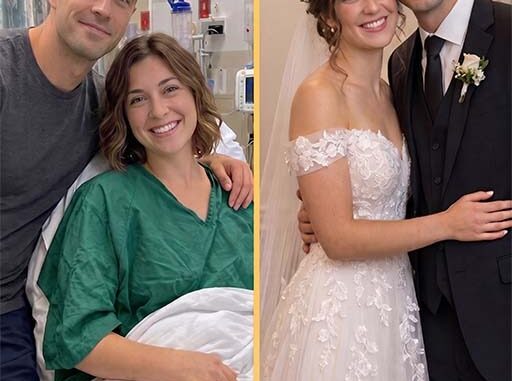
I married the man who rescued me, convinced we had no secrets. He had donated a kidney to me, only to find out he had terminal cancer just months later. When he proposed, he expressed his desire to spend whatever time he had left with me. I accepted. But mere minutes after we exchanged our vows, he took my hand and whispered, “Now I can finally tell you the truth.” What he disclosed nearly jeopardized our marriage before it even started.
A year prior, I was 31 and leading a normal life when unexplainable fatigue, swelling, and nausea led me to the hospital. Tests indicated that I had advanced kidney disease that had remained undetected for years.
My kidneys were failing.
Within weeks, I began dialysis, taking numerous medications, and waiting for a transplant. My parents and younger brother offered to donate, but none were medically approved.
I was scared my life would never be normal again.
Then, two months later, my transplant coordinator called with surprising news.
“We have a potential living donor,” she said. “His name is Peter.”
I had never heard of him.
Apparently, a previous colleague of his named Camille had mentioned my situation. Peter had thought about becoming a living kidney donor before, and upon learning about me, he reached out to the transplant center.
He underwent months of medical and psychological evaluations. When the transplant team finally determined he was a match, we agreed to meet.
Peter was 37, with gentle brown eyes and a subtle sense of humor.
“Why would you do something like this for a stranger?” I inquired.
He smiled.
“Because I can. And because I hope someone would do the same if a loved one needed help.”
I couldn’t grasp such selflessness.
But Peter insisted he had made the choice willingly. He understood the risks and wanted nothing in return.
The surgery was successful. My new kidney started functioning almost right away, and both of us recovered without significant complications.
In the weeks following, we kept in touch. Peter called to check on me, delivered groceries when I was worn out, and sometimes showed up with awful movies and snacks.
He even gifted me a small fern.
“Something else we can keep alive together,” he joked.
Gradually, our friendship grew.
We spent evenings discussing everything from our childhoods to our aspirations for the future. By the time we both healed from surgery, I realized I looked forward to seeing him more than anyone else.
One rainy evening, he kissed me outside my apartment.
I kissed him back.
In the following months, we fell in love. I no longer viewed him merely as the man who saved my life. I adored his humor, his patience, and how he always seemed prepared to assist someone in need.
I believed I knew him entirely.
I was mistaken.
About four months after the transplant, Peter started experiencing ongoing headaches. Then, one afternoon, his vision suddenly became blurry.
An MRI revealed a brain tumor. Further testing confirmed glioblastoma, an aggressive type of brain cancer.
The doctors explained that the tumor could not be entirely removed and that treatment might only slow its growth, but it wouldn’t cure him.
Peter had shown no neurological symptoms during his kidney donor evaluations, which hadn’t required brain imaging. His doctors clarified that the diagnosis was unrelated to his donation.
Still, the news shattered us.
One evening, Peter came to my apartment looking pale and fatigued.
“The doctors can’t tell me exactly how much time I have,” he confessed.
I took his hand.
“We’ll face this together.”
He gazed at me for a long moment, then reached into his coat pocket and set a small jewelry box on the table.
“June, will you marry me?”
I stared at him.
“Peter, you’ve just told me you have terminal cancer.”
“I know.”
“Are you asking because you love me or because you’re afraid of dying?”
He lowered his gaze.
“Both,” he acknowledged. “I’m terrified. But I also know I love you. And I don’t want to confront whatever time I have left without you.”
I couldn’t respond right away.
We had been in a romantic relationship for only a few months. I worried about making such a significant decision under the weight of his diagnosis.
But after several days of contemplation and discussions with my family, I realized my feelings were authentic.
I loved Peter, regardless of his illness.
When I finally agreed, I made him promise one thing.
“No secrets,” I told him. “Whatever happens, we must be completely honest with each other.”
He paused briefly before nodding.
“I promise.”
Two weeks later, during the brief interval before his cancer treatment began, we wed in a small garden room behind a restaurant.
My parents were there, along with my brother and a few close friends. Camille, who hadn’t known Peter well since they worked together years ago, cried throughout the ceremony.
Peter looked handsome in his dark suit, although he appeared unusually anxious.
When the officiant declared us husband and wife, everyone applauded.
Peter kissed me.
For a few moments, I forgot about the daunting uncertainty surrounding our future.
Then he took my hand.
“June,” he whispered, “now I can finally tell you the truth.”
My smile vanished.
“What truth?”
He glanced toward the guests before leaning closer.
“I have a daughter.”
I froze.
“What?”
“Her name is Willa. She’s 12.”
For several seconds, I was speechless.
“You have a 12-year-old daughter, and you’re telling me this after we’ve married?”
Peter looked distraught.
“I know I should have told you sooner.”
“Then why didn’t you?”
He led me into the hallway, away from the guests.
He explained that he had been divorced for several years. Willa’s mother lived in another state and had become inconsistently involved in her daughter’s life.
Peter remained Willa’s primary parent, but because his job had once required frequent travel, Willa had begun staying with her maternal grandmother, Doris, during the school week. The arrangement had continued because Willa was settled at her school and enjoyed being near her grandmother. Peter spent weekends and school vacations with her.
“She knows about you,” he admitted.
I stared at him.
“Your daughter knows I exist?”
He nodded.
“She knows about the transplant, our relationship, and the wedding.”
“Was she invited?”
“Yes. But she declined to come.”
My chest tightened.
“Why?”
Peter looked away.
“Because she believes I care more about helping others than spending time with her.”
As he spoke, the truth gradually unfolded.
Peter had always been the person everyone contacted when something went wrong. He once missed Willa’s school performance because a friend needed an emergency ride. Another time, he cut short her birthday outing to assist a colleague with moving.
Then he volunteered to donate his kidney to me.
He hadn’t discussed that choice with Willa until the donor evaluation was already underway. Although she understood it was his decision, she was scared and hurt that he had kept something so serious from her.
“When I told her about us,” Peter continued, “she thought I was replacing her. Every time I tried to mention you, she became upset.”
“So you chose not to tell me about her?”
“I was worried you’d think my life was too complicated. At first, I kept telling myself I’d explain everything once our relationship became serious.”
“But it became serious.”
“I know.”
“Then you got sick, proposed, and still said nothing.”
His eyes filled with tears.
“I was scared of losing you. And I thought that once we were married, Willa might finally see that you weren’t just a temporary person in my life.”
I stepped away from him.
“Peter, you didn’t just conceal something from me. You attempted to force both of us into a family neither of us had been allowed to understand.”
He lowered his head.
“I know.”
“You promised me no secrets.”
“I’m sorry.”
I looked down at my wedding ring.
The man I trusted most had hidden an entire part of his life because he feared I might make a choice he wouldn’t like.
I left the reception and called Doris after Peter reluctantly provided me with her number.
Doris was shocked to find out that Peter had never informed me about Willa. She agreed I could visit, but cautioned that Willa might refuse to see me.
Twenty minutes later, I was sitting on her porch in my wedding dress.
Doris had told Willa I was outside, and I made it clear that I would leave if she didn’t wish to talk.
After nearly 15 minutes, the door opened.
A girl with Peter’s brown eyes stepped onto the porch.
“This is weird,” she said.
I let out a nervous laugh.
“Very.”
She sat a few feet away.
“Did you marry my dad because he gave you a kidney?”
“No,” I replied. “I appreciate what he did, but I married him because I love him.”
She looked down.
“Everybody loves my dad.”
There was a hint of bitterness in her voice.
“He’s always saving someone. Everyone thinks he’s amazing.”
“He is a good person,” I said cautiously.
“Then why am I never important enough?”
My heart sank.
She told me about the school performance he’d missed and the birthday outing he had abandoned.
“I know he wants to help people,” she whispered. “But what about me?”
Then her eyes filled with tears.
“When he donated his kidney to you, I thought something might happen to him. And now he has cancer. What if he dies? What if he spends whatever time he has left worrying about everyone else instead of being with me?”
I finally comprehended.
Willa wasn’t just envious of me.
She was terrified of losing the father she adored, and she’d spent years believing that everyone else’s problems mattered more than her feelings.
I moved a little closer.
“Willa, your dad loves you. But you’re right that he hasn’t always listened to you.”
She wiped her cheeks.
“Are you going to try to be my new mom?”
“No. I’m June. I’d like to get to know you, but only if you want that.”
She scrutinized me.
“And if I don’t?”
“Then I’ll respect that.”
For the first time, she offered a small smile.
“Are you mad at him?”
“Very.”
“Good,” she muttered.
I chuckled despite myself.
When I returned to the restaurant, the guests had mostly departed.
My parents were waiting with Peter.
I looked at him.
“Tell them.”
He hesitated.
“June—”
“No. You kept this secret because you didn’t want anyone making decisions you couldn’t control. That ends now.”
Peter finally confessed everything.
My mother was furious.
“You let my daughter marry you without revealing you had a child?”
Peter nodded.
“I was afraid she’d leave.”
My father shook his head.
“Then you should have given her the chance to decide.”
Peter began to cry.
“I know. I convinced myself I was protecting everyone. In reality, I was shielding myself from hearing no.”
I looked at him.
“I love you, Peter. But I don’t know if I can trust you right now.”
He swallowed.
“What do you want me to do?”
“For once, I want you to stop deciding what’s best for everyone else. Start listening.”
That night, I went home with my parents.
We spent the following weeks living apart while Peter began his cancer treatment.
We attended marriage counseling and had challenging conversations about his daughter, his illness, our finances, and the future.
Peter apologized to Willa without making excuses.
He began involving her in age-appropriate discussions about his treatment rather than concealing frightening information until decisions had already been made.
He also prioritized her.
He stopped canceling their weekends to assist acquaintances and learned to say no when others expected him to drop everything.
Along with Doris, Willa’s mother, and a lawyer, he started addressing the legal and practical arrangements for Willa’s care if his health declined.
Nothing was decided behind her back.
Meanwhile, I gradually began rebuilding my trust in him.
It wasn’t easy.
There were arguments, tears, and days when I wondered if our marriage could endure.
But Peter didn’t pressure me to forgive him because of his illness.
He gave me time, answered my questions honestly, and showed through his actions that he understood what he had done wrong.
Eventually, I chose to return home.
Not because I owed him my life.
Not due to pity.
But because I loved him and could finally see that he was willing to change.
Willa and I also developed a relationship, slowly and naturally.
At first, she barely spoke during my visits. Then she began asking me questions, inviting me to assist with school projects, and occasionally calling when she couldn’t reach her father.
She still referred to me as June.
I never asked her to call me anything else.
Several months after our wedding, Peter’s latest scan showed no measurable tumor growth since his initial treatment.
His doctors reminded us that the cancer remained incurable, but the temporary stability gave us reason to appreciate the time we had.
That summer, the three of us returned to the garden where Peter and I had married.
We spread a blanket beneath a tree and shared sandwiches and strawberries.
Halfway through our picnic, Willa pulled two wrapped boxes from her backpack.
“Wedding presents,” she announced. “A little late.”
I opened mine.
Inside was a mug that read:
“WORLD’S MOST COMPLICATED STEPMOM.”
I burst out laughing.
“Willa!”
She beamed.
“It’s true.”
Peter chuckled.
“That’s pretty funny.”
She turned toward him.
“Don’t laugh. Yours is worse.”
He opened his box.
His mug read:
“ASK YOUR FAMILY FIRST.”
For a moment, he stared at it.
Then he laughed, wiping tears from his eyes.
“Fair enough.”
Willa leaned against his shoulder.
“You promise you’ll keep doing that?”
His smile softened.
“I promise I’ll keep trying. And if I forget, you can remind me.”
“I definitely will.”
I watched them together, recalling the little girl I’d encountered on a porch in my wedding dress and the man whose greatest strength had also become his greatest weakness.
Peter had spent years believing that loving people meant protecting them, helping them, and solving their problems.
But sometimes, his determination to do good had prevented him from recognizing what the people closest to him truly needed.
Willa hadn’t needed him to be everyone’s hero.
She’d needed him to be her father.
And I hadn’t needed him to make difficult decisions for me.
I’d needed him to trust me with the truth.
As the afternoon sunlight began to fade, Willa stood and reached for our hands.
“Come on,” she said. “Let’s go home.”
Peter looked at me, smiling.
For once, he didn’t presume what I wanted.
“Ready?”
I squeezed his hand.
“Ready.”
We still didn’t know how much time we had together. There would be more treatments, more scans, and undoubtedly more tough days.
But we were no longer pretending that love could shield us from every painful truth.
The man who donated a kidney had saved my life. Yet the lesson that transformed our family came from his 12-year-old daughter.
Love isn’t about making every decision for the people you care about. Sometimes, the greatest act of love is trusting them enough to let them choose for themselves.