The kitchen scissors slipped from my father's grasp and clattered to the floor.
He stood motionless, gazing at the scars concealed beneath my husband's long hair.
“Does my daughter know about this?” he murmured.
Calvin, my husband, remained silent. He simply held his dark hair away from his neck.
I had seen those scars before, yet I had never discovered how he acquired them.
When Calvin finally disclosed the truth, my father's response was so harsh that I left my childhood home unsure if I would ever return.
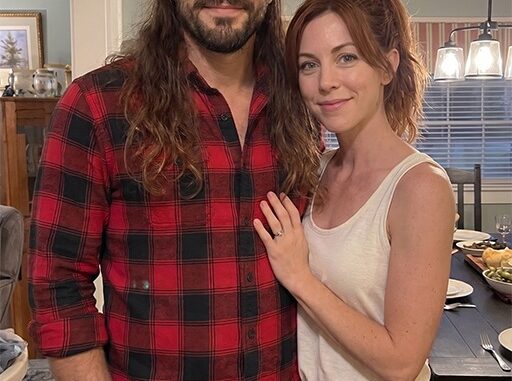
Calvin and I had been together for six years, married for four. He was a diligent automotive technician with a gentle demeanor, a fantastic sense of humor, and thick brown hair that cascaded just below his shoulders.
I adored his hair.
My father, Walter, absolutely detested it.
From the moment I introduced them, Dad had complained that Calvin needed to present himself as more of a “real man.”
“A grown man should have a respectable haircut,” he’d remark. “Especially one who’s married to my daughter.”
Calvin typically brushed it off with laughter. However, over time, Dad's comments grew increasingly offensive.
At our last family gathering, he even humiliated Calvin in front of our neighbors, joking that my husband needed to borrow my hairbrush.
I told Dad to cease, but he dismissed me as being overly sensitive.
In hindsight, I should have done more.
That Sunday morning, I found Calvin in our bathroom, using my expensive conditioner.
“Again?” I teased.
He smiled. “Yours says ‘intensive repair.’ Mine doesn’t. Clearly, my hair needs the superior stuff.”
I laughed as I watched him work a comb through his damp hair.
Then he suddenly grimaced.
“Did you catch a knot?”
“Something like that.”
He carefully moved the comb away from the back of his head.
I knew he had several scars beneath his hair. I’d discovered them early in our relationship when he emerged from the shower.
When I inquired about them, he had quietly explained that he’d been injured years ago and wasn’t prepared to discuss it.
I had respected his wishes.
He also mentioned attending counseling after a challenging period in his twenties, but he had never elaborated much about that time.
Now, as I watched him set down the comb, I wondered if those things were related.
“Does it still hurt?” I asked.
“Not much anymore.”
He hesitated.
“Sometimes I just recall what life was like back then.”
“What do you mean?”
Calvin looked at me through the mirror.
“I don’t live like that anymore, Megan. That’s what matters.”
Before I could inquire further, he kissed my forehead.
“Come on. We don’t want to be late for dinner.”
We were visiting my parents that afternoon.
Mom, Diane, adored Calvin. Unfortunately, Dad seemed determined to criticize everything he did.
Mom had spent most of her marriage smoothing over Dad’s bad moods, usually changing the subject whenever he became unpleasant.
I had developed the same habit.
By the time we arrived, the dining table was already set.
Mom greeted us warmly, but Dad barely looked up before making his usual remark.
“Good grief, Calvin. Is that hair ever going to stop growing?”
“Good afternoon to you too, Walter,” Calvin replied with a polite smile.
Dad shook his head.
“You’d think a married man would put a little more effort into his appearance.”
“Dad, please,” I said.
“What? I’m just saying.”
Mom quickly interjected.
“Walter, could you pass the potatoes?”
For a while, dinner proceeded normally.
Then Dad looked at Calvin again.
“Seriously, son, don’t you think it’s time for a haircut? You’d look much more respectable.”
Calvin set down his fork.
“I’m happy with my hair, Walter.”
Dad scoffed.
“That’s the issue with young men today. Nobody takes advice anymore.”
“Dad, enough,” I warned.
But instead of stopping, he pushed back his chair and disappeared into the kitchen.
He returned holding a large pair of scissors.
“Here,” he said, extending them toward Calvin with a mocking grin. “Let’s settle this once and for all.”
No one laughed.
“Put those away,” I said.
Dad ignored me.
“Come on, Calvin. Just a few inches. Maybe you’ll finally look like a real man.”
My husband’s expression shifted.
He’d endured years of these comments, but something about those words seemed to strike a particularly deep nerve.
“Walter,” he said quietly, “I’ve told you before that I don’t want to cut my hair.”
“What’s the big deal? It’s just hair.”
“Then why can’t you leave it alone?”
“Because my daughter deserves a husband who looks like a man!”
Calvin stared at him.
For a moment, I thought he might walk out.
Instead, he slowly stood.
His hands were trembling slightly.
“You’ve been questioning my masculinity for years,” he said. “You think my hair means I’m weak, irresponsible, or somehow less deserving of your daughter.”
Dad shrugged.
“If the shoe fits.”
I stood as well.
“Calvin, we can leave.”
But he shook his head.
“No. I’m tired of being ashamed of something that was never my fault.”
He took a shaky breath.
“You want to know why I keep my hair long?”
Dad crossed his arms.
“I’ve been asking for years.”
Calvin hesitated, then slowly gathered his hair behind his head and lifted it.
The scars were impossible to overlook.
Several pale, jagged lines crossed the back of his scalp. One extended toward his right ear.
Dad’s expression changed instantly.
The scissors slipped from his fingers and fell to the floor.
Mom gasped.
“Oh, Calvin…”
Dad stared.
“What happened to your head?”
Calvin let his hair fall.
I stepped beside him and took his hand.
“I’ve seen the scars, Dad,” I said. “He doesn’t owe you an explanation.”
But Dad wasn’t listening.
“What were you involved in?” he demanded. “Some kind of gang? A fight?”
“Dad!”
Calvin looked at me.
And the fear in his eyes shattered my heart.
“Megan, do you think that too?”
I hesitated.
I recalled his vague references to a rough crowd he’d known years ago and his reluctance to discuss that phase of his life.
“I don’t know what happened,” I admitted. “But I trust you. And you don’t have to tell us anything.”
Calvin looked down at our intertwined hands.
Then he spoke.
“The person who did this was my ex-girlfriend.”
Silence enveloped the room.
Dad frowned.
“Your girlfriend?”
“Her name was Shannon. We lived together before I met Megan.”
Calvin swallowed.
“At first, things were good. Then she began controlling everything. Where I went, who I spoke to, when I came home.”
His voice remained low, but every word seemed laborious.
“When she got angry, she’d throw things. Initially, it was just plates against the wall. Then she started throwing them at me.”
Mom covered her mouth.
“I convinced myself I could improve things by avoiding upsetting her. But nothing I did was ever sufficient.”
He paused.
“The night I told her I wanted to leave, she picked up a heavy ceramic serving bowl and struck me in the back of the head.”
I tightened my grip on his hand.
“The bowl shattered. I fell against the kitchen counter, and some of the broken pieces cut my scalp. I had a concussion and several wounds that needed stitches.”
“Oh, sweetheart,” Mom whispered.
“A neighbor heard the crash and called an ambulance. After I left the hospital, I stayed with a friend. I reported what happened and never moved back in with Shannon.”
Calvin touched the back of his head.
“I started growing my hair because I hated seeing the scars. They reminded me of how terrified I used to be.”
He looked at me.
“I was ashamed, Megan. People kept asking why a man my size couldn’t stop a woman from harming him. Some even laughed about it.”
My eyes filled with tears.
“That’s why you never told me?”
He nodded.
“I was afraid you’d think less of me.”
I shook my head.
“Calvin, I could never think less of you for that.”
For a brief moment, I thought my father finally understood.
He was staring at the floor, looking almost remorseful.
Then he said something unforgivable.
“You’re telling me you let a woman do that to you?”
Calvin went still.
I turned toward Dad.
“What did you just say?”
Dad shrugged.
“He’s twice her size! Surely he could have defended himself.”
“Walter!” Mom protested.
“I’m just trying to understand.”
Calvin lifted his head.
“What exactly should I have done? Hit her?”
“I didn’t say that.”
“Then what are you implying?”
Dad folded his arms.
“A real man doesn’t allow someone to push him around like that.”
Calvin’s face drained of color.
I could see how deeply those words affected him.
But he responded calmly.
“I did stand up for myself. I left. I found somewhere safe to stay. I reported what happened. And I never returned, even when she begged me to.”
Dad shook his head.
“Sounds like you ran away.”
“ENOUGH!”
My voice resonated through the dining room.
Everyone stared.
I stepped in front of Calvin.
“You’ve spent years humiliating my husband over his appearance. Today, you demanded he cut his hair like some disobedient child. And when he finally explained why he keeps it long, you blamed him for being hurt!”
Dad’s face flushed.
“I’m entitled to ask questions about the man my daughter married.”
“And I’m entitled to refuse to watch you treat him like this!”
I was trembling with rage.
“Calvin is kind, hardworking, loyal, and patient. He has assisted you countless times, and he’s never asked for anything in return.”
Dad opened his mouth, but I didn’t let him interrupt.
“You keep talking about what defines a real man. Well, a real man doesn’t need to demean someone else to feel powerful.”
Mom began to cry.
I turned to Calvin.
“Get your coat. We’re leaving.”
Mom stood.
“Megan, please. Perhaps we can all sit down and calm down.”
I looked at her.
“Mom, I love you. But you’ve spent years asking everyone to overlook Dad’s behavior just to maintain the peace. I’m not doing it anymore.”
She lowered her eyes.
Dad scoffed.
“You’re really walking out over a few questions?”
“No,” I said. “I’m leaving because of how you treated the answers.”
We walked toward the door.
Dad followed us.
“And now you’re hiding behind my daughter?” he called after Calvin.
My husband paused.
For a moment, I thought he might finally lose his temper.
Instead, he turned around.
“Your daughter isn’t protecting me because I’m weak, Walter. She’s standing beside me because she loves me.”
He took my hand.
“And I won’t apologize for surviving something you don’t comprehend.”
Then we left.
In the car, Calvin sat silently behind the wheel.
His eyes were moist.
“I thought showing him the scars would make him stop,” he whispered.
I reached for his hand.
“You shouldn’t have had to show him anything.”
He wiped his cheek.
“I didn’t think I’d end up explaining why I didn’t fight back.”
My heart ached.
“I’m sorry, Calvin.”
He looked at me.
“For what?”
“For allowing Dad to treat you poorly for so long. I kept hoping he’d change, but I should have established boundaries years ago.”
Calvin didn’t respond immediately.
Finally, he whispered, “I hated going there sometimes.”
“I understand that now.”
“I didn’t want to make things difficult between you and your parents.”
“You weren’t the one causing difficulties.”
He squeezed my hand.
That evening, we sat together on the couch, and Calvin shared more about his past.
He explained how Shannon had gradually isolated him from friends and convinced him that every argument was his fault.
After leaving, he’d attended counseling for several months.
“It took me a long time to grasp that I hadn’t failed because I stayed,” he said. “And leaving didn’t make me a coward.”
I rested my head against his shoulder.
“I’m glad you got out.”
He looked at me.
“I loved how you perceived me before you knew all this. I was afraid that would change.”
I turned toward him.
“I still see the same man I married. I just comprehend more of what you’ve endured.”
For the first time that day, he smiled.
In the following weeks, my parents managed the situation quite differently.
Mom called after two days.
She apologized for failing to defend Calvin and acknowledged that she’d spent too many years trying to excuse Dad’s behavior.
Calvin eventually agreed to speak with her, and their conversation helped mend some of the hurt.
Dad, however, remained obstinate.
According to Mom, he initially insisted that everyone had overreacted.
He claimed he’d only been asking reasonable questions and that Calvin should have understood he meant no harm.
But Mom refused to let it go.
One evening, she posed a question that finally made him reconsider.
“If Megan told you her husband was hurting her, would you advise her to stay and fight back?”
Dad immediately responded, “Of course not! I’d tell her to find somewhere safe.”
“Then why did you label Calvin a coward for doing exactly that?”
Dad had no response.
Over the next several weeks, Mom continued challenging his excuses. Eventually, he began to acknowledge that his comments hadn’t merely been harmless jokes.
Nearly six weeks after that disastrous dinner, Dad sent Calvin a handwritten letter.
He apologized for mocking his appearance, humiliating him in front of the family, and blaming him for the abuse he’d endured.
He also acknowledged something I never expected him to concede.
He wrote that he’d spent too long confusing masculinity with toughness and had failed to recognize Calvin’s bravery.
At the bottom, he added:
“I understand if you don’t want to forgive me. But I hope someday I can earn back your trust.”
Calvin read the letter twice.
Then he folded it and placed it in his bedside drawer.
“Are you going to respond?” I asked.
“Maybe. Eventually.”
I nodded.
He looked contemplative.
“I’m glad he apologized. But I’m not ready to sit across from him at dinner and pretend everything’s fine.”
“Then we won’t.”
He smiled.
“Thank you.”
Over time, Dad and Calvin spoke briefly on the phone. Dad apologized directly without making excuses, and Calvin told him rebuilding their relationship would require patience.
Dad accepted that.
We still didn’t return to our old Sunday dinner routine, but Mom visited us regularly, and for now, that was sufficient.
One evening, I walked into the bathroom and found Calvin standing before the mirror.
He’d pulled his hair back, revealing the scars he had concealed for so many years.
For once, he wasn’t hurrying to cover them.
“Everything alright?” I asked.
He nodded.
“Just reflecting.”
“About what?”
He studied his reflection.
“I used to look at these scars and remember how powerless I felt. Now I’m trying to view them differently.”
I stepped closer.
“How?”
He gave a small smile.
“As proof that I survived. That I escaped and built a better life.”
I wrapped my arms around his waist.
He released his hair, allowing it to cascade over his shoulders.
Then I asked, “Have you ever thought about cutting it shorter?”
He glanced at me through the mirror.
“Maybe someday.”
I smiled.
“Really?”
He turned around and kissed my forehead.
“Sure. But if I ever cut it, it’ll be because I want to.”
I laughed softly.
“That’s precisely how it should be.”
He reached for my conditioner.
I raised an eyebrow.
“You’re still stealing that?”
Calvin grinned.
“Of course. Being emotionally healthy doesn’t mean I have to settle for inferior conditioner.”
I burst out laughing.
And as he smiled back at me, I realized how much had transformed.
My husband no longer needed to justify his scars to prove his worth. My father had finally begun to question beliefs he’d held for decades. And I had learned that maintaining peace should never come at the expense of someone you love.
Calvin hadn’t become stronger because he’d shown us his scars.
He’d been strong all along. He was simply beginning to believe it himself.