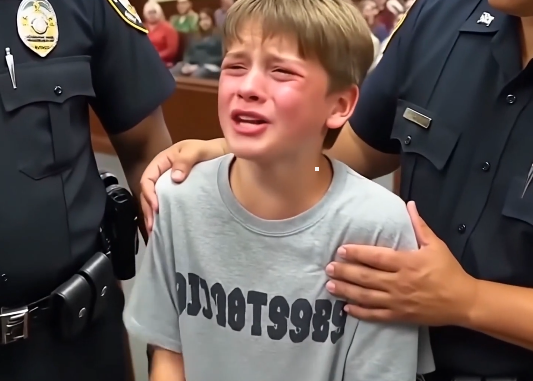
The initial scream did not convey fear.
It resembled the sound of something within a person shattering.
The courtroom had been set for a verdict, for legal discussions, for yet another day of procedure and protocol. What no one appeared ready for was the raw, heartbreaking reality of witnessing a twelve-year-old child learn that the next fifty years of his existence would be spent within a prison system.
For a brief moment, time seemed to freeze.
Then the panic ensued.
Not calculated. Not theatrical. Not the type of response one anticipates from courtroom dramas on television.
This was something far more unsettling.
It was instinct.
Pure dread.
The boy’s cries reverberated throughout the room as he struggled to grasp what had just transpired. His voice quivered as he begged, implored, and resisted a future that suddenly felt unbearable to endure. The words escaping him were not legal arguments or justifications. They were the desperate sounds of a child facing a reality too immense for him to comprehend.
Several individuals in the courtroom averted their gaze.
Others remained silent, staring.
Even those who felt justice had been delivered found themselves rattled by what they were observing.
Because regardless of views on guilt or punishment, one truth remained impossible to overlook:
A child was coming to terms with the fact that nearly his entire life had just been stripped away.
When the screaming finally ceased, the silence felt even more oppressive.
It wasn’t acceptance.
It wasn’t comprehension.
It was shock.
The sort of shock that occurs when the human mind reaches its threshold.
As officers approached, the boy seemed smaller than before. His shoulders drooped. His movements became sluggish. He no longer resembled someone resisting the sentence. He looked like someone succumbing to it.
The courtroom remained still.
The judge sat unmoving.
Family members struggled to manage their feelings.
Observers who had entered anticipating another routine hearing suddenly found themselves bearing an image they would not easily forget.
The boy’s feet dragged along the floor as he was led toward the side door.
With each step, the reality grew more permanent.
More conclusive.
More tangible.
Long after he vanished from view, no one appeared willing to speak.
The legal proceedings were concluded.
The paperwork would be processed.
The sentence would be documented.
But another question lingered in the room, overshadowing all present.
Not whether the law had been adhered to.
Not whether the verdict was legally warranted.
But whether there could ever be a moment when watching a child lose his future feels anything other than tragic.
That question persisted long after the courtroom emptied.
Long after the doors closed.
And long after the echoes of those screams finally faded away.