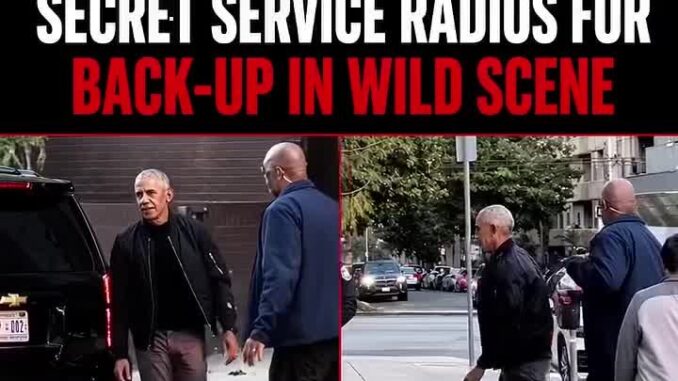
A late-night incident involving two Secret Service agents outside former President Barack Obama’s residence in Washington, D.C., on May 21, 2025, escalated into an internal issue. At approximately 2:30 a.m., the officers got into a physical scuffle, prompting one to call for a supervisor as tensions heightened. Video and audio recordings of the event later surfaced.
This situation garnered attention due to the officers' role in safeguarding a former president. Barack Obama continues to receive Secret Service protection, and the agency placed both officers on suspension while initiating an internal inquiry. Officials did not publicly disclose all the details regarding the cause of the altercation, and there was no evidence reported that Obama was threatened or that an external intruder capitalized on the incident.
Nonetheless, the episode raised concerns about security and professionalism. Officers assigned to a protected residence must stay vigilant, as threats can arise unexpectedly, even during late-night shifts. Additionally, the incident occurred amid increased scrutiny of the Secret Service, including a 2026 Government Accountability Office review that highlighted delays and deficiencies in how certain security incidents prompted policy adjustments.
Ultimately, the importance of the confrontation hinges on the findings of the investigation and whether any systemic issues were detected. The confirmed facts indicate that two officers were involved in a physical conflict, both were suspended, and no external threat exploited the situation. What remains crucial is whether the agency utilized this incident to enhance supervision, training, accountability, and workplace practices.
The timing and context lend significance to the confrontation. A night assignment at a protected residence relies on officers staying focused, even when the environment seems calm. In this scenario, the disruption stemmed from a disagreement between the officers themselves. This makes the internal response pivotal to the narrative: the agency needed to assess conduct within the protective operation rather than react to an identified external attack.
The suspension of both officers represented a tangible response, while the investigation aimed to clarify the circumstances surrounding the altercation. These are distinct actions. Removing officers from their posts can address an immediate concern without necessarily resolving all inquiries regarding the cause of the conflict or the oversight in place that evening. The account does not provide a definitive outcome regarding discipline.
The recordings also transformed the audience for an incident that started during a late shift. Once the video and audio were made public, a workplace dispute became subject to wider examination. Viewers could see or hear parts of what transpired, but public interest could not substitute for the information an internal investigation needs to collect. The narrative leaves some of those details unclear.
The distinction between a serious internal failure and an external threat remains significant throughout the account. No reported intruder exploited the altercation, and the narrative does not depict an attack on Obama. The concerns revolve around professional conduct, oversight, and the reliability of the protective team. Evaluating these issues requires separating the incident itself from scenarios that the available account does not clarify.
The enduring question is what the agency has learned from the confrontation. This inquiry ties into broader scrutiny of how security incidents prompt changes in practice. A suspension addresses the individuals involved; improved training or oversight would tackle the circumstances surrounding them. The account concludes with this question of institutional follow-through, without asserting that every suggested improvement has already taken place.