⏱️ 18–20 min estimated read time | 📸 22 photos
A family fishing trip united six relatives. What transpired on their return journey?
Flight data indicated a sudden and troubling descent. What did aviation specialists observe?
Dispatch audio recorded the moment rescuers arrived at the debris field. What did they report?
Deteriorating weather conditions made the overnight search even more challenging. What aided crews in locating the aircraft?
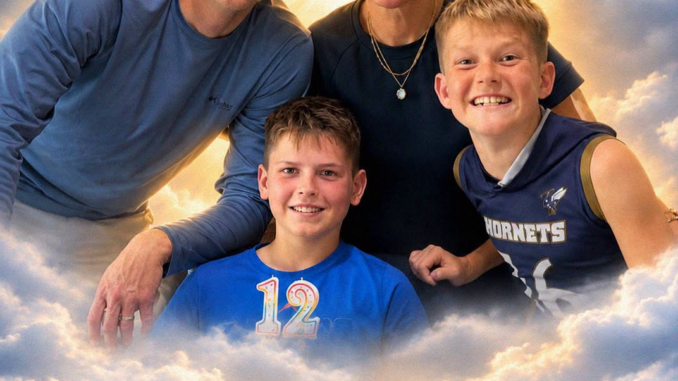
Heartbreaking family pictures illustrate the lives behind the tragedy. What are investigators still attempting to determine?
A family fishing excursion had gathered six relatives to celebrate the upcoming holiday season. However, as they traveled back to Florida, a routine trip transformed into a disaster, and the urgent search that ensued would uncover sorrowful details about their last hours.
The six relatives hailed from Fort Myers, Florida, where they had established their lives, careers, and family ties.
They had journeyed to southeastern Louisiana for a fishing adventure, enjoying time on the water before planning to head home for the holiday season.
Flight-tracking data from FlightAware shows that the family’s Cessna 210 took off from Page Field in Fort Myers on November 21 and arrived at the Triumph Air Strip in Buras, Louisiana.
A Family Trip That Began Days Before the Tragedy
In the following days, the aircraft made several movements prior to the family's return on November 24.
It left the Triumph Air Strip at 1:06 p.m. Central Time and reached New Orleans Lakefront Airport at 1:19 p.m., as per flight records reported by The News-Press.
The plane was refueled just before 2 p.m. and took off again at 2:02 p.m., this time en route to Page Field in Fort Myers, the New Orleans Advocate noted.
The aircraft was a six-seat, 1972 Cessna 210L, registered under EAB Services, a company located in Cape Coral, Florida. Brent Stokes, 50, was flying the plane, accompanied by family members, according to The News-Press.
Brent served as the president of Stokes Marine, a Fort Myers firm focused on boat lifts, docks, and seawalls. His career was deeply intertwined with the water, which also influenced his leisure time.
His company's website characterized him as a passionate fisherman and lifelong boater who dedicated much of his time to the water, whether working or enjoying it with family and friends, as per The New Orleans Advocate's report.
His sister, Arlyn Knox, 43, and her spouse, Michael Knox, 43, had also built their own business in Fort Myers. The couple started Knox Technology, an IT firm, in 2012.
Their two sons, Charles Holden Knox, 12, and Truett Knox, 10, joined the trip, along with Brent's 16-year-old son, Hunter.
Both Brent and Michael had also obtained private pilot certificates in 2023, according to records referenced by PBS NewsHour.
It was a journey that united two branches of the same family, including three children eager to spend time with their relatives.
The Cessna was anticipated to arrive in Fort Myers later that evening, but something went drastically wrong over the Mississippi coast.
The Plane's Final Journey Home Took a Sudden Turn
The Federal Aviation Administration's report indicated that contact with the aircraft was lost around 3:45 p.m. on November 24 as it headed toward Florida.
The aircraft had been flying at roughly 9,000 feet when it began to descend at a concerning rate of 10,000 feet per minute, according to PBS NewsHour's examination of the flight data and FAA information.
It was reportedly descending in a right-hand turn, an unusual maneuver that drew the attention of aviation experts who later analyzed the available tracking data, per PBS NewsHour.
Retired airline captain Steven Arroyo, with 50 years of flying experience, assessed the FlightAware data and described the descent as highly irregular, PBS NewsHour reported.
"It's highly, highly irregular," Arroyo stated. "I think it's safe to assert this aircraft encountered serious issues."
The accessible air traffic control recordings did not seem to capture a distress signal from the pilot prior to the loss of communication, according to the publication's review of publicly available recordings.
Just before the aircraft lost contact, a controller at Gulfport–Biloxi International Airport had reportedly informed the pilot about precipitation and adverse weather conditions in the vicinity, the media outlet reported.
Aviation expert Todd Curtis, a former Boeing safety engineer, mentioned that the public recordings did not suggest anything out of the ordinary before the event.
However, he pointed out that precipitation in below-freezing temperatures can lead to hazardous icing conditions, potentially impacting instrument readings or diminishing lift, as noted by the outlet's report.
It remains unclear whether icing or any other factor played a role in the crash.
The aircraft fell into the Gulf of Mexico, approximately two nautical miles northeast of Horn Island, a secluded barrier island off the Mississippi coast, according to the Federal Aviation Administration's crash details.
What Rescuers Found in the Water as the Search Intensified
Following the aircraft's disappearance, the U.S. Coast Guard coordinated a comprehensive search-and-rescue operation involving multiple agencies, as reported by The News-Press's initial coverage from the scene.
The initial search brought boats, aircraft, and marine rescue personnel into the Mississippi Sound, with emergency crews eventually staging at Singing River Island on Tuesday night, WLBT reported.
The Coast Guard discovered a debris field about two miles northeast of Horn Island. Among the items found were the aircraft's cabin, three life jackets, and a life raft, according to the Coast Guard's search details reported by The News-Press.
However, there was initially no indication of the six individuals aboard.
Coast Guard spokesperson Juan Ros confirmed that the search was ongoing as crews worked through the evening. "We have not found any people," Ros stated. "We hope to find them safe and sound."
He also emphasized that the operation would persist as long as there was a chance of locating the occupants.
"When we have a confirmed person in the water, we'll continue searching," he said.
As hours went by, rescuers kept examining the surrounding waters, with the Coast Guard deploying the Coast Guard Cutter Cobia along with smaller boats and aircraft, as noted by The News-Press.
The Mississippi Department of Marine Resources, local sheriff's marine division, and other agencies also joined the effort.
The situation was becoming increasingly challenging as weather conditions worsened.
As emergency responders arrived at the suspected crash site, dispatch communications captured their attempts to coordinate the search.
Dispatch Audio Captured the Moment Crews Reached the Debris Field
One officer described the scene in a recording that provided insight into what crews were encountering in the water.
"We're right where the plane is. There's debris floating in every direction," the officer stated.
The Mississippi Department of Marine Resources (MDMR) played a supportive role in the operation, with its personnel employing sonar equipment and a grid-based search to locate the submerged aircraft, according to Capt. Michael Strickland's account to the outlet.
Capt. Michael Strickland explained that Coast Guard aircraft searched for the debris field while a GPS locator dropped near the suspected crash site assisted marine crews in identifying the plane using sonar.
The discovery of the floating cabin and other debris offered rescuers a clearer indication of where to focus their efforts.
However, the search was far from complete, and conditions were becoming more difficult.
Strickland informed WLOX News, as reported by the publication, that conditions deteriorated as the operation progressed, with stronger winds and increasingly rough waters complicating the work.
"[Conditions] were worsening with each passing hour. With the front moving through, wind conditions were escalating, and the water was becoming more aggressive," he stated.
Despite the adverse conditions, underwater visibility remained good, aiding the divers during the recovery operation, Strickland told WLBT.
Personnel from the Mississippi Department of Marine Resources eventually found the remains of all six occupants inside the aircraft's fuselage.
The recovery operation extended deep into the night, with some crews remaining on the water until the early morning hours.
"We were out till two or three in the morning," Strickland said. "And some agencies stayed out there even longer."
The response involved the Coast Guard, MDMR, Pascagoula Police Department, Jackson County Sheriff's Department, Harrison County divers, and several other local and federal agencies, according to the rescue operation report.
Strickland commended the collaboration between the various teams, noting that they shared equipment and personnel to complete the operation.
"It was a great example of everyone working together, sharing resources, and fulfilling the task we're meant to do," he said.
At around 11:30 p.m., authorities confirmed that all six victims had been retrieved from the wreckage, as reported by The New York Post citing the Coast Guard.
According to the New York Post, divers from the Mississippi Department of Marine Resources (MDMR) discovered the bodies inside the fuselage.
"On behalf of MDMR, I want to extend our deepest condolences to the families and loved ones affected by this tragedy," Mississippi Department of Marine Resources Executive Director Joe Spraggins stated.
"Recovering those who lost their lives is a solemn responsibility, and our Marine Patrol officers and dive team are collaborating with our federal and local partners to carry out these efforts with the utmost care, professionalism, and respect."
The Coast Guard also acknowledged the tragic outcome and the efforts of the agencies involved in the recovery.
"This is a heartbreaking outcome, and our deepest sympathies are with the families and loved ones who are enduring an unimaginable loss," Cmdr. Trevor Blount, coordinator at the Coast Guard Sector Mobile Search and Rescue Mission, stated in a news release.
"While this is not the outcome any of us hoped for, we are grateful for the strong interagency coordination that allowed us to quickly locate those aboard the aircraft and provide closure to their families."
The news concluded the search, but it also confirmed the devastating result rescuers had been striving desperately to prevent.
The Six Family Members Who Were Lost Together
The victims were identified by Jackson County Coroner Bruce Lynd Jr. as Brent; his son, Hunter; Brent's sister, Arlyn; her husband, Michael Knox; and their sons, Charles Holden and Truett, according to The News-Press.
All six were residents of Fort Myers, Florida.
The loss was particularly painful for their community as the family had spent the trip engaged in something they genuinely enjoyed together.
They had gone fishing, celebrated the start of the holiday season, and were returning home to reconnect with the rest of their family.
Their relatives later issued a statement expressing the depth of their sorrow while remembering the joy surrounding the trip, according to the report.
Michael and Brent's mother, Lynn Knox, provided a particularly heartfelt description of what the family had been doing prior to the tragedy.
"They died doing what they loved: celebrating the start of a wonderful holiday season with a fishing trip together, before heading home to be with the rest of our family," she wrote.
"In the midst of our grief, we are holding onto that, and to how much love they gave us and how much love surrounds us now. We will carry them with us always."
The family also expressed gratitude to the Coast Guard, the Mississippi Department of Marine Resources, and everyone who took part in the search and recovery operation.
"We are profoundly grateful to the U.S. Coast Guard, the Mississippi Department of Marine Resources, and everyone who searched for and brought our family home. We also thank everyone who has reached out with prayers and kindness. We request privacy as we grieve and care for one another, especially the children in our family. We will share details about services when we are able."
Jackson County Coroner Bruce Lynd Jr. stated that autopsies would be conducted on the two men as part of the standard procedure for pilots involved in such incidents, according to Naples Daily News.
Beyond their immediate family, the tragedy also left friends and acquaintances of the Stokes and Knox families grappling with the loss.
Friends Remember Brent and the Son Who Followed in His Footsteps
Brent, in particular, had fostered lasting friendships through his passion for fishing and boating.
Longtime Fort Myers restaurateur and caterer Mike Gavala, who had known Brent for about 30 years, recalled him as someone whose ambition and personality made a significant impact, according to Naples Daily News.
Their friendship began when Brent was in medical sales and frequently visited Gavala's restaurant, Sasse's.
During one of their conversations, Brent mentioned he was thinking about starting a marine construction business, despite lacking formal training in the field.
Gavala encouraged him to pursue the idea, remembering the confidence he had in his friend's ability to succeed.
"Go for it, buddy," he recalled telling Brent. "It's hard work, but if anyone's going to do it, it's going to be you."
Reflecting on their friendship, Gavala portrayed Brent as a man who combined an impressive work ethic with a warm demeanor.
"He was just a powerhouse," Gavala said, "but one of the sweetest, most down-to-earth guys. The conversations you could have with him were just endless."
Gavala also recalled that he had recently flown with Brent over Labor Day weekend.
Their shared interests in aviation and fishing led to many enjoyable trips together, often with Hunter accompanying his father.
"It was always about the kids," Gavala remarked.
He described Hunter as a young man who stood out for his maturity and ability to engage in meaningful discussions, even during lengthy fishing trips.
"I could see him following in his dad's footsteps. The conversations we would have when we'd go fishing and be on the boat for 12, 14 hours, sometimes overnight … talk about a young man who was beyond his years in conversation. All that came from his mom and dad."
Gavala also remembered Hunter simply as "a fantastic young man."
Their School Community Is Also Mourning the Two Boys
The deaths of Charles Holden and Truett also profoundly impacted their school community in Fort Myers.
The boys attended St. Francis Xavier Catholic School, where Charles was in sixth grade, and Truett was in fourth grade.
Principal John Gulley stated that the Knox family had been part of the school's community for generations, making the loss particularly challenging for those who knew them.
In a message to the school community, Gulley expressed the school's commitment to remembering the boys and honoring their lives.
"We will strive to honor their memory and cherish their lives," he wrote.
The boys' deaths have left classmates, teachers, and families in their school community mourning alongside their relatives.
While the families and their community grieve the six victims, investigators are working to determine what caused the aircraft to descend so rapidly before crashing into the Gulf.
The Investigation Into What Happened to the Cessna 210
The National Transportation Safety Board (NTSB) is spearheading the investigation with assistance from the Federal Aviation Administration (FAA).
In a November 25 announcement, the NTSB confirmed that it was investigating the November 24 crash of a Cessna 210L near Horn Island, Mississippi.
Investigators are expected to document and analyze the recovered aircraft wreckage once recovery operations are concluded.
The aircraft will then be transported to a secure facility for further examination, according to The New Orleans Advocate's report.
The investigation will also review air traffic control communications, the pilot's history, aircraft maintenance records, and other pertinent information, as stated by the NTSB.
According to the report, a preliminary report is anticipated within 30 days of the accident, while a final report identifying the probable cause could take up to two years.
As investigators analyze the wreckage and the aircraft's maintenance history, the Cessna 210's previous structural safety concerns are also noteworthy.
The Cessna 210 Has Faced Structural Safety Concerns Before
According to the model's operational history, the Federal Aviation Administration issued an Emergency Airworthiness Directive on May 21, 2012, mandating that 3,665 cantilever-wing Cessna 210 aircraft undergo inspections for cracks in their spar caps, wing spars, and wings.
Aircraft with over 10,000 hours of airframe time were immediately grounded pending visual inspections.
The model experienced another serious incident on May 26, 2019, when a Cessna T210M suffered an in-flight separation of its right wing.
Preliminary investigations identified cracking in the wing-spar carry-through, with fatigue stemming from a small corrosion pit on its lower surface.
Following the incident, Textron issued a mandatory service letter on June 24, 2019, detailing inspection procedures for the wing carry-through spar.
The FAA subsequently issued another Airworthiness Directive on February 21, 2020, requiring inspections of the affected structural components, corrective action where necessary, and protective measures against corrosion.
However, these incidents do not establish that the Cessna 210L involved in the Mississippi crash had similar structural defects or that a wing-spar issue contributed to the accident.
Investigators have not determined a cause, and the aircraft's maintenance records will be among the information reviewed.
The Crash Also Comes Amid Wider Concerns About Aviation Safety
The investigation is occurring against a backdrop of increased public concern regarding aviation safety following several deadly aircraft accidents in 2025.
A Newsweek report examining aviation safety issues highlighted several notable incidents, including the January 29 collision between an American Airlines passenger jet and a military helicopter in Washington, D.C., which resulted in 67 fatalities.
Days later, all 10 individuals aboard a Cessna aircraft died while en route to Nome, Alaska. The report also mentioned a Delta-operated passenger jet that overturned during landing at Toronto Pearson Airport, although no fatalities were recorded in that incident.
These accidents prompted renewed criticism of the Federal Aviation Administration and calls for enhancements in aviation safety.
Jeff Guzzetti, a former director of the FAA's accident investigation division, emphasized the responsibility that accompanies the agency's extensive oversight of aviation.
"By design, FAA has its fingers in everybody's aviation pie," he told Newsweek. "Only with that control comes a sobering responsibility for aviation safety in this country."
The report also explored whether aviation accidents were becoming more frequent or severe.
According to NTSB figures cited by Newsweek, the United States recorded 1,158 nonfatal and 257 fatal aviation accidents in 2024, with both categories generally declining since 2020.
Hassan Shahid, president and CEO of the Flight Safety Foundation, cautioned against interpreting those figures as a reason to become complacent.
"Aviation remains one of the safest modes of transportation, but every incident is a stark reminder that safety requires continuous vigilance."
The FAA and NTSB have yet to determine what led to the November 24, 2026, crash, leaving significant questions about the aircraft's final moments unanswered.
For the Stokes and Knox families, however, the investigation is only one aspect of what lies ahead.
They must now navigate life with the loss of six loved ones who embarked on a family fishing trip and never returned home.